
Table of Contents
The best product ideas rarely arrive fully formed. More often, something gets built for one job, flops, and then waits around until someone notices a second use nobody planned for. A few of the items in that category are now so ordinary that their original purpose sounds like a joke.
Here are seven of the most popular products originally designed for something else, plus the details of how each one finally found its real job.
1. Bubble Wrap Was Supposed to Cover Your Walls
In 1957, two engineers in New Jersey, Alfred Fielding and Marc Chavannes, heat-sealed two sheets of plastic together and trapped a layer of air between them. The plan was textured wallpaper for the booming post-war housing market. Buyers disagreed. Fielding later admitted it was the worst wallpaper he had ever seen.
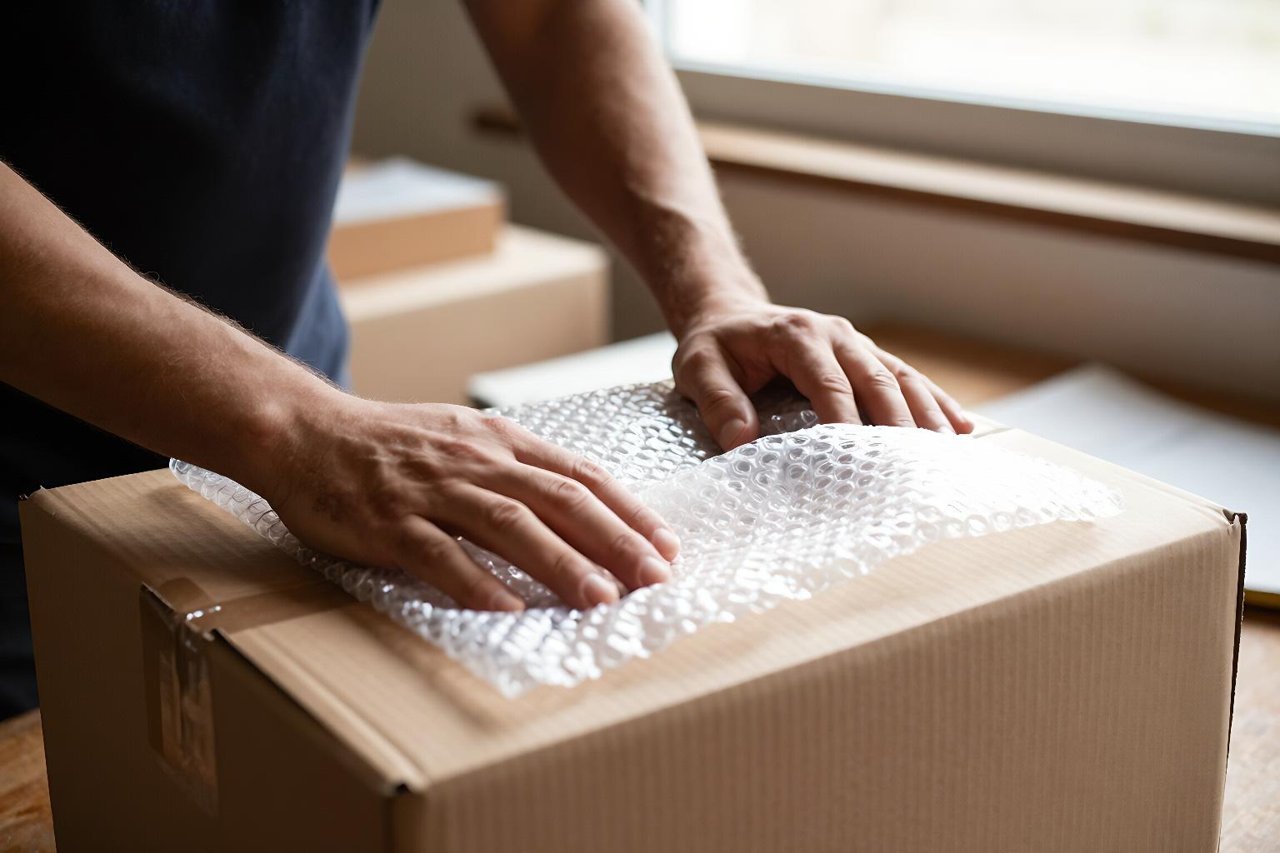
They spent three years trying to sell it as greenhouse insulation instead, which also went nowhere. The breakthrough came in 1960, when IBM began shipping it around the delicate components of its System/360 computers. Fielding and Chavannes founded Sealed Air that same year, and the material that failed as decor became the world’s default cushioning. Order anything fragile online and it turns up in the box, and a strip of it still earns its place in the suitcase next to the travel essentials deals worth grabbing before your next trip.

2. Play-Doh Started Life as a Wallpaper Cleaner
Kutol Products, a soap company in Cincinnati, was making a soft putty in the 1930s that families used to lift soot off wallpaper. Coal furnaces produced a lot of soot, so the business made sense for a while. Then gas heating and washable vinyl wallpaper arrived, and demand collapsed.
What saved the company was a nursery school teacher named Kay Zufall, who was related to one of the owners by marriage. She handed the putty to her class for modelling and watched what happened. By 1956 it had been reformulated, dyed and relaunched as a toy. It shipped in an off-white blob at first, then in the red, yellow and blue tubs most of us remember. More than three billion cans later, nobody associates the stuff with dirty walls.
3. Listerine Was a Surgical Antiseptic
Jordan Wheat Lambert launched the formula in 1879 and named it after Joseph Lister, the British surgeon who pioneered antiseptic surgery. It was sold as a general antiseptic for operating rooms, as a floor cleaner, and, with spectacular optimism, as a treatment for gonorrhoea.
Diluting it with water and marketing it to dentists as a mouthwash worked better than any of that. The real explosion came in the 1920s, when an advertising campaign invented the modern fear of halitosis and pushed the brand from a small operation into a national staple. The germ-killing credentials came first. The fresh breath pitch came forty years later.
4. The Treadmill Was a Prison Punishment
In 1818, a Suffolk engineer named William Cubitt designed a wheel with 24 spokes that prisoners climbed, step after step, without ever going anywhere. Brixton prison installed one of the first, and at its peak 44 inmates were grinding out six hours a day. The workload was brutal, roughly equal to climbing between 5,000 and 14,000 vertical feet daily, and doctors eventually called it too harsh. British prisons abolished the practice in 1902.
Half a century later, a cardiologist named Robert Bruce patented a motorised version for stress-testing hearts, and Kenneth Cooper’s 1968 book on aerobics turned running-in-place into a fitness habit. The machine that once broke convicts now sells in millions of units a year to people who pay for the privilege of walking uphill indoors.
5. Post-it Notes Came From Bad Glue
Spencer Silver, a chemist at 3M, spent 1968 hunting for a super-strong adhesive for aircraft construction. What he produced was the opposite: a weak acrylic glue that stuck lightly and could be peeled off and reused. He pitched it around the company for years and found no takers.
A colleague, Art Fry, was singing in a church choir and losing his paper bookmarks out of the hymnal. He dabbed some of Silver’s glue on the back of a slip and the first sticky note was born in 1974. Test markets ran in 1977, national rollout followed in 1980, and the failed adhesive became one of the most familiar office products in the world.
6. Gorilla Glass Was Shelved for Four Decades
Corning’s 1960 experiments produced a chemically strengthened glass, code-named Chemcor, that was tougher than anything on the market. It went into racing car windscreens and a few prison windows, but cars started using laminated glass and the material quietly went on a shelf for the next 40 years.
In 2005, Steve Jobs called Corning’s chief executive, Wendell Weeks, asking whether the company could make a scratch-resistant screen for a phone he was about to launch. Weeks dug out the Chemcor files. The iPhone shipped in 2007 with the glass, rebranded Gorilla Glass, and Corning has since supplied screens for billions of devices. A glass the car industry rejected became the reason your phone survives a pocket full of keys.
7. Viagra Was a Heart Drug
Pfizer’s scientists in Sandwich, Kent, developed sildenafil in the late 1980s as a treatment for angina. The idea was that it would widen blood vessels and improve circulation to the heart. Trials showed the drug performing modestly on its intended outcome, but male volunteers kept reporting a dramatic side effect, and reports of the trial spread fast.
Pfizer pivoted, filed in a different direction, and won approval from the US regulator in March 1998. Within months it was the fastest-selling prescription drug in history. The cardiovascular benefits never carried it. The side effect did.
How to Spot the Better Use Before Someone Else Does
What separates these stories from the thousands of failed inventions nobody remembers is rarely luck alone. Somebody noticed a signal and took it seriously, whether it was a play-friendly putty or a pill that volunteers refused to hand back at the end of a trial.
- Treat complaints as clues. When users do something unexpected, ask what job they are actually hiring the product to do, then watch how they improvise.
- Keep failed work on the shelf. Corning’s glass sat unused for decades before a phone maker needed it. The patent, the formula, the prototype all retain value.
- Test it with the wrong audience. Play-Doh broke out through a nursery class, not a cleaning-products sales channel.
- Watch the side effects. Side effects are data. Viagra’s origin story was a business decision made by reading them correctly.
- Rebrand fast once the evidence is clear. Silver spent years pitching his glue internally; the value only appeared when Fry put it on a bookmark and someone gave it a name.
The same logic shows up in software, where general-purpose tools tend to outgrow the narrow tasks they were built for. That is roughly how a research chatbot turned into an AI sidekick I use most days, and it is why good ideas tend to look slightly wrong the first time you see them. Next time something flops, look at the parts of it people actually use. The real product may be hiding in there, waiting for a sensible name.


