
Table of Contents
Why Habits Beat Willpower Almost Every Time
A bag of baby carrots sitting on the counter at eye level will do more for your diet than three months of food journaling. That sounds like an exaggeration until you notice how much of what you eat is decided by what’s in front of you, how hungry you are, and how much effort it takes to get something else.
Nutrition advice usually fails for a boring reason: it asks people to make good decisions at the exact moments they’re least equipped to make them. Tired at 9pm. Ravenous at 6pm. Standing in front of an open fridge with no plan. Willpower is a terrible tool for that job. Habits are better because they remove the decision altogether.
The seven habits below are ordered roughly by how easy they are to start, not by how impressive they sound. Pick one. Run it for two weeks. Add another when the first one stops feeling like effort.
1. Put Protein on the Plate Before Anything Else
Protein is the most filling macronutrient per calorie, and most people eat far too little of it early in the day. A breakfast of toast and coffee sets you up to be rummaging through the cupboard by 10:30am. Twenty to thirty grams of protein at that first meal does something noticeably different.

Concretely: 200g of Greek yogurt is about 20g. Three eggs is 18g. A cup of cottage cheese gets you to 25g. None of that requires cooking skill or a frying pan if you don’t want one.
The payoff shows up hours later. Protein blunts the mid-morning biscuit run and makes the 6pm decision about dinner less frantic. If you eat meat or fish, aim for a palm-sized portion at lunch and dinner too. If you don’t, lentils, tofu, beans and dairy will get you there with a little more planning.
2. Eat the Vegetables First, While You’re Actually Hungry
Whatever else is on your plate, start with the green stuff. Hunger peaks in the first five minutes of a meal, which is exactly when vegetables taste least appealing and are therefore most likely to get eaten. Wait until you’re half full and they turn into an obligation you push around the plate.
This is a tiny piece of sequencing, but it changes the arithmetic of a meal. Two cups of roasted broccoli is roughly 60 calories plus a serious amount of fibre and vitamin K. Eat that first and you’ll naturally eat less of the calorie-dense part of the plate without counting anything.
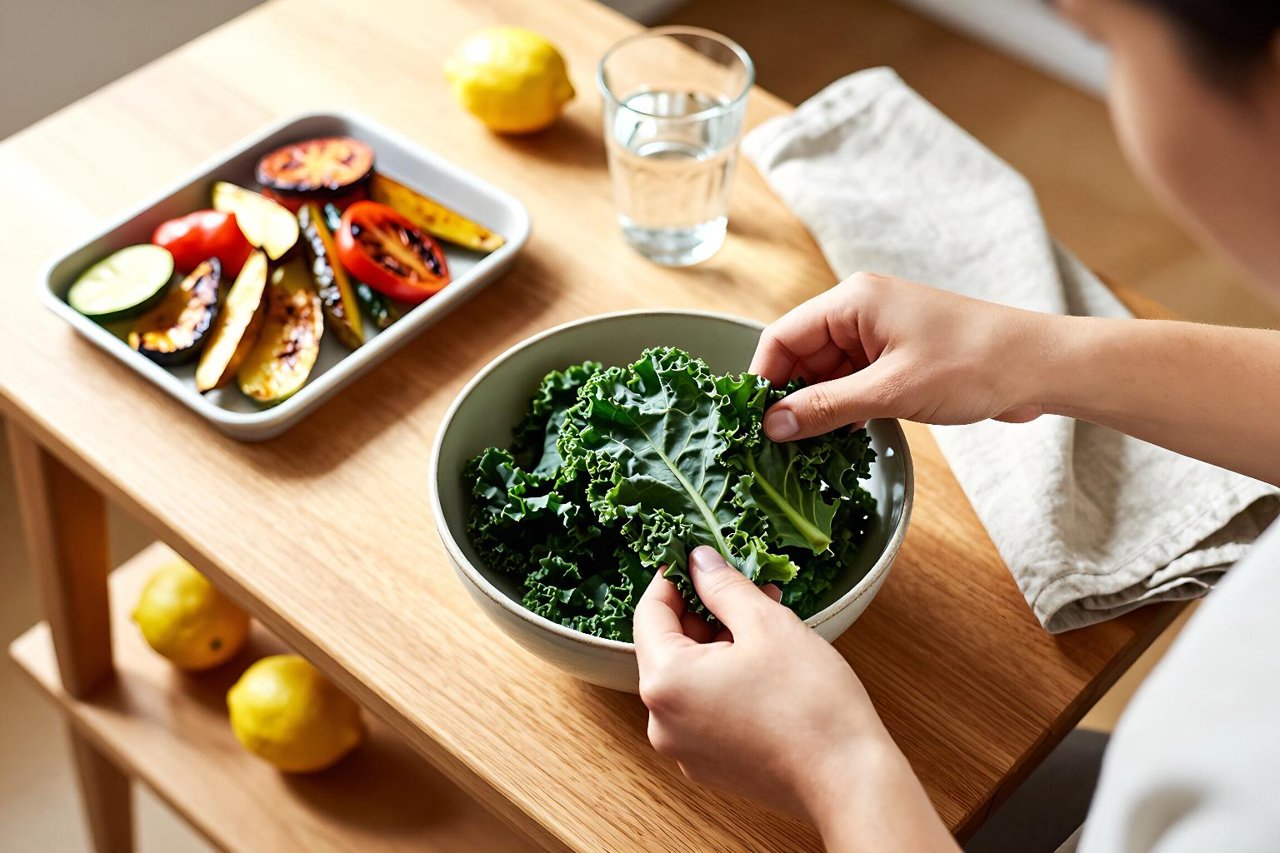
Practical detail: roast a big tray on Sunday and keep it in the fridge. Reheated broccoli is fine. An untouched bag of spinach turning to slime in the drawer is not a habit, it’s a guilt object.
3. Keep Water Where You Can See It
Mild dehydration gets routinely mistaken for hunger, and the mistake is most common in the mid-afternoon when the office biscuits appear. A drop of just 1–2% in body water is enough to affect mood, concentration and how tired you feel.
Don’t rely on remembering. Put a filled bottle on your desk, in your bag, or on the kitchen bench. Drink a glass before your first coffee rather than after it. Two litres is a reasonable target for most adults, more if you’re training hard or it’s hot out, and you can judge it well enough by colour: pale straw is fine, apple juice means drink something.
4. Slow the Fork Down by Ten Minutes
Your gut takes roughly twenty minutes to tell your brain it’s been fed. Eat a full meal in eight and you’ll finish before the signal arrives, then feel uncomfortably full twenty minutes later. That’s not a character flaw, it’s just timing.
Three things that genuinely slow a meal down
- Put the fork down between bites. It feels ridiculous for about ninety seconds, then it works.
- Drink water between mouthfuls rather than with the food.
- Eat with someone and talk. Solo eaters finish fastest, every time.
You don’t need to chew each bite forty times or set a timer. Aim to still be eating when the person across the table finishes, and notice how much less food you need to feel satisfied.
5. Build One Default Meal You Could Cook Half Asleep
Decision fatigue is the real enemy of good eating, and it peaks at dinnertime. The fix isn’t a meal plan with 21 unique recipes. It’s one reliable, repeatable meal you can assemble with whatever’s in the fridge without thinking.
A good default looks like this: a protein, a vegetable, a starch, all on one tray at 200°C for about 25 minutes. Chicken thighs, red onion, peppers, potatoes. Salmon, asparagus, new potatoes. Firm tofu, broccoli, sweet potato. Salt, oil, and something acidic at the end.
Make enough for two nights. The second night is the one that saves you, because that’s when the delivery app looks most attractive. If you’d like the food itself to do more heavy lifting over decades rather than weeks, the eating patterns in what to eat to extend your years and healthspan come down to legumes, vegetables, fish, olive oil and whole grains, with not much else in large quantities.
6. Set Up Your Kitchen for the Person You Are at 9pm
Late-night you is not the same person who wrote the shopping list. Late-night you is tired, has no executive function left, and will eat whatever is closest to hand. Design for that person.
Put the fruit bowl on the counter and the biscuits on the top shelf behind the tins. Keep a bowl of washed grapes in the fridge at eye level. Tip nuts into a small dish instead of eating from the bag. These sound like trivial tricks. They aren’t. They’re the difference between a habit that survives a bad day and one that collapses the first time you’re exhausted.
Watch out for the related trap of turning healthy eating into a personality test, where one biscuit becomes proof you’ve failed at the whole thing. There’s a useful breakdown of the predictable traps that derail healthy routines if that pattern sounds familiar.
7. Eat One Meal a Day Without a Screen
People eat more when they’re distracted, and they also remember less of what they ate, which makes them more likely to eat again sooner. One meal, phone in another room, sitting at a table. Breakfast is usually the easiest one to claim.
It’s also the habit most likely to show you what you’re actually eating. Plenty of people who insist they “don’t really eat that much” find out otherwise during week one of eating without a screen.
What to Do on the Days It All Falls Apart
Every one of these habits will break. You’ll travel, get sick, work late, eat an entire packet of something in the car. None of that undoes anything, provided you restart at the next meal rather than the next Monday.
The Monday rule is the one that quietly destroys progress, because it turns a single bad evening into a five-day write-off. Restart at lunch instead. And don’t let the bathroom scale referee the whole project, since it swings two kilos on water and salt alone; there are far better ways to measure progress that actually counts, like energy, strength, sleep and how your clothes fit.
If you’re layering these changes on top of an already busy life, start with the easiest one and give it a fortnight before adding anything else. That’s the approach behind these healthy lifestyle steps you can start this week, and it’s the reason some people are still doing them a year later. The habits that last are never the most impressive ones. They’re the ones that survive contact with an ordinary Tuesday: a tray of vegetables in the fridge, a bottle of water on the desk, twenty-five minutes of oven time, and no decisions left to make when you’re tired.


