
Table of Contents
Around week 12 of pregnancy, blood volume starts climbing toward a 45 percent increase by the third trimester. That extra fluid needs more of almost everything: more iron to build haemoglobin, more iodine for the baby’s thyroid, more DHA for a brain that will triple in size before the second birthday. The body is quietly generous here. It will leach calcium from your bones and ferritin from your liver before it lets the baby run short. That sacrifice is precisely why a deficiency can look invisible from the outside while the numbers slide underneath.
So here are the top 7 pregnancy-related nutritional deficiencies, what they actually do, and the practical detail that helps you catch them before they catch you.
1. Iron deficiency (and iron-deficiency anaemia)
Pregnancy raises iron needs from 18 mg to 27 mg a day. That is roughly the amount in 3 kilograms of cooked spinach, which is why so many women fall short even with a decent diet. Absorption from plant sources sits around 5 to 12 percent, and it drops further if you drink tea or coffee with meals or take your supplement alongside milk.
Watch for breathlessness on stairs you used to climb without thinking, a resting heart rate that feels oddly high, restless legs at night, and a strange craving for ice or chalk. A pale lower eyelid and a tongue that looks smooth and shiny are old clinical clues still worth knowing.

Routine blood work during pregnancy usually reads haemoglobin, ferritin and platelets together. If the platelets come back low as well, your clinician will work through the possible causes of low platelet counts before assuming it is nutrition-related. Ferritin below 30 micrograms per litre is worth a conversation, even if haemoglobin still looks acceptable.
2. Folate (vitamin B9)
The neural tube closes between day 22 and day 28 after conception. Many women are still staring at a faint line on a test at that point, which explains why 400 to 600 micrograms of folic acid daily is recommended for anyone who could become pregnant, not just those with a confirmed pregnancy.
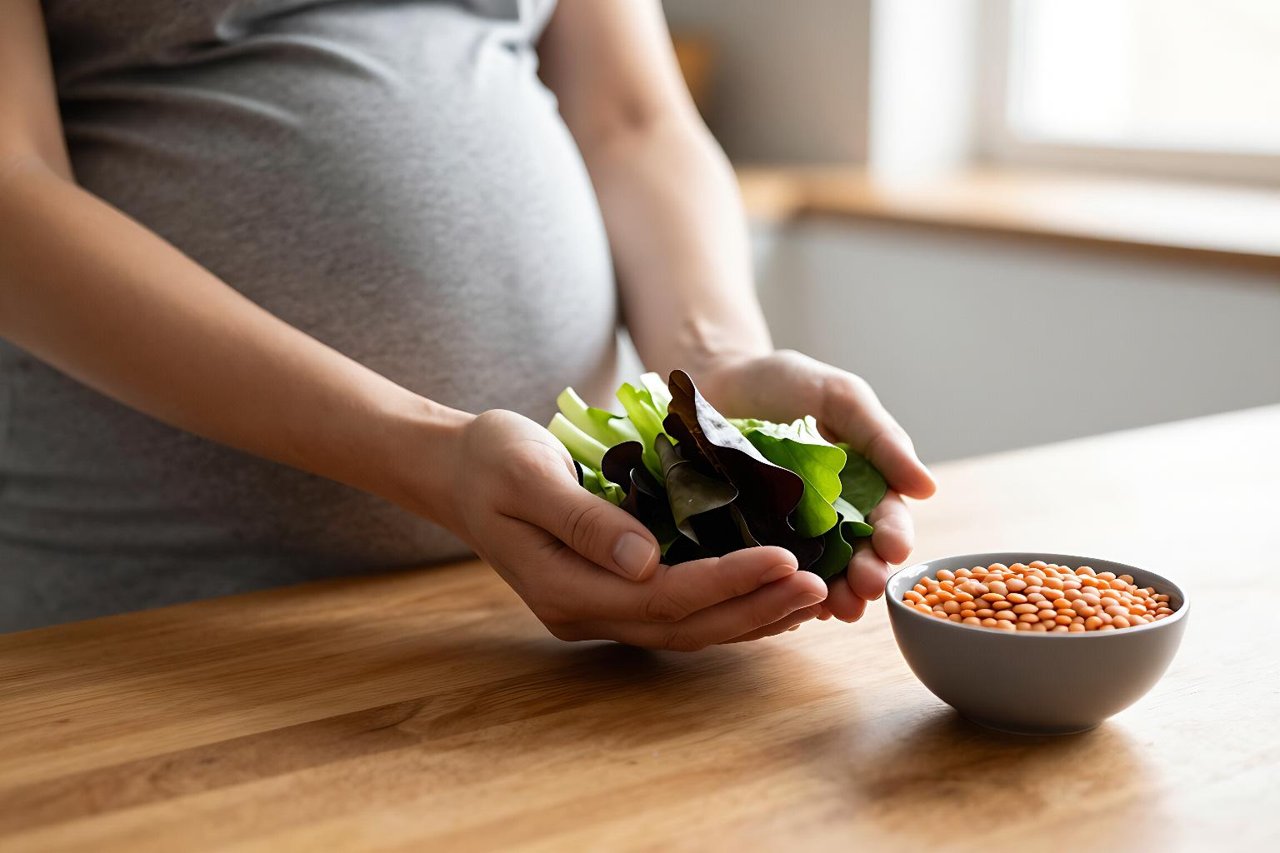
Food sources include lentils (about 180 micrograms per cooked cup), edamame, asparagus, avocado and fortified cereals. Folate from food is less bioavailable than the synthetic form, so a supplement still matters. Some women carry MTHFR variants that reduce conversion to the active form; a clinician may suggest methylfolate instead, though the evidence for routine use remains mixed.
3. Vitamin D
Vitamin D does more than build bone. It supports placental function and immune signalling, and low levels have been associated with higher rates of pre-eclampsia and gestational diabetes, though causation is still debated. The standard 600 IU (15 micrograms) target assumes some sun exposure. In northern latitudes, in winter, or with darker skin and covered clothing, that assumption collapses.
Ask for a 25-hydroxyvitamin D test rather than guessing. Below 30 nmol/L is deficient by most definitions; between 30 and 50 nmol/L is often called insufficient. A daily dose of 1000 to 2000 IU is commonly used to correct a mild shortfall, but dosing above that should be supervised.
4. Iodine
Iodine is the raw material for thyroid hormone, and the fetus depends entirely on maternal supply for the first trimester. Needs rise to 220 micrograms daily in pregnancy and 290 micrograms while breastfeeding. Severe deficiency is a leading preventable cause of intellectual disability worldwide, and mild deficiency still shows up in cognitive and language outcomes.
Iodised salt, milk, yoghurt and eggs are the everyday sources. Seaweed is a wildcard: a single gram of kelp can carry thousands of micrograms, well past a safe upper limit of 600 micrograms. If your prenatal contains kelp or bladderwrack, check the actual iodine number on the label.
5. Vitamin B12
B12 deficiency is easy to miss because the neurological signs can arrive before any anaemia shows on a blood count. Numbness or tingling in the fingers, unsteadiness, memory fog, a sore red tongue. Needs sit at 2.6 micrograms daily.
Anyone eating a vegan or mostly plant-based diet is at real risk, and so are women who have had bariatric surgery, take metformin for PCOS, or have pernicious anaemia. Injections or a high-dose oral supplement solve it quickly. Deficiency in pregnancy has been linked to neural tube defects independently of folate, so it deserves its own test rather than being lumped in.
6. Calcium
The fetus pulls roughly 30 grams of calcium from you across nine months, mostly in the third trimester when the skeleton mineralises. If intake is low, your body compensates by releasing parathyroid hormone and mobilising calcium from your own skeleton. That works, but it leaves you with a deposit withdrawn from bone you would rather keep.
Target 1000 mg daily. A cup of milk or fortified plant milk gives around 300 mg, 100 g of firm tofu set with calcium sulphate gives 350 mg, and a small tin of sardines with the bones gives 380 mg. Vitamin D and magnesium both influence how well that calcium gets used.
7. Omega-3 fatty acids, specifically DHA
DHA makes up roughly 40 percent of the polyunsaturated fat in the brain and a large share of the retina. Requirements climb to about 200 to 300 mg of DHA daily, and typical Western intake sits well below that. Vegetarian and vegan pregnancies usually sit lowest of all.
Two to three servings of low-mercury fish a week is the simplest fix: salmon, sardines, anchovies, trout and mackerel. Avoid swordfish, shark and king mackerel. Algae oil capsules are a solid plant-based route and deliver DHA directly rather than making you convert it from flax, a process that runs at only 5 to 10 percent efficiency.
The everyday symptoms that overlap and get dismissed
None of these deficiencies announce themselves with a single unmistakable sign. What you tend to get is a cluster that gets blamed on pregnancy itself:
- Fatigue that does not lift after a full night’s sleep (iron, B12, iodine)
- Muscle aches and bone pain in the hips or thighs (vitamin D, calcium)
- Cold hands, brittle nails, hair shedding (iron, B12)
- Brain fog or low mood that feels out of proportion (B12, iodine, DHA)
- Frequent infections or slow-healing grazes (vitamin D)
- Craving ice, clay or starch (iron)
Plenty of these overlap with normal physiological changes, so symptoms alone never confirm anything. They are a prompt to test, not a diagnosis.
What a well-covered plate looks like in practice
Consider a Tuesday. Breakfast is fortified cereal with milk and a glass of orange juice, which lands folate, calcium, iodine and vitamin C to boost iron absorption later. Lunch is a lentil and spinach salad with lemon dressing and a handful of pumpkin seeds. Dinner is a salmon fillet with roasted sweet potato and broccoli. A prenatal vitamin that actually contains iodine, DHA and B12 covers the rest.
Two habits do most of the heavy lifting: keep tea and coffee at least an hour away from your iron source, and pair plant iron with vitamin C rather than with dairy. Small, repeatable adjustments beat a total diet overhaul you abandon by week three.
The blood test conversation worth having
Standard antenatal panels vary widely by country and clinic. Some check ferritin, some do not. Very few check iodine or DHA at all. If you are being tested for iron, ask whether ferritin is included. If you eat little or no animal product, ask for B12. If you have thyroid symptoms, ask for TSH alongside iodine status. If fatigue has lingered past the first trimester, ask for a vitamin D level.
Bring a three-day food diary to the appointment and a list of what your prenatal actually contains, including the milligram amounts rather than just the nutrient names. Clinicians can move much faster with that in hand, and you leave with a plan tied to your numbers instead of a generic handout.


