
Table of Contents
A bag of dried lentils costs about two dollars and makes four dinners. A small punnet of blueberries in January costs roughly the same and disappears in two days. Both are “healthy.” Only one of them will quietly wreck your food budget.
That gap is where most attempts at eating better fall apart. Someone decides to clean up their diet, fills the trolley with salmon, cold-pressed juice and protein powder, and by week three the grocery bill has doubled. The resolve goes shortly after.
Improving what you eat and spending more money are two separate decisions. You can make the first without the second, and the version that doesn’t drain your account is the one you’ll still be doing in six months. Small changes that stick beat dramatic overhauls, and dinner is no exception.
Here are seven ways to improve your diet without spending more. None of them need a new appliance, a supplement subscription or a trip to a specialist grocer.

1. Cook in batches, then assemble instead of cooking
The biggest cost in a “healthy” diet isn’t ingredients. It’s convenience. Pre-portioned meals, salad bars and grab-and-go wraps carry a premium of two to four times what the same food costs when you cook it yourself.
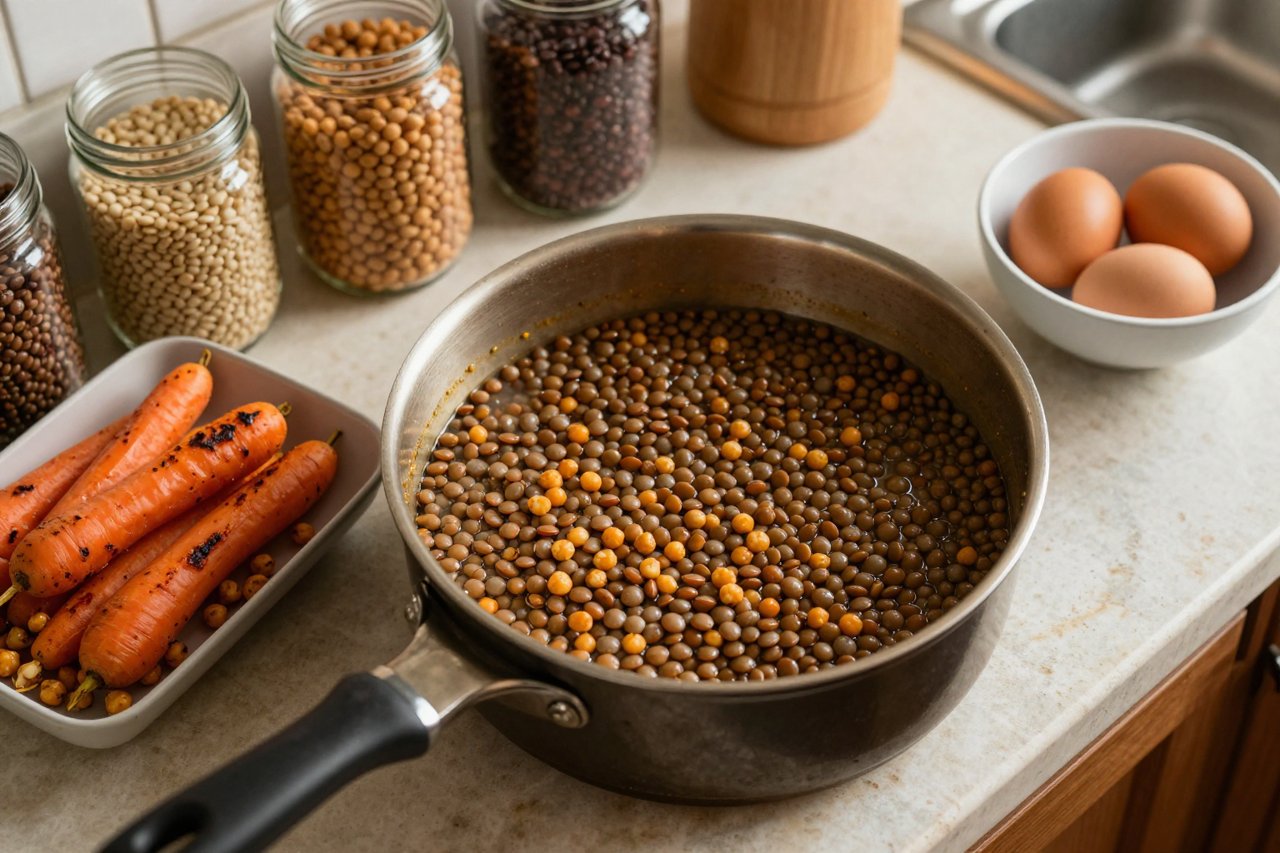
Spend 90 minutes on a Sunday and the week is basically solved: a pot of rice or barley, a tray of whatever vegetables were cheapest, a pot of beans, and one protein. Nothing fancy. Portion it into containers and the whole lot costs less than three takeaway lunches, and it removes the 7pm moment where you cave and order something instead.
The trick is to cook components rather than finished meals. Roasted vegetables, grains and beans can go into a bowl with a fried egg, get folded into a tortilla, or turn into soup with a splash of stock. Same ingredients, seven different dinners.
2. Shop the freezer aisle and the “ugly” shelf
Frozen produce is picked at peak ripeness and frozen within hours, which means its vitamin content often matches or beats fresh produce that has spent a week in transit. It’s also cheaper, and it doesn’t rot in the drawer, which matters more than most people admit.
Frozen spinach, berries, peas, broccoli and fish fillets should be permanent residents. So should the “wonky” or “imperfect” ranges many supermarkets now sell at 30-50% off, and the reduced section at the end of the day. A bruised pepper that’s going to be roasted tonight is exactly as good as a perfect one.
What to skip: pre-cut vegetables, pre-washed salad bags and anything already marinated. You’re paying for labour, not nutrition.
3. Make meat the seasoning, not the main event
Protein is the line item that blows up most food budgets, and the cheapest sources are usually the ones dietitians already like. The trick isn’t cutting meat out. It’s halving the amount and bulking it out with something cheap.
Four hundred grams of mince plus a cup of cooked lentils makes twice the bolognese for barely more money. A pack of chicken thighs stretches across three meals once it’s shredded into a curry or a tray of roasted veg. Nobody at the table notices the missing half.
Per serving, the cheapest proteins on the shelf tend to be:
- Eggs: roughly 30 cents each for around 6g of complete protein
- Dried beans and lentils: a fraction of the canned price, and red lentils don’t even need soaking
- Plain yogurt and cottage cheese: buy the big tub, not the single pots
- Tinned fish: sardines and mackerel cost less than half of fresh salmon and carry more omega-3s
- Tofu and frozen edamame: cheaper than most meat per gram of protein
None of this is a sacrifice. It’s just shifting the balance of the plate.
4. Stop paying for the things marketed as health
This is where budgets quietly die: juices, cleanses, detox teas, greens powders, protein bars, the whole wellness aisle. Most cost more per serving than a proper meal and deliver a fraction of the benefit. If you’ve ever wondered whether a three-day juice cleanse is worth the money, this comparison of juice cleanses, fasting and whole-food resets is fairly blunt about it.
Supplements get the same treatment. A few are genuinely useful for specific people, like vitamin D in winter or B12 if you’re vegan, but most of what’s sold in shiny tubs does nothing a decent plate of food wouldn’t do better. That includes the shelf full of sleep aids, where most sleep supplements don’t hold up to the evidence. Put the money towards fish and vegetables instead.
5. Plan around what’s already dying in the fridge
Households throw away somewhere near a third of the food they buy. If your weekly shop is $150, that’s roughly $50 a week going in the bin, which is more than enough to fund better ingredients with money you’re already spending.
Before you write a shopping list, open the fridge and take stock. Half a cabbage, three carrots, a lonely courgette, some tired herbs. That’s a stir-fry, a soup or a frittata. Build one or two dinners a week from the “use it up” pile, then shop for whatever is actually missing.
Give things that expire first a shelf at eye level and do a quick “eat me” check every couple of days. That kills most of the waste without any willpower involved.
6. Learn three cheap flavour habits
Most people who say healthy food is boring are simply under-seasoning it. The fix costs pennies:
- Buy spices in bulk bags, not tiny jars. Cumin, smoked paprika, chilli and curry powder will transform a pot of lentils for a few cents a serving.
- Keep acid on hand. A squeeze of lemon or a splash of vinegar at the end of cooking makes vegetables taste like someone cooked them on purpose.
- Roast at high heat. Cauliflower, carrots, onions and chickpeas all become something else entirely at 220°C with a little oil and salt.
That’s the whole difference between a sad bowl of boiled veg and something you’d happily order in a restaurant. The strategies that have actually lasted for real people tend to be this unglamorous: a technique, not a product.
7. Drink water and stop buying drinks
Soft drinks, bottled smoothies, fancy coffees and “healthy” iced teas are the highest-margin items in the shop and the easiest to cut. A $4 coffee on the way to work, five days a week, adds up to over $1,000 a year. Not one of those purchases was ever going to improve your diet.
Keep a bottle filled and in sight. If plain water bores you, buy cordial or a box of tea bags rather than bottles. It sounds small, but it’s the fastest win on this list.
What a week of this actually looks like
Put it all together and a typical basket looks like this: oats, eggs, plain yogurt, dried lentils, tinned tomatoes, tinned sardines, a whole chicken or a pack of thighs, onions, carrots, cabbage, frozen peas, frozen spinach, frozen berries, rice, pasta, potatoes, a bag of spices and a few lemons. In most places that’s roughly $60-70, and it covers three meals a day for one person with leftovers to spare.
Nothing on that list is a superfood. Nothing is branded as wellness. It’s just food, cooked properly, with a bit of planning behind it, which is what the research on eating well over a lifetime keeps pointing back to anyway. People who age well aren’t the ones who spent the most on groceries. They’re the ones who kept cooking.
So pick one of these seven. Run it until it’s automatic, then pick another. That’s the entire method, and it works whether your grocery budget is tiny or merely normal.


