
Table of Contents
The first time I landed in Bangkok I had no local cash, a dead phone, and a hotel address written on the back of a receipt. Twenty years and forty-odd countries later I still get things wrong, but the mistakes cost less. What follows is the version of travel tips and guides I hand to friends before their first big trip, the kind that survives contact with reality.
None of it requires a spreadsheet or a 40-litre backpack. It mostly requires doing three or four things before you leave, then refusing to over-plan once you arrive.
The Paperwork You Should Sort Before You Book Anything
Book the flight first and fix the paperwork second, and you will eventually get burned. Check your passport’s expiry date against the destination’s rules. Plenty of countries want six months of validity beyond your planned departure, and a few want blank pages free for stamps. South Africa, for example, expects two facing blank pages. Renewals in the US routinely take six to eight weeks, longer in spring.
Check the embassy, not a blog
Visa rules shift constantly. Indonesia changed its visa-on-arrival fee, the UK rolled out its electronic travel authorisation, and the EU’s new entry system has been pushed back more than once. Official embassy and government sites are ugly, boring, and correct. Travel forums are entertaining and often two years out of date.

Treat insurance as medical cover
A twisted ankle in your own city is an inconvenience. The same ankle on a trek in Nepal can mean a helicopter, and a helicopter can mean $20,000. Buy the policy for the evacuation and repatriation limits, not the lost-luggage clause, which usually reimburses a fraction of what your bag was worth.
Store digital copies of everything: passport photo page, insurance policy number, and the phone number of your bank’s fraud line. Email them to yourself so they survive a stolen phone.
Pack for the Trip You’re Actually Taking
Passengers on many Asian and low-cost carriers get seven kilograms of cabin baggage. That is a pair of shoes and a paperback. Weigh your bag at home, not at the check-in desk with a queue behind you.
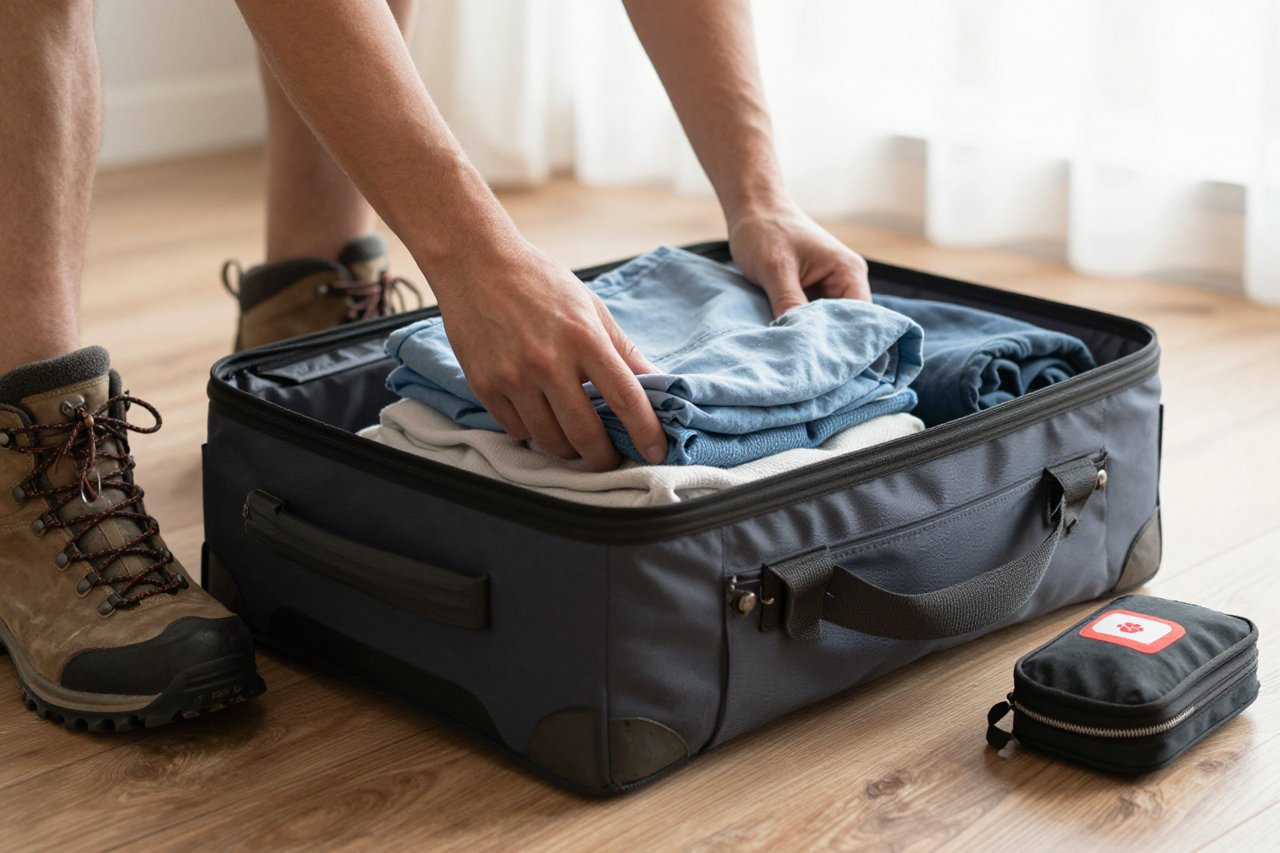
The rule of thumb: pack for five days and do laundry. Hotels and laundromats across most of Europe and Asia charge a few euros for a wash and fold, and it beats hauling a week of clothes up three flights of stairs.
- Two pairs of shoes maximum, and wear the bulky pair on the plane.
- Three tops, two bottoms, one warm layer, one rain shell.
- A universal adapter with two USB ports, because airport outlets are scarce.
- One small medical kit: painkillers, rehydration sachets, blister plasters, antihistamines.
- A packable tote for groceries, beach days, and the overflow you’ll inevitably acquire.
Layers beat bulk. A merino base layer, a fleece, and a shell handle a Dublin drizzle, a cold Moroccan night, and a mountain bus with no heating.
Money: Two Cards, One Rule, Some Cash
Carry two cards from different networks, a Visa and a Mastercard, and keep them in separate places. Fraud blocks are common abroad, and one frozen card in a country where your bank’s helpline closes at 5pm local time makes for a miserable afternoon.
The one rule: always pay in the local currency. When a card terminal offers to charge you in your home currency, decline. That so-called convenience adds three to seven percent to every purchase.
Withdraw larger amounts less often. Most ATMs charge a flat fee, so taking out 400 units once beats 100 units four times. Use machines attached to a real bank branch during opening hours, and if the machine offers its own conversion rate, refuse it.
Keep the equivalent of $100 to $150 in local cash. Markets, rural buses, and the taxi that finds you after midnight rarely take cards.
Build Your Days Around Two Anchors, Not Twelve
The single biggest mistake new travellers make is scheduling. Twelve attractions in three days produces photographs and almost no memories.
Pick one anchor for the morning and one for the late afternoon or evening. Leave the hours between them empty. That’s when the good stuff happens: the market you wander into, the cafe where the owner draws you a map, the viewpoint you find because you weren’t rushing to a reservation.
If you would rather have structure, book a guided day out and let someone else handle the logistics. Knowing what to expect from Cappadocia’s day tours is a useful template, because the same questions apply almost everywhere: how big is the group, how long at each stop, is lunch included, and is there a hard-sell carpet or jewellery stop at the end.
Getting Around Without Overpaying
An eSIM installed before you fly costs a few pounds or dollars and avoids the airport SIM kiosk markup. Download offline maps for every city on your route. They work with no data at all and have saved me more times than any printed city guide.
On transport:
- Book European high-speed rail six to twelve weeks ahead. Paris to Lyon drops to around 35 euros early and climbs past 120 closer to departure.
- Use the local ride-hailing app: Grab in Southeast Asia, Bolt in much of Europe, Careem in the Middle East.
- Ask your accommodation which taxi firm they call for their own family.
Airport transfers are where budgets quietly die. A public bus or train into the centre is usually a tenth of the taxi fare, and often faster once you count the traffic.
Choose Destinations by Season and Temperament
A country that suits a solo traveller in April can be a poor fit for a family in August, and the reverse. Ask three questions: what is the weather doing that month, is it peak season for locals or for tourists, and does the trip match your energy level right now.
If you’re weighing options, this curated guide to the best countries to visit sorts destinations by traveller type, which is far more useful than a numbered ranking.
Shoulder season is the open secret. Rome in late October, Kyoto in early June, and Greece in May give you the same sights with half the crowd and lower room rates.
Cold weather counts as a destination
Winter trips get written off too quickly. A week in the French Pyrenees in winter combines serious skiing, thermal baths, and villages that feel lived-in rather than staged, at prices that would barely cover a weekend in the Alps.
Slow Travel Beats Fast Travel
Four cities in a week means four days of packing, transit, and check-in. Two cities in a week means you learn which bakery opens at 6am.
Slower travel doesn’t have to mean sitting still for a month. It can mean choosing a journey where the moving is the point. River itineraries are built that way, with overnight sailing and full days ashore, and riverboat cruises along historic waterways are a good reminder that a slow route through a valley shows you more than a flight over it.
When Things Go Wrong Anyway
They will. Flights get cancelled, bags get rerouted to another continent, and street food occasionally wins. What matters is having a plan you can run while tired.
The general principle: get to a person before you get to a queue. Airport transfer desks, airline apps, and gate staff can often rebook you faster than the customer service line that stretches 60 people deep. Keep chargers, medication, and one change of clothes in your carry-on, always.
For the recurring classics, there is a solid walkthrough on troubleshooting and preventing common travel problems, covering missed connections, card declines, and the stomach bug that arrives on day two.
Ask, Then Ask Again
Menus, ticket machines, and hotel websites rarely answer the questions that matter. People do.
Learn ten phrases in the local language, even badly: hello, please, thank you, sorry, how much, where is, I don’t understand, one beer, the bill, and help. The effort changes how you’re treated, and it usually earns you a recommendation you would never find online.
Ask staff where they eat. Ask the bus driver which stop is closest. Ask the shopkeeper what time the market actually opens, rather than what the sign claims. The most valuable travel tips and guides you collect on any trip won’t come from a website. They’ll come from a five-minute conversation with someone who lives there.


