
Key Points
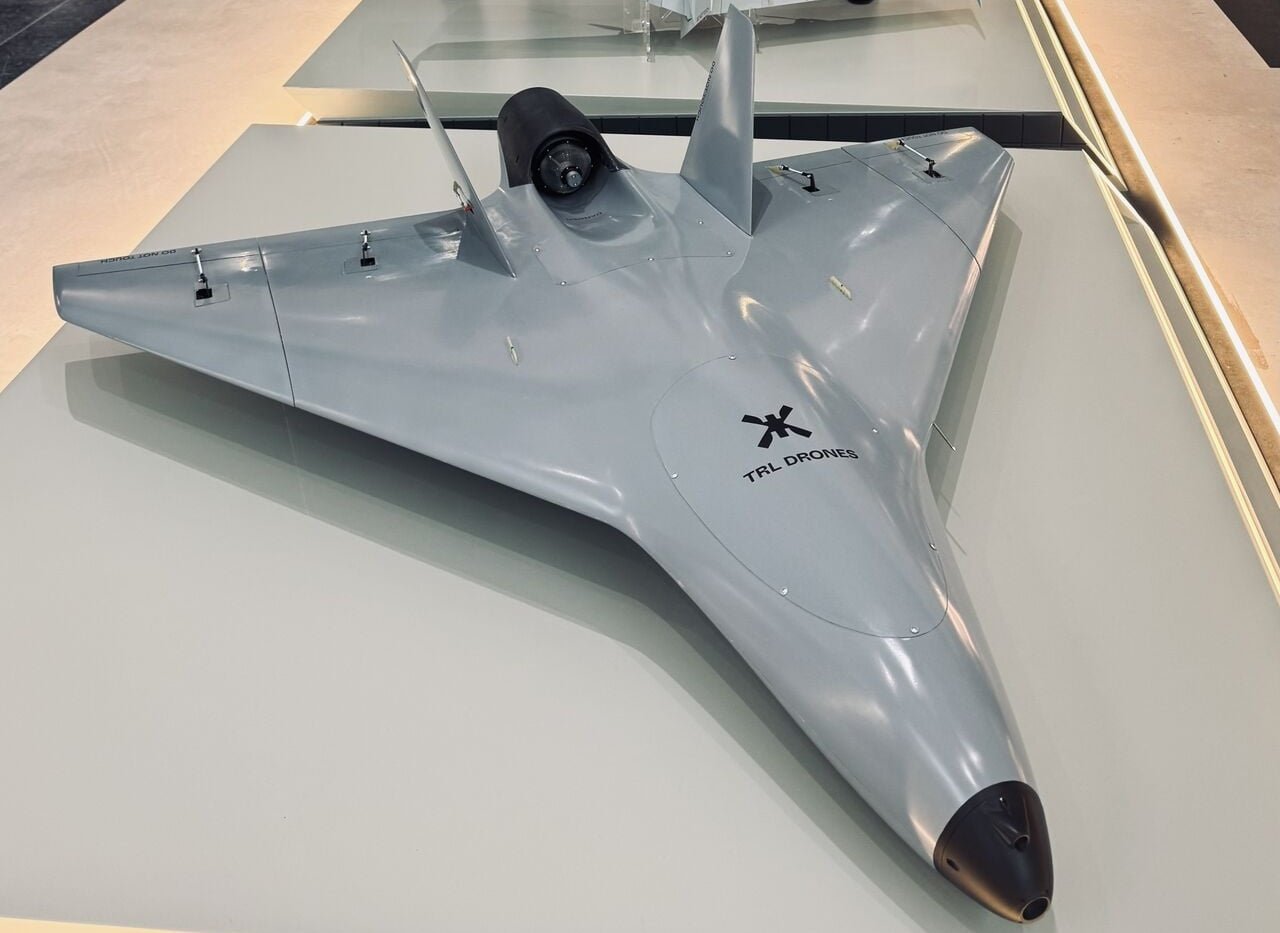
- AdlerAerospace, partnering with TRL Drones in Czechia, has developed the TALOS-J and TALOS-E fixed-wing interceptor drones using operational lessons derived from battlefield conditions in Ukraine.
- The TALOS family is designed to provide layered, scalable counter-drone defense with missile-class performance at lower cost through human-supervised autonomous interception.
Jackson-based AdlerAerospace, in partnership with its Czech R&D affiliate TRL Drones, has developed the TALOS-J and TALOS-E interceptor drone systems — a new fixed-wing counter-unmanned aerial system (C-UAS) family designed using operational lessons drawn from battlefield conditions in Ukraine, the company confirmed during an exclusive interview with CEO and Chairman Wilhelm Meya.
TRL Drones brings expertise in advanced UAV technologies, and AdlerAerospace is working with the company on the current version as well as future variants.
The development comes as military forces confront growing numbers of fast and low-cost unmanned aerial threats, including one-way attack drones and medium-class UAVs that compress engagement timelines and strain traditional air defense systems. AdlerAerospace said the TALOS series was created to address reaction speed and interception challenges observed in active combat environments.
– ADVERTISEMENT – CONTINUE READING BELOW –
The company designed the TALOS-J and TALOS-E as part of a layered interceptor family intended to deliver missile-class performance at drone-class cost, enabling scalable air defense for military forces and protection of critical infrastructure. According to AdlerAerospace, the systems are optimized for time-critical intercept missions while reducing reliance on traditional kinetic interceptors.

In an exclusive discussion, Meya said operational experience connected with Ukraine directly influenced the program’s design philosophy.
“Ukraine battlefield experience has been a fundamental driver behind TALOS development,” Meya said. “Real operational lessons — especially around reaction time, threat volume, and engagement geometry — directly shaped the interceptor family.”
He added that the concept has already demonstrated operational use in real combat conditions, including engagements against larger Group 2 and Group 3 UAV threats and Shahed-class one-way attack profiles.
“TALOS was not designed for a lab problem — it was designed for the battlefield conditions we’re seeing now,” Meya said.
AdlerAerospace selected a fixed-wing configuration instead of multirotor interceptor concepts to improve efficiency and engagement reach. Fixed-wing platforms allow operators to intercept threats at greater distances from defended assets while maintaining broader coverage areas.
“The fixed-wing decision was driven by mission efficiency and engagement depth,” Meya said. “In modern C-UAS, the goal is simple: kill the threat farther out, not overhead.”
According to the company, the fixed-wing architecture provides higher intercept speed, wider engagement envelopes, improved endurance, and better performance against moving targets at longer stand-off ranges. These characteristics are intended to increase decision time for operators facing dense drone attacks.
“The physics matter — speed and range buy you decision time,” Meya said.
AdlerAerospace launched both TALOS variants simultaneously to support a layered defense approach. TALOS-J is optimized for high-speed, longer-distance intercepts where rapid response is required, while TALOS-E is designed to provide scalable interception capacity during sustained operations.
“One interceptor is a product. A layered family is a defense strategy,” Meya said.
The company estimates interception probability between 87 and 92 percent based on simulation, mission-level modeling, subsystem testing, and progressive live validation. AdlerAerospace noted that actual performance depends on engagement geometry, electronic warfare conditions, and operational doctrine.
“We validate in phases: model, test, field, refine,” Meya said.
During engagements, TALOS interceptors operate under human-supervised autonomy. Early phases rely on radar vectors and networked sensor data to continuously update intercept solutions, followed by onboard precision sensing during the terminal phase while maintaining operator authority.
“Autonomy handles speed; humans keep authority,” Meya said.
Electronic warfare resilience was incorporated as a baseline design requirement. The guidance architecture combines network-fed cueing with onboard sensing to maintain interception capability under degraded navigation or disrupted signal conditions.
“EW resilience was designed in from day one, not added later,” Meya said.

AdlerAerospace said its primary focus is military and government users facing large-scale drone threats, including air-defense units, border security operators, and programs integrating interceptor drones into radar and electronic warfare networks. The TALOS family is designed to complement existing SHORAD and kinetic air-defense systems.
“TALOS is a force-multiplier layer inside a larger air-defense kill chain,” Meya said.
The company expects autonomous interceptor drones to become a standard layer of modern air defense architecture as drone warfare continues to expand.
“Mass drone warfare changed the equation — interceptor autonomy is now a necessity, not an option,” Meya said.

Also, Meya said that AdlerAerospace and TRL Drones will be conducting live demos of the TALOS systems in Europe in April.