
Table of Contents
Two drivers in the same ZIP code can pay wildly different rates for the same car. One logs 4,000 miles a year and rarely drives after dark. The other commutes 45 minutes each way and brakes hard at every yellow light. Traditional auto insurance prices them mostly by age, address, vehicle, and claims history. Usage-based auto insurance tries to price the driving itself.
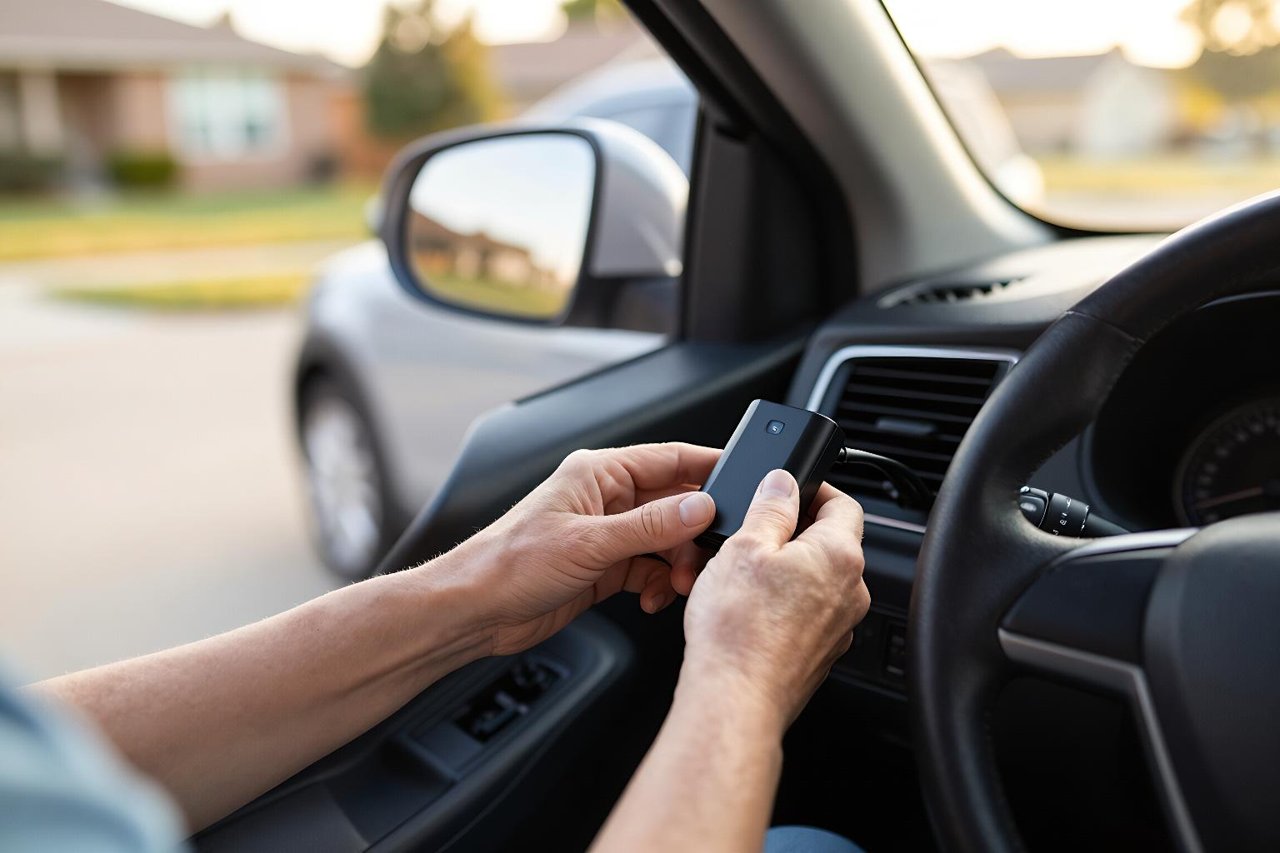
Most programs use a smartphone app, a plug-in device, or both to track miles, time behind the wheel, and habits such as hard braking or phone handling. The pitch is simple: pay for what you use. The reality includes smaller discounts than advertised, privacy trade-offs, and renewal scores that can cut both ways.
What Usage-Based Auto Insurance Actually Measures
Insurers collect different data depending on the program, but most usage-based auto insurance falls into three buckets:
- Distance: annual or monthly miles, sometimes verified with odometer photos.
- Timing: time of day, length of trips, and occasionally the types of roads you use.
- Technique: acceleration, braking, cornering, speeding, and phone motion.
A pure pay-per-mile plan may ignore how smoothly you drive. A behavior-based plan may care mostly about braking and phone use, with mileage as a secondary factor. Some programs use a plug-in device that reads the car’s data; others rely on phone sensors and GPS.

The data becomes a driving score or a per-mile charge. That score can unlock a discount at renewal, leave your rate unchanged, or in some programs trigger a surcharge. Two policies with similar names can work very differently.
Pay-Per-Mile vs. Pay-How-You-Drive
Usage-based coverage is an umbrella term, not one product. The two main models solve different problems.
Mileage-based plans
Pay-per-mile insurance usually combines a low monthly base rate with a charge for each mile. A plan might quote $35 per month plus 5 cents per mile. At 5,000 miles a year, the mileage portion runs about $21 a month, for a total near $56 before taxes and fees. At 15,000 miles, that same plan costs about $98 a month. The low-mileage driver gets real savings; the high-mileage driver may be better off with a standard policy.
Some plans include a mileage allowance and charge only for overage. Mileage is usually tracked by app or device, and some insurers ask for an odometer photo at signup and renewal.
Behavior-based plans
Pay-how-you-drive programs score trips and turn the result into a discount. A signup discount of 10% is common. A safe-driver discount at renewal might reach 30% or more, though the maximum varies by insurer and state. The headline ‘save up to 40%’ usually describes the best possible score, not the average customer’s result.
Some insurers guarantee that a telematics score will not raise your rate. Others allow a surcharge if your driving scores poorly. That difference matters. A program that can only help is a low-risk experiment. One that can raise your premium is a pricing decision you need to model before you enroll.
Hybrid programs
Several carriers blend mileage and behavior into one score. You might pay a base rate plus a per-mile charge, then get a multiplier based on smooth driving. Ask which factors carry the most weight before you sign up.
Who Saves, and Who Usually Doesn’t
Usage-based auto insurance tends to work best for drivers whose odometers stay low and whose trips are predictable:
- Remote workers and retirees who drive under 8,000 miles a year.
- Households with a second car or weekend vehicle that sits in the driveway.
- Drivers with clean records who take short daytime trips on familiar roads.
- Parents willing to let a teen’s driving be scored, if the insurer allows it and the discount outweighs the monitoring.
Heavy commuters, rideshare drivers, and people who routinely drive late at night often find standard policies cheaper. A 20,000-mile year can erase the mileage advantage quickly, and a handful of hard stops can pull down a behavior score.
One overlooked group is older drivers. Low annual mileage and gentle habits can make telematics appealing, though not every insurer offers it to applicants over 70. The same low-mileage logic behind senior driver insurance strategies applies here: fewer miles and a clean record are worth more than a loyalty discount.
The Discount Is Not the Rate
An insurer might advertise ‘save 30% with telematics.’ That number is often the maximum discount off a base rate that may already be higher than competitors. A $1,800 policy with a 25% discount still costs $1,350. A $1,200 policy with no device wins by $150, and you don’t have to plug anything in.
Compare the final premium for the same coverage limits, deductible, and drivers. A low headline rate can also come with thin coverage, so check the limits. The same discipline in getting cheap car insurance without paying for it later applies to usage-based plans.
How to Compare a Usage-Based Quote
Before you install an app or device, get answers to these questions in writing:
- What is the base rate before any usage discount?
- Is there a monthly fee, device fee, or activation charge?
- What is the maximum discount, and what score earns it?
- Can the rate increase at renewal? Is there a surcharge cap?
- Does the app track location all the time, or only during trips?
- How is data shared, and can you delete it after you leave?
- What happens to the discount if you add a driver, change cars, or move states?
- Can you cancel mid-policy without a penalty?
Then run a simple calculation. If a pay-per-mile plan charges $40 a month plus 6 cents per mile, and you drive 10,000 miles a year, the mileage charge is $600. Add $480 in base rate and you are at $1,080 before taxes, fees, and discounts. Compare that with a standard quote for identical coverage. If the gap is $40, the hassle may not be worth it. If the gap is $300, it probably is.
Affinity groups and auto clubs can complicate the math. If you are considering AAA car insurance, ask whether the quote includes a usage-based discount or just a standard policy with a safe-driver app.
The Privacy and Practical Trade-offs
Telematics requires data. Phone-based programs may ask for location, motion, and network access, and some run in the background. Plug-in devices read the car’s onboard computer. Either way, the insurer can see where and when you drive, not just how many miles you log. Read the consent screen.
Practical annoyances show up too. Apps can drain a battery, lose Bluetooth, or misread a passenger’s phone as the driver’s. A single hard stop on a short sample can move a monthly score more than it should. If your spouse or teenager drives the car, their trips count toward your score.
Data portability is limited. A good score with one insurer usually does not follow you to another, so you may start over with a new app and a new baseline.
Usage-Based Coverage Across Vehicle Types
Telematics is spreading into electric vehicles, which often have built-in connectivity and can report mileage without a plug-in device. The premium math is still different because electric vehicle insurance costs reflect battery repair, specialized parts, and higher total-loss values. A usage-based discount may help, but it will not erase those underlying costs.
Older cars raise a separate decision. If you are thinking about dropping collision coverage to offset a telematics bill, read what collision insurance covers and when dropping it makes sense. Saving $30 a month on telematics while risking a $6,000 repair bill is not a win.
When to Walk Away
Skip a usage-based plan if the final premium is higher than a standard policy, if the insurer will not explain surcharge rules, or if the app demands more data access than the program needs. A telematics discount is not a loyalty test. It is a pricing tool.
Your odometer and three comparable quotes tell you more than any advertised savings percentage. If the math works, usage-based auto insurance can be a sensible way to stop subsidizing high-mileage drivers. If it doesn’t, keep your OBD-II port empty and your phone out of the insurance company’s dashboard.


