
Table of Contents
A friend of mine once spent forty minutes in a supermarket aisle comparing two jars of peanut butter. One had two ingredients. The other had seven, including palm oil and a spoonful of sugar. She bought the two-ingredient jar, felt quietly virtuous for a day, then watched her kids refuse it on sight. It sat in the cupboard for four months and separated into a brick.
That jar is a decent place to start with clean eating, because it shows both the appeal and the trap. The appeal: fewer ingredients feels safer, simpler, more like food. The trap: “fewer ingredients” is not the same thing as “better for you,” and the label on the front has no legal obligation to mean anything at all.
What Is Clean Eating? The Short Version
Clean eating is a way of eating that prioritises whole, minimally processed foods and leans on home cooking over packaged convenience. In practice, that usually means more vegetables, fruit, whole grains, beans, eggs, fish and meat close to their original form, and fewer items with long ingredient lists, added sugars and industrial additives.
Here’s the thing nobody selling you a clean eating programme wants to lead with: there is no official definition. No government body, medical association or certification scheme governs the term. Ask ten people what clean eating means and you’ll get ten slightly different answers, some of which contradict each other outright. One person means “cook more and eat more vegetables.” Another means “no gluten, no dairy, no seed oils, no sugar, ever.” Both call it clean eating.

Where the Phrase Came From
The idea has roots in the natural foods movement of the 1960s and 70s, got picked up by bodybuilding culture in the 1990s as “chicken, broccoli, rice, repeat,” and then exploded through food blogs in the 2000s. That last step matters, because blogging turned a loose philosophy into a marketable identity. Once “clean” became a selling point, it stopped describing a way of eating and started describing a brand.
Compare it to “organic,” which in most countries has legal definitions and third-party certification. “Clean” has nothing like that. A packet of biscuits can be marketed as clean if the marketing team feels like it.
What It Actually Looks Like on a Plate
Strip away the branding and most versions of clean eating come down to something like this:
- Vegetables and fruit making up a serious portion of most meals, not a garnish
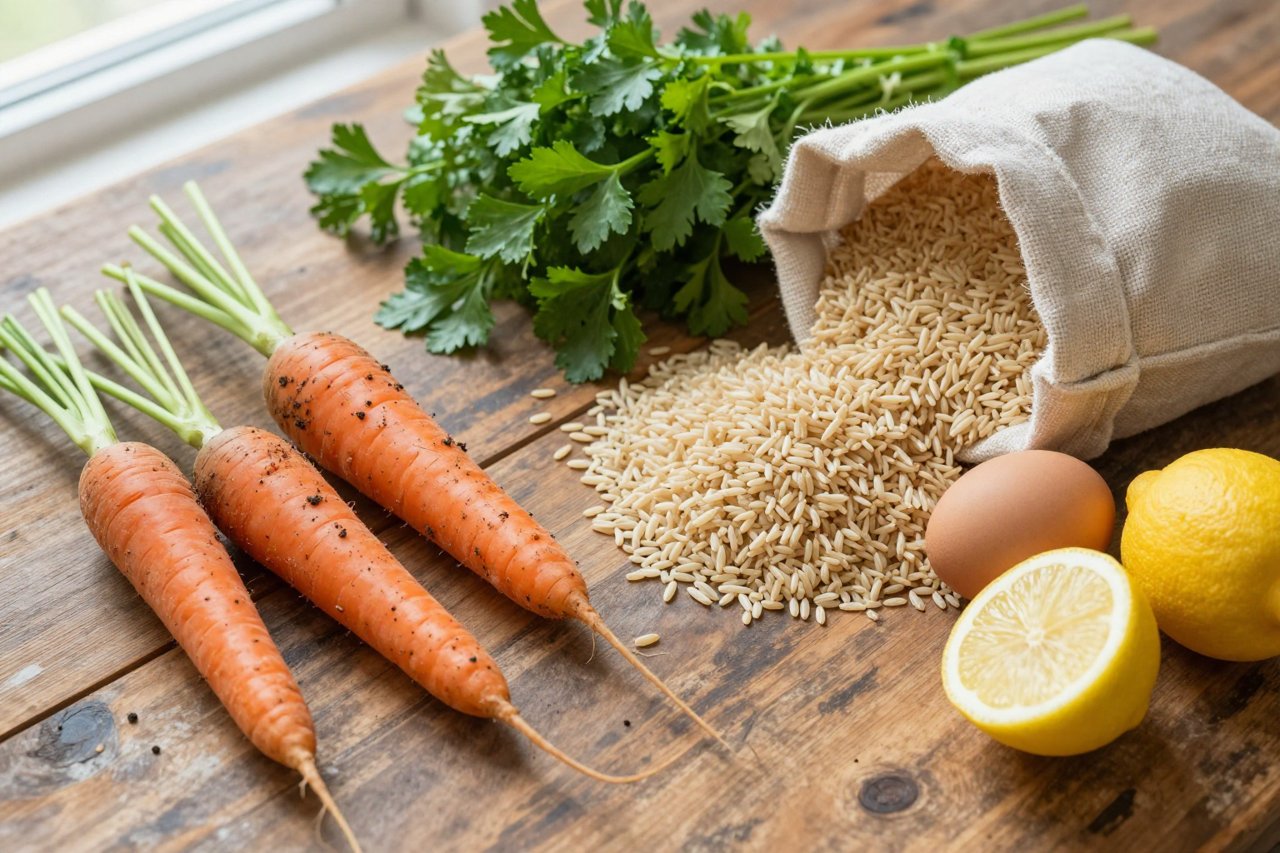
- Whole grains such as oats, brown rice, barley and whole wheat rather than refined versions
- Protein from a mix of sources: lentils, beans, fish, eggs, dairy, meat
- Fats from nuts, seeds, olive oil and avocado
- Water, tea and coffee as the default drinks
- Fewer products with fifteen ingredients and a cartoon mascot
Notice what’s absent from that list: bans. Nothing there requires you to give up bread, rice, dairy or a slice of cake on your birthday. But many popular clean eating plans tack on elimination rules, cutting out gluten, dairy, legumes, nightshades or all sugar. That’s a different animal, and it’s where things tend to go wrong.
The Parts That Genuinely Hold Up
Cooking more of your own food is one of the most reliable changes a person can make. You control the salt, the oil and the portion size, and it’s almost always cheaper than the equivalent ready meal. Eating more fibre from vegetables, beans and whole grains is one of the few dietary changes with near-universal agreement behind it.
Cutting back on ultra-processed food also has reasonable support. Large observational studies keep finding associations between diets heavy in ultra-processed products and poorer health outcomes, though researchers are still untangling how much is the food itself and how much is what it displaces. Either way, cooking from scratch more often nudges you in the right direction without needing a rulebook.
Where Clean Eating Goes Sideways
“Clean” Becomes a Price Tag
Cleaning up your diet can get expensive fast. Cassava flour at nine dollars a bag, activated charcoal lemonade, collagen powders that cost more per gram than steak. Some of these products are fine. None of them are necessary. The same nutritional ground is covered by a bag of oats and a bag of frozen peas.
The Rules Keep Multiplying
Most people start with something reasonable, like “cook more and eat more vegetables.” Six months later they’ve cut out six food groups and can’t eat at a restaurant without interrogating the waiter. When the list of forbidden foods grows faster than the list of foods you actually enjoy, that’s a warning sign. Restrictive eating can quietly become undereating, and the body keeps score: the signs you’re not eating enough tend to show up long before you’d notice them yourself.
Food Stops Being Social
Turning down a friend’s birthday cake is a small thing. Turning it down every time, for years, is not. Clinicians have a name for the pattern where food choices become rigid enough to interfere with daily life, and it’s not a rare side effect of wellness culture so much as a predictable one.
How to Do It Without the Morality
The most useful adjustment is to drop the language of purity. Food isn’t clean or dirty. A banana isn’t morally superior to a biscuit; it’s just more nutrient-dense and less calorie-dense, which is a practical fact rather than a virtue.
From there, a few habits do most of the work:
- Build five or six default meals you can cook without thinking, so the fallback isn’t takeaway
- Aim for roughly 80 percent whole foods and leave the other 20 percent unexamined
- Keep frozen vegetables, tinned beans and tinned fish in the house at all times
- Judge a food by what it gives you, not by how many ingredients it has
- Stop measuring if measuring has stopped being useful, which is a bigger deal than it sounds: stepping away from macro tracking is its own skill
Households with children need a looser version still. Kids are not small wellness influencers, and a plate of nuggets on a Tuesday night does not undo the eight years of varied meals that came before it. If the pressure to serve a perfect plate is making dinners miserable, it’s worth reading about why one parent decided her kids could mostly eat whatever they want and what actually happened as a result.
A Simple Test for Whether Your Version Is Working
Forget the ingredient lists for a minute and ask four questions instead. Can you eat at a friend’s house without anxiety? Are you eating enough to feel steady through the afternoon? Do you have room in your week for a meal you didn’t plan? And could you keep this up for another five years without resentment?
Four yeses means whatever you’re doing is probably fine, even if a stranger on the internet would call it unclean. A no or two doesn’t mean you’ve failed at nutrition. It usually means the rules have multiplied past the point of usefulness, and the fix is to strip them back to the ones you’d defend to a friend over dinner: cook more, eat more plants, don’t make food into a test you’re constantly failing.


