
Table of Contents
A caffeine-free drink should not feel like punishment. Yet too many people avoiding caffeine end up with a lukewarm decaf, a glass of water, or a sugary soda they did not really want. The good news is that the caffeine-free drinks aisle is wider than it has ever been. You can find brews with real body, cold drinks with bite, and evening cups that feel like a ritual rather than a restriction.
Some people cut caffeine because of sleep, anxiety, pregnancy, medication, or a sensitive stomach. Others simply dislike the 3 p.m. jitter. Whatever the reason, the goal is the same: drinks that taste good enough to order again. This guide to caffeine-free drinks for people avoiding caffeine focuses on what to actually put in your glass.
Know what ‘caffeine-free’ really means
Zero caffeine is a stricter standard than many labels suggest. Decaf coffee usually contains 2 to 5 mg per 8-ounce cup, not none. Decaf black tea can land in a similar range. Chocolate contains small amounts too: an ounce of dark chocolate can carry 20 mg or more. If your doctor has told you to avoid caffeine completely, treat decaf as a low-caffeine drink, not a caffeine-free one.
Herbal teas are different. Rooibos, peppermint, chamomile, ginger and hibiscus contain no caffeine unless they are blended with tea leaves or added extracts. Read the ingredient list on flavored blends. ‘Herbal’ on the front does not always mean caffeine-free on the back.

Brews with body: the best caffeine-free hot drinks
Roasted grain, barley and chicory
Roasted barley tea, sold as mugicha in Japan, tastes toasted and faintly sweet. It works hot, but it is even better steeped overnight and served cold. Chicory root has a darker, coffee-like bitterness; dandelion root is earthier. Both make a convincing base for a caffeine-free latte with steamed milk. Check the blend before you buy. Some coffee substitutes include green tea or matcha for flavor, which puts caffeine back in the cup.
Rooibos and honeybush
Rooibos is naturally sweet, red-brown, and almost impossible to over-steep. A 6-minute steep gives you a full-bodied cup that takes milk and honey well. Honeybush is similar, with a rounder, honeyed finish. Both are forgiving if you forget the timer, which makes them good desk teas.
Herbal teas with real flavor
Peppermint is sharp and clean after a meal. Ginger has heat; slice fresh root and simmer it for 10 minutes if you want the good stuff. Hibiscus is tart enough to stand in for cranberry juice. For brewing ratios and which botanicals are worth the money, this guide to herbal teas and natural beverages goes deeper.
Decaf coffee and tea, if you are not strictly at zero
Decaf coffee can satisfy a coffee habit without the full dose. Choose Swiss Water or CO2-processed beans if you care about solvent-free decaffeination. Decaf black tea is weaker in flavor than regular, so brew it a minute longer. Neither is a true zero, so skip them if your goal is strict avoidance.
Cold caffeine-free drinks that pull their weight
Hot drinks get the attention, but most people need a cold option in the fridge. These are worth the shelf space.
- Sparkling water with citrus: A squeeze of lime or grapefruit in cold sparkling water feels like a proper drink. Add a sprig of mint and a few crushed ice cubes.
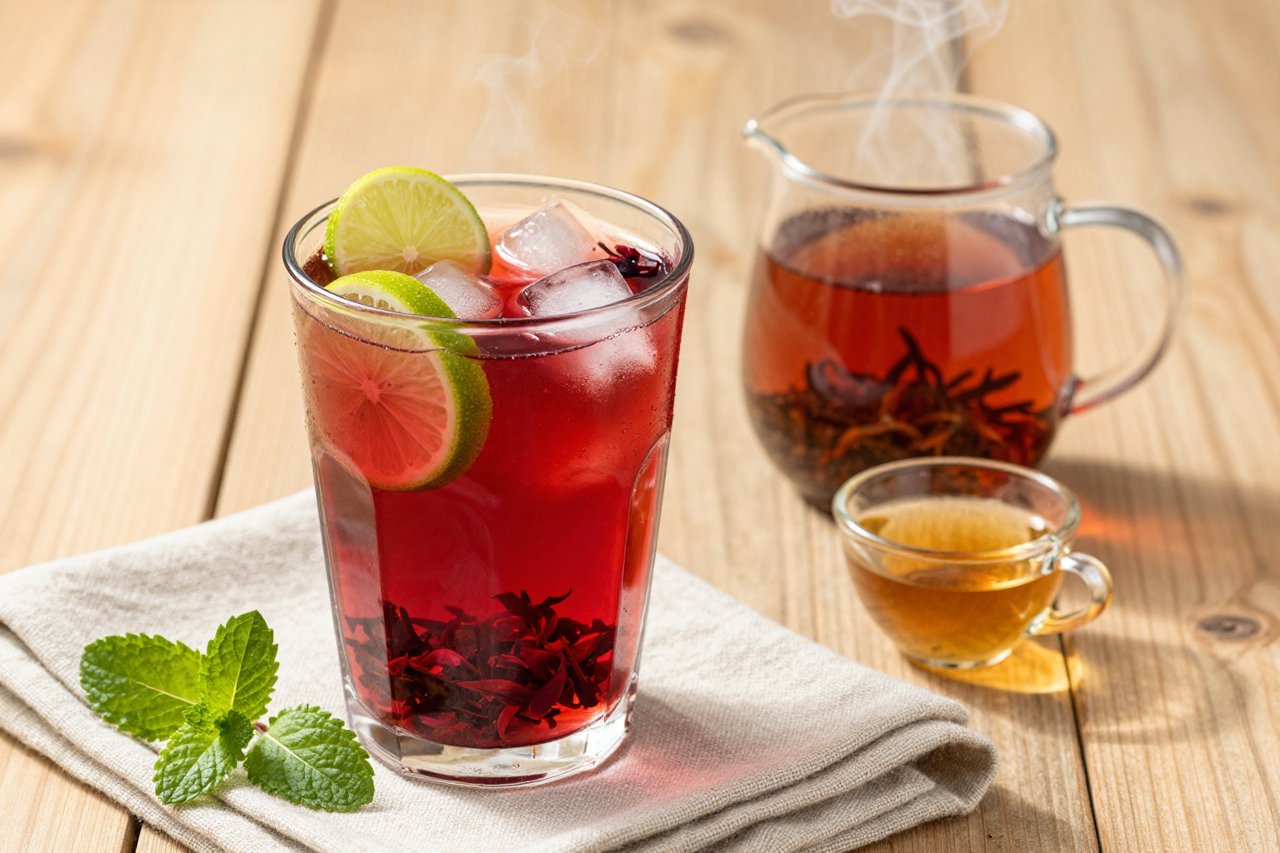
- Cold-brewed hibiscus: Use 1/2 cup dried hibiscus per quart of cold water. Steep 8 hours, strain, and dilute with water or apple juice. It is tart, ruby-red, and caffeine-free.
- Barley tea on ice: Toast 1/2 cup pearl barley in a dry pan until it smells nutty, then simmer in 2 quarts water for 20 minutes. Chill and strain.
- Tart cherry juice: Strong and sweet, so cut it 1-to-3 with water or sparkling water. A 4-ounce splash is enough.
- Coconut water: Naturally caffeine-free, with electrolytes. Look for unsweetened cartons rather than flavored blends with added sugar.
- Milk and kefir: Plain milk, kefir, and unsweetened yogurt drinks contain no caffeine. Blend kefir with frozen berries for a fast afternoon drink.
Soda, juice and energy drinks: read the label
Not every fizzy drink is caffeine-free. Cola almost always contains caffeine, and so do many ‘energy’ sodas, some root beers, and certain fortified waters. Ginger ale, lemon-lime soda, tonic water, and most sparkling waters are caffeine-free. They can still be loaded with sugar, so treat them as occasional drinks rather than a daily habit.
Juice is caffeine-free unless it is a blend with tea or guarana. Hot chocolate and chocolate milk contain small amounts of caffeine from cocoa, so they are not zero either. If you are sensitive, keep an eye on serving size. A large chocolate shake can add up.
Hidden caffeine hides in more places than coffee
Supplements and packaged foods are the usual culprits. Watch for these ingredients on labels:
- Guarana and yerba mate, common in energy drinks and ‘natural’ focus shots.
- Green tea extract, matcha, and black tea powder, often added to smoothies and protein blends.
- Kola nut, used in some colas and flavored sodas.
- Caffeine itself, sometimes listed in pain relievers and weight-loss supplements.
Some ‘decaf’ teas are decaffeinated with a chemical process that leaves trace amounts. If you need zero caffeine for medical reasons, choose herbal infusions and plain water instead.
Ordering caffeine-free drinks without an inquisition
At a café, ‘decaf’ is not the same as caffeine-free. Ask for a herbal tea or a steamed milk drink with no coffee or tea base. If you want a flavored drink, ask what the syrup contains; some seasonal syrups include tea concentrates. At a bar, soda water with lime, ginger ale, tonic water, and non-alcoholic beer are usually safe. Check non-alcoholic spirits, since some are made with tea or guarana.
Coffee shops can blend a caffeine-free mocha with roasted chicory and steamed milk. It will not taste exactly like espresso, but it will have body. Ask for it without chocolate syrup if you are avoiding even trace caffeine.
A caffeine-free drink shelf that actually gets used
Keep three things on hand: one hot brew you love, one cold drink that feels refreshing, and one treat for evenings. A tin of rooibos, a bottle of cold-brewed hibiscus, and a small carton of tart cherry juice cover most moods.
Brew stronger than you think. Herbal teas often taste thin because they are steeped for 2 minutes when they need 6 to 8. Use boiling water for rooibos, ginger, and hibiscus; use slightly cooler water for peppermint if you want less bitterness. Make a quart of cold brew on Sunday and strain it before the week starts. That one habit removes the 9 p.m. temptation to grab a soda.
Finally, do not try to replace coffee with a sad imitation. Choose drinks that taste good on their own terms. A cold glass of toasted barley tea or a mug of rooibos with milk is not a compromise. It is just a different drink, and often a better one for the hour.


