
Table of Contents
Ask ten venture capitalists to define deep tech and you’ll get ten slightly different answers, but almost all of them circle the same idea: a company whose main advantage comes from a scientific or engineering breakthrough that takes years, not months, to turn into something people can buy. The prototype usually lives in a basement lab before it ever meets a customer.
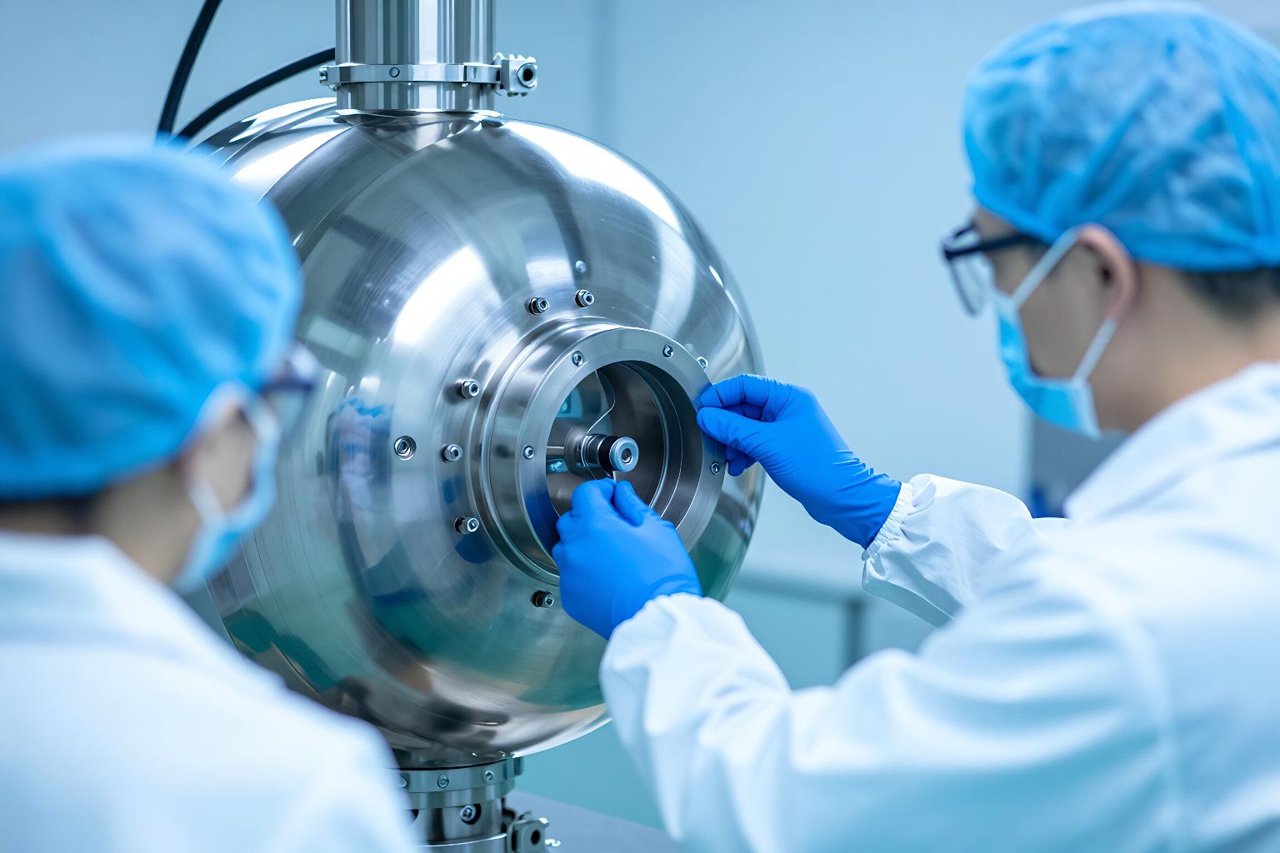
Picture a team of 40 physicists and materials scientists trying to make a battery that doesn’t catch fire, or a startup growing synthetic proteins in stainless steel tanks. That is a different animal from a startup shipping a mobile app in a weekend. Both can be excellent businesses. Only one of them is deep tech.
What Deep Tech Actually Means
The label covers companies rooted in fundamental research: novel physics, new materials, engineered biology, advanced manufacturing. The technology isn’t a feature bolted onto a product, it is the product. Commercial timelines typically run five to fifteen years, and the money required before the first real revenue can hit nine figures.
A few markers show up again and again:

- Research at the core. The founding team often includes academics, and the earliest proof usually appears in a peer-reviewed paper or a patent filing.
- Long development cycles. Instead of quarterly releases, you get milestones: first working prototype, first pilot line, first certification.
- Capital intensity. Cleanrooms, reactors, test rigs and fabrication equipment eat cash in a way that a cloud bill never will.
- Atoms, not just bits. Most deep tech eventually has to make a physical thing, at a yield and a cost that a factory can live with.
- Defensibility through knowledge. Years of tacit know-how sit with the team, and that is far harder to copy than a user interface.
Deep Tech Versus Ordinary Software
Software businesses, even technically demanding ones, follow a different logic. A team choosing Spring Boot for a new backend service can have something running in production within weeks and iterate from there. The risk is commercial, not scientific. Deep tech inverts that: the market need is often obvious, while whether the physics or the biology will cooperate at scale remains genuinely unknown for years.
The Fields That Usually Count
The boundaries are fuzzy, but most of the sector clusters into a handful of areas: quantum computing and sensing, semiconductors and chip design tools, biotechnology and synthetic biology, medical devices, advanced materials, energy and climate technology, space hardware, robotics, and frontier artificial intelligence. Some funds also count photonics, fusion and agricultural technology.
Healthcare offers some of the clearest examples because the timelines are visible. Cardiac ablation catheters used in atrial fibrillation treatment took decades of engineering, animal studies and regulatory trials before a cardiologist could use one safely. The same pattern appears in medical aesthetics, where precision and safety in dermatological procedures depend on laser physics and a deep understanding of how tissue absorbs light. Neither product could have been shipped by a small team with a clever idea and a cloud account.
Why Deep Tech Matters
Three reasons, and they’re worth separating.
1. It addresses problems that software cannot touch
Decarbonising cement, curing a genetic disease, feeding ten billion people, computing past the limits of silicon. None of these yield to a better dashboard. They need new chemistry, new machines, new biology. If a problem has resisted fifty years of smart people writing code, it usually needs a lab.
2. The spillovers are enormous
GPS, the mRNA vaccine platform, lithium-ion batteries, the touchscreen, voice recognition. All of them began as publicly funded or deep-pocketed research programs with no obvious commercial path, then quietly became the foundation of trillion-dollar industries. Returns from early-stage science are hard to measure precisely, which is exactly why they’re so often undervalued.
3. It has become a question of national capability
Semiconductors, rare earth processing, advanced batteries and biomanufacturing capacity now sit at the centre of trade policy. Export controls on chipmaking tools and the fight over critical minerals are not abstract economics. Look at how corporate exposure to a single market shapes diplomacy, for instance the debate over how Tesla’s China business might influence US foreign policy, and you can see why governments now treat deep tech capacity as strategic infrastructure rather than a private sector concern.
Why It’s So Brutally Hard to Build
The failure mode is well documented. Between a promising lab result and a manufacturable product lies what investors call the valley of death, and it usually takes seven to twelve years to cross. A demonstration that works once, by hand, at a cost of $50,000 per unit, has to become something produced a million times a year at $8. That gap demands pilot plants, certification, supply chain engineering and a team that combines PhD-level scientists with people who have actually run a factory floor.
Talent is the other bottleneck. A quantum startup in Delft and a battery firm in Michigan are competing for a small pool of specialists, and the best ones often prefer a university chair or an established conglomerate to a company with eighteen months of runway. Hardware also breaks in ways simulations don’t predict, which means timelines slip and budgets balloon in ways software founders find genuinely shocking.
How to Spot Real Deep Tech From a Pitch Deck
Not every company calling itself deep tech deserves the label, and the term has become a marketing badge. A handful of questions separate the serious from the cosmetic.
- Is there a peer-reviewed result, a granted patent, or an independent lab that has reproduced the claim?
- What is the current yield, efficiency or purity, and how far is that from commercial viability?
- Does the team include someone who has built this class of product before, not just studied it?
- Who owns the underlying intellectual property, the company or a university licensing office?
- What does the cost curve look like at volume, and who has agreed to buy the first thousand units?
Vague answers aren’t automatically fatal. Early-stage science is uncertain by design. But a company that can’t name its key technical risk is usually selling a story rather than a breakthrough.
The Areas Worth Watching Next
Several fields are moving from lab curiosity toward industrial reality right now. Sodium-ion and iron-air batteries are chasing cheaper storage. Photonic chips promise to move data with light instead of electrons. Cell-free biomanufacturing could make proteins without fermentation tanks. Precision fermentation is already producing dairy proteins and enzymes at commercial scale, and heat pump and grid software companies are absorbing enormous amounts of capital.
The useful signal to follow isn’t the press release announcing a breakthrough. It’s the pilot plant that gets built, the certification that gets granted, the first commercial order that gets signed. Watch cost curves and factory floors, and you’ll know within a couple of years which of these technologies is genuinely arriving and which is still a very good poster.


