
Table of Contents
You wake up, tap your phone, and see a sleep score of 74. A ring says you got 6 hours 12 minutes. Your watch says 6 hours 38. Neither device was in the room with a brainwave sensor, so what exactly are they measuring? Common sleep tracking devices have become small, comfortable, and surprisingly good at spotting broad patterns. They are also sold with confident numbers that can be mistaken for medical evidence. Here is a practical guide to what they do well, where they stumble, and how to choose one without turning bedtime into a test.
What these devices actually measure
Most trackers combine a few ordinary sensors. An accelerometer detects movement. A green LED and photodiode measure heart rate through the skin, usually called PPG. Some add heart-rate variability, skin temperature, blood oxygen, or a microphone. Bedside units may use radar. Under-mattress pads use pressure sensors. None of that is the same as an EEG electrode glued to your scalp.
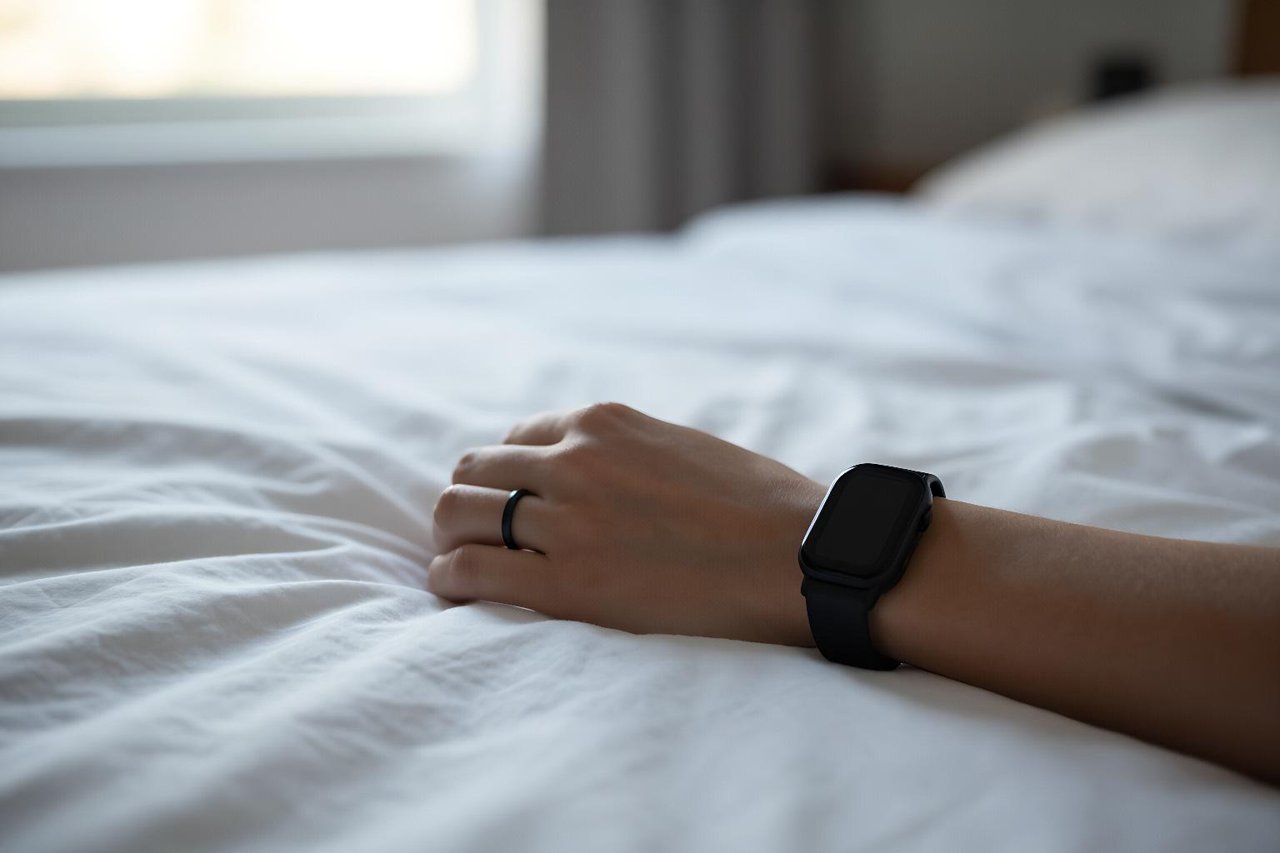
- Wrist wearables. Watches and bands from Apple, Fitbit, Garmin, and Samsung are the most common option. They pack motion and heart-rate sensors into something you already wear. Battery life is often one to two days, and the screen can light up at 2 a.m.
- Smart rings. Oura, Ultrahuman, and RingConn put similar sensors on your finger. Rings are quiet and screenless, but sizing matters and battery life is usually four to seven days.
- Under-mattress sensors. Pads from Withings and others detect pressure, movement, and sometimes breathing. You never charge them, though a partner’s movement can blur the readings.
- Contactless bedside units. Radar-based devices sit on a nightstand and sense motion and breathing without touching you. Placement is fussy, and a ceiling fan or pet can confuse them.
- Phone apps. These use the microphone and accelerometer. They are cheap and rough, good for spotting loud snoring, not for staging sleep.
The big gap is sleep staging. A lab sleep study, or polysomnography, records brainwaves, eye movements, muscle tone, airflow, and oxygen. It can tell the difference between REM sleep and quiet wakefulness with reasonable confidence. A consumer device infers sleep from stillness, heart rate, breathing, and temperature. That works well enough for total sleep time on many nights. It is much shakier at labeling one 20-minute block as deep sleep rather than light sleep.
Where the numbers get fuzzy
Sleep stages are educated guesses
Independent testing has generally found that wearables estimate total sleep time better than they classify stages. Light sleep, deep sleep, and REM are the hardest labels. If your ring says 1 hour 42 minutes of deep sleep, treat that as a pattern, not a measurement. Two devices can disagree by 40 minutes and both be plausible.

A sleep score is a private formula
One company’s 80 is another’s 65. Scores blend duration, timing, restlessness, heart rate, and sometimes temperature. The weights are proprietary and can change with a software update. A score is a motivational nudge, not a clinical result.
Stillness can look like sleep
If you wake at 3 a.m. and lie still, a motion-based tracker may record you as asleep. If you read in bed without moving, the same thing can happen. Restless legs, a partner shifting, or a cat on the duvet can push the numbers the other way. This is why a tracker can report seven hours when you feel like you slept for five.
Comfort, battery, and the seven-night test
The best tracker is the one you will actually wear six or seven nights a week. A ring that feels tight by morning, a watch strap that irritates your skin, or a bedside unit that needs recharging every third day will end up in a drawer. Check the return policy before you commit. Ring sizing kits are worth the extra week.
Think about the boring details. Does the alarm vibrate or play a sound? Will it wake your partner? Can you snooze it without opening a bright screen? Does the app require a monthly subscription for history or coaching? A $300 ring with a $6 monthly fee costs $372 in the first year. Under-mattress pads avoid charging but may not work on an adjustable bed or a very thick mattress.
What to do with the data without obsessing
Treat the nightly number like weather. One bad night means little. A seven-night rolling average is more useful. Pick one variable to test for two weeks: a consistent lights-out time, no caffeine after 2 p.m., or a cooler bedroom. Then look at the trend, not a single Tuesday.
You do not need to rebuild your evening. How to make healthier choices without changing everything applies well to sleep: swap one thing, keep the rest steady, and give it time to show up. A 20-minute earlier wind-down is easier to sustain than a rigid 9 p.m. bedtime.
Sleep also sits inside a wider picture. The same caution applies to smart scales as a way to measure health. A number can reveal a trend without explaining it. Ask what decision the data will change before you buy another sensor.
Privacy, subscriptions, and the fine print
Sleep and heart-rate data can reveal stress, illness, pregnancy, alcohol use, and changes in mental health. That makes it more sensitive than a step count. Before you buy, check whether you can export your data, delete it, and use the device without an account. Look for a plain-language privacy policy and a clear statement about third-party sharing.
Match the device to your actual problem
Start with the question you want answered. “Am I getting enough sleep?” is different from “Why am I exhausted at noon?” and different again from “Do I stop breathing at night?”
If you want a gentle nudge
A basic band or phone app is enough. You need a consistent bedtime reminder and a rough sense of sleep duration, not four decimal places of REM.
If you suspect sleep apnea or chronic insomnia
Consumer trackers are not diagnostic. Loud snoring, gasping, morning headaches, and daytime sleepiness deserve a doctor’s visit. A home sleep apnea test or an overnight study measures airflow and oxygen, which a ring cannot do reliably. For insomnia, cognitive behavioral therapy for insomnia is the first-line treatment; a tracker can sometimes make the anxiety worse.
If you share a bed or dislike wristbands
A ring or under-mattress pad may fit better. If your partner is a light sleeper, choose a silent vibrating alarm and skip the bedside device that beeps. Sleep is not one lever. Five approaches to staying healthy, compared by who each one suits makes the same point about health habits: the best system is the one that fits your actual life, not the most elaborate one.
A two-week trial that tells you more than the score
Before you keep a tracker, run a simple test. It will tell you more than any launch review.
- Choose one question, such as “Does a 10:30 p.m. lights-out improve how I feel?”
- Wear or use the device for 14 nights, including weekends.
- Each morning, rate your energy from 1 to 5 before you look at the score.
- At the end, compare your notes with the device’s trend line.
- If the data has not changed a single decision, return the device if you can.
A sleep tracker is a mirror, not a coach. It is useful when it helps you notice that late meals push your sleep later, or that a warm room wakes you at 3 a.m. It is less useful when it becomes another inbox to clear before bed. Keep the device that answers your question and ignore the rest of the numbers. If the readings never change what you do, an expensive sleep score is just a very quiet alarm clock.


