
Table of Contents
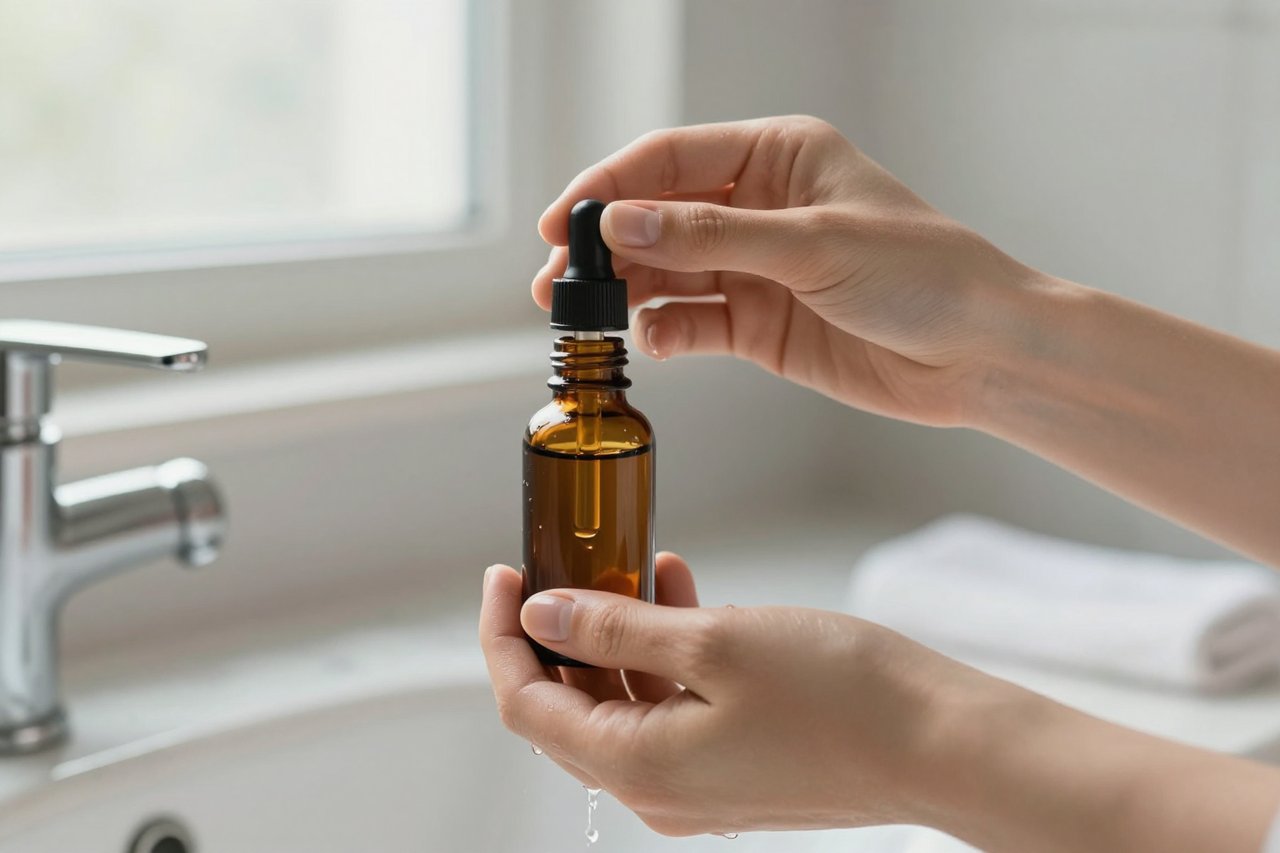
There is probably a small amber bottle on your bathroom shelf doing nothing. It was bought with good intentions, used for four days, then nudged behind the moisturiser and forgotten. Vitamin C is one of the most studied ingredients in skincare and also one of the most abandoned, usually because nobody explained where it goes in the routine or what it is actually supposed to do.
That is a waste, because vitamin C has a specific, useful job in an anti-aging routine. It does that job well when it is placed correctly, and poorly when it is squeezed in at random.
What Vitamin C Does for Aging Skin
Your skin cannot manufacture vitamin C on its own. The ingredient concentrates in the dermis, where collagen is built, and acts as a cofactor for two enzymes that stabilise collagen molecules. When levels drop, collagen production becomes sloppy and slower. That is part of why scurvy skin tears and bruises so easily.
Applied topically, the research points to three effects worth caring about:

- Antioxidant defence. UV exposure and pollution generate free radicals that break down collagen and switch on pigment production. Vitamin C neutralises them before they cause damage.
- Collagen support. Studies using concentrations of 5% and above show measurable increases in collagen synthesis in skin.
- Brightening. It interferes with tyrosinase, the enzyme behind melanin production, which is why sun spots and post-acne marks fade over weeks rather than days.
What it will not do is replace sunscreen or retinol. Think of it as a supporting player that makes everything else in the routine work a little better.
Morning Is Usually the Right Slot
Sunscreen blocks most UV, but not all of it. Vitamin C catches some of what gets through, and studies show that layering it under SPF reduces markers of sun damage more than sunscreen alone. It oxidises while doing this job, which is a good argument for applying it in the morning and letting it be used up protecting you.
Evening use is not wrong. If your skin tolerates vitamin C better at night, or you save your mornings for something else, swap it around. The ingredient does not know what time it is, and consistency matters far more than timing.
Application Order: Thin Before Thick
Cleanse, pat dry, then apply vitamin C to bare skin. Give it thirty to sixty seconds to settle before the next layer. Follow with moisturiser, then sunscreen if it is morning.
This matters because a water-based serum cannot penetrate a rich cream sitting on top of it. If you are layering several products, the general rule is thinnest texture first, heaviest last, with sunscreen always at the end. If your routine has grown into a seven-step puzzle you no longer enjoy, it is worth trimming it back to something repeatable, and these practical ways to build a simple skincare routine you will stick to are a good place to start.
Choosing a Formula That Works
L-ascorbic acid carries the strongest evidence, and it is also the least stable form. It needs a low pH, below about 3.5, and a concentration between 8% and 20% to penetrate well. Going above 20% buys you irritation, not better results.
When you are reading labels, these are the details that separate a formula worth the money from a pretty bottle:
- L-ascorbic acid listed near the top, ideally between 10% and 15%
- An opaque or dark pump or dropper, since light and air destroy the ingredient
- A supporting antioxidant such as vitamin E or ferulic acid, which slows oxidation
- A batch date or a realistic use-up window of about three months after opening
Colour is your best at-home test. A pale straw serum is fine. Once it turns deep orange or brown, it has oxidised and is no longer doing much beyond smelling sharp. Storing it in a drawer rather than on a sunny windowsill extends its life noticeably.
What About the Gentler Derivatives?
Sodium ascorbyl phosphate, magnesium ascorbyl phosphate and tetrahexyldecyl ascorbate are more stable and less irritating, but the evidence for them is thinner and results tend to arrive more slowly. They are a reasonable entry point for reactive skin. If you want a closer look at how these formats compare, this guide to vitamin C serum for skin breaks down the strengths and trade-offs.
Pairing Vitamin C With Other Actives
Retinol
These two work well together as long as they are separated. Vitamin C in the morning, retinol at night. Both are irritating in their own way, and stacking them in the same layer is a reliable route to redness and flaking. Split them and you get the antioxidant protection during the day plus the cell turnover overnight.
Niacinamide
The old warning that these two cancel each other out came from a study using high heat and unstable conditions that do not resemble a real serum. Modern formulations sit together fine. If you enjoy both, layer them without worry.
Exfoliating Acids and Benzoyl Peroxide
Here you do need to be careful. Glycolic and salicylic acids lower the pH and can make vitamin C sting, so alternate days rather than layering. Benzoyl peroxide oxidises vitamin C on contact, so use one in the morning and the other at night, never in the same step.
If Your Skin Runs Sensitive
Reactive skin does not have to skip vitamin C, it just needs a slower entrance. Start with 5% to 10% three times a week, applied after a light moisturiser rather than on bare skin, which buffers the sting without blocking much benefit. Build up over four to six weeks. If you are still flushing, a derivative is the better bet than pushing through.
It helps to keep the rest of the routine quiet while you adjust, so the culprit is easy to identify. These sensitive skin products and routine tips cover what to use alongside it without adding fuel.
What to Realistically Expect
Brightness and a more even tone show up first, usually somewhere between four and eight weeks of daily use. Dark spots take longer, closer to eight to twelve weeks, because you are waiting on pigment to move up and shed. Fine lines are the slowest of all. Expect six months of consistent use before you can judge anything meaningful, and take a photo in the same light on day one so you have something honest to compare against.
If you are still assembling the rest of your lineup, it helps to know which actives are pulling their weight. This breakdown of the top anti-aging skincare ingredients and how to use them covers the ones that pair well with vitamin C and the ones that fight it.
One last practical note: apply it to your neck and the backs of your hands too. They age on the same schedule as your face and most people neglect them entirely. Two extra drops cost almost nothing and the difference after a year is visible.


