
Table of Contents
[ad_1]
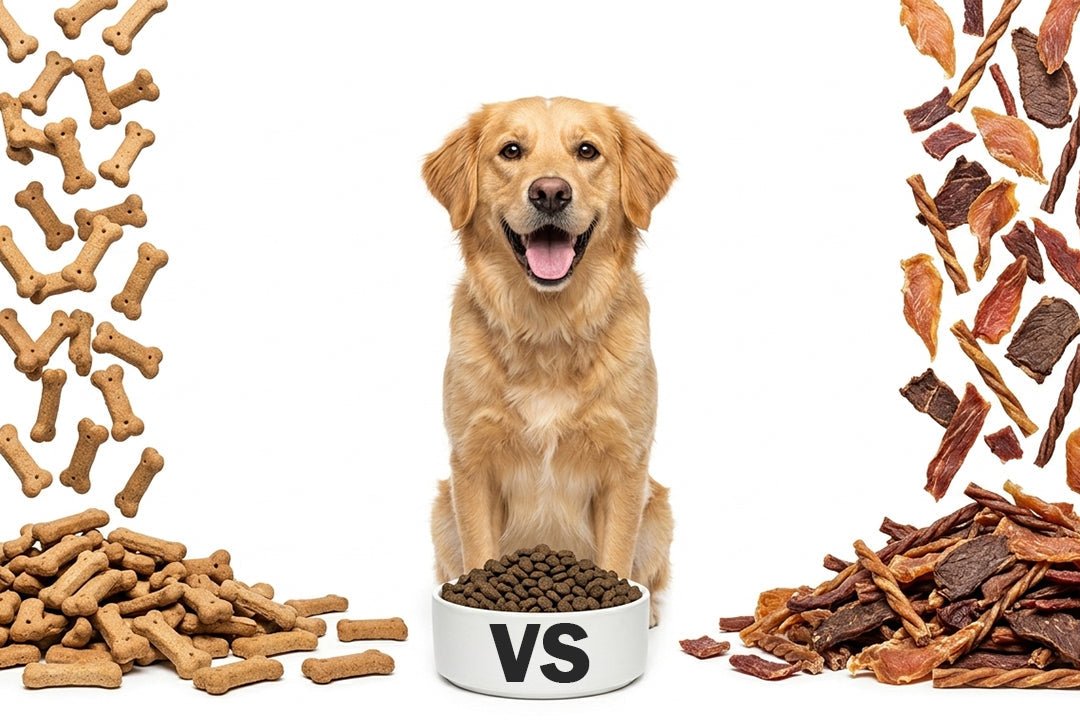
Every Indian dog parent has faced this aisle dilemma. On one shelf sit the familiar, crunchy dog biscuits. On the other, packets of dog jerky promise a more natural, protein-rich option. Both claim to be the perfect treat, but your dog only needs one thing: the right one for their age, health, and training needs.
This guide breaks down biscuits and jerky honestly. You will learn how they differ in ingredients, calories, protein content, and shelf life. You will also find out which one suits daily training, which one works for picky eaters, and which holds up better in India’s humid climate. By the end, you will know exactly when to reach for each.
Quick Verdict
For most dogs, a mix of both works best. Biscuits are useful as everyday, low-calorie rewards and for training repetition. Jerky is better as a high-value reward, a protein boost, or a treat for fussy eaters. If you have to pick one, jerky wins on nutrition and palatability. Biscuits win on affordability, shelf life, and everyday convenience.
What Are Dog Biscuits?
Dog biscuits are baked treats made from flours, grains, fats, and sometimes added meat, milk, or vegetables. They are hard, crunchy, and long lasting on the shelf. Most Indian brands sell them in bone or bar shapes, with flavours like chicken, mutton, milk, and multigrain.
Pros:
-
Affordable, with many options available at budget-friendly price points
-
Long shelf life, which matters in humid Indian conditions
-
Crunchy texture that helps scrape mild plaque off teeth
-
Easy to portion for training sessions with small dogs
-
Wide variety of sizes, from tiny puppy biscuits to large breed bars
Cons:
-
Often high in refined flour, sugar, or hidden additives
-
Lower in real protein compared to meat-based treats
-
Some commercial biscuits contain salt, artificial colours, or preservatives
-
Not suitable as a meal substitute or a real nutrition booster
Look for biscuits that list real meat or a single flour like oats or ragi as the first ingredient. Avoid anything with added sugar, caramel colour, or chemical names you cannot pronounce.
What Is Dog Jerky?
Dog jerky is thin strips of slowly dried meat, usually chicken, mutton, fish, or liver. The drying process removes moisture and concentrates flavour, making jerky intensely appealing to dogs. Quality jerky contains a single ingredient: real meat, and nothing else.
Pros:
-
High in real protein, often between 40 and 60 percent
-
Usually single-ingredient, making it great for dogs with allergies
-
Strong smell and taste make it a top high-value training treat
-
Naturally grain free, suitable for grain-sensitive dogs
-
Low in carbs and free from refined flour
Cons:
-
More expensive than biscuits per kilogram
-
Shorter shelf life once opened, especially in humid weather
-
Some imported or bulk jerky contains added salt or glycerine
-
Rich jerky in large quantities can upset sensitive stomachs
Always check the label for sodium content, preservatives, and country of origin. Jerky made from human-grade meat, with no added salt or sugar, is the safest choice for daily rewarding.
Head to Head: Biscuits vs Jerky
Nutrition: Jerky wins here. It provides concentrated animal protein with little filler. Biscuits contain more carbohydrates and often less actual meat.
Protein and calories: According to the American Kennel Club, adult dogs need high-quality animal protein as a core part of their diet. Jerky delivers that in every bite, while most biscuits rely on grain fillers.
Training value: Jerky is the high-value option dogs work harder for. Biscuits work better for repetitive training where dozens of small rewards are needed during a single session.
Shelf life and storage: Biscuits win for Indian homes. They stay fresh longer, especially during monsoon. Opened jerky needs airtight containers and should be finished within a few weeks.
Dental benefits: Biscuits give a mild plaque scrape. Jerky does not help much with dental cleaning, but soft tissue chews serve that role better anyway.
Price: Biscuits are significantly more affordable. Jerky costs two to three times more per kilogram.
Allergies: Jerky is safer for dogs with grain or wheat allergies. Wheat-based biscuits can trigger flare-ups in sensitive dogs.
When to Pick Biscuits vs Jerky
Choose biscuits when:
-
You need affordable daily rewards for routine use
-
You are training a puppy with many short sessions
-
Your dog needs a low-calorie crunch between meals
-
You want something that will not spoil quickly in the heat
Choose jerky when:
-
You are working on tough behaviours like recall or leave-it
-
Your dog is a picky eater who ignores regular kibble
-
Your dog has grain or gluten sensitivities
-
Your dog needs a post-walk protein boost
-
You want a clean, single-ingredient reward
A practical approach for most Indian pet parents: use biscuits as everyday rewards and keep jerky for big wins. This balances cost, nutrition, and training value, and your dog stays motivated because the good stuff never feels routine.
Storing Treats in Indian Weather
India’s climate is not kind to dog treats. Monsoon moisture softens biscuits and spoils jerky within weeks. Summer heat melts fat-rich treats, and winter dampness in hill stations can cause mould.
Practical storage tips:
-
Transfer treats to airtight glass or food-grade plastic jars as soon as you open the pack
-
Store jerky in the refrigerator during monsoon, especially in cities like Mumbai, Chennai, or Goa
-
Keep a few silica gel sachets inside biscuit tins to absorb humidity
-
Buy smaller packs more often instead of one large pack
-
Discard any treat that changes smell, colour, or texture
Fresh treats are safer and tastier. A good rule to live by: if you would not eat it, your dog should not either.
Treats to Avoid
Some treats marketed for dogs are not actually safe. Skip the following:
-
Biscuits with added sugar, chocolate, raisins, or xylitol
-
Jerky with high salt content, artificial smoke flavour, or propylene glycol
-
Unknown imported brands without clear ingredient lists
-
Anything that smells rancid or looks oily
-
Human biscuits like Marie, glucose, or cream biscuits
Human biscuits contain sugar, refined flour, and sometimes milk solids that upset dog digestion. According to the ASPCA, ingredients like xylitol, chocolate, and raisins are toxic to dogs. Always stick to dog-specific treats from trusted brands.
FAQs
Are biscuits good for dogs every day?
Yes, in moderation. Good quality dog biscuits can be given daily, but they should not exceed 10 percent of your dog’s total calorie intake. Pick biscuits with real meat, low sugar, and no artificial colours. For small dogs, two to three biscuits a day is usually enough.
Is jerky safe for puppies?
Pure, single-ingredient jerky made from chicken or mutton is safe for puppies older than four months. Avoid jerky with added salt, seasoning, or smoke flavouring. Cut jerky into small pieces to match their jaw size, and always supervise the first few sessions.
Can I give my dog jerky during training?
Yes, jerky is one of the best high-value training treats for dogs. Its strong smell grabs attention and keeps dogs motivated through difficult commands. Break it into pea-sized pieces so you do not overfeed during longer sessions.
Which is better for weight control, biscuits or jerky?
Jerky is generally better for weight control because it is high in protein and low in refined carbohydrates. However, it is calorie dense, so portion control matters. For overweight dogs, small jerky pieces work better than low-quality biscuits loaded with flour and fat.
Are homemade biscuits and jerky better than store bought?
Homemade treats can be excellent because you control every ingredient. Bake biscuits using oats, ragi, and plain chicken. Make jerky by slow drying lean meat in an oven or dehydrator with no added salt. Store-bought treats are perfectly fine when they come from trusted brands with clean labels.
Final Thoughts
Biscuits and jerky both have a place in your dog’s life. The right choice depends on the moment, not on the label. Use biscuits for everyday rewards and light training. Save jerky for high-value moments, picky appetites, and dogs needing more protein. Read labels carefully, store treats properly in Indian humidity, and rotate flavours to keep your dog interested.
Browse PetsWorld’s dog treats and chews collection to compare quality biscuits and jerky options that suit your pet’s age, size, and taste preferences.
[ad_2]
Source link


