
Table of Contents
[ad_1]
I evaluated over 20 platforms to find the best security compliance software, including Vanta, Sprinto, Drata, Secureframe, JumpCloud, Scrut Automation, Thoropass, and Scytale.
Security compliance rarely stays simple for long. As companies grow, so do the frameworks, audits, and security requirements they need to manage.
What starts as preparing for a single certification can quickly turn into collecting evidence from dozens of systems, tracking control ownership across teams, and responding to an endless stream of auditor requests.
During my research, one challenge kept surfacing: maintaining compliance is often harder than achieving it. Teams need a way to stay organized, monitor controls continuously, and prove compliance without relying on spreadsheets or last-minute document hunts.
That’s where security compliance software comes in. The best platforms automate evidence collection, centralize compliance activities, and provide real-time visibility into audit readiness across frameworks like SOC 2, ISO 27001, HIPAA, and GDPR.
To identify the top options, I analyzed G2 Data, reviewed verified customer feedback, and compared how leading platforms help organizations reduce audit fatigue, strengthen compliance processes, and stay prepared year-round.
8 best security compliance software for 2026
- Vanta: Best for automated compliance and continuous monitoring
Helps growing companies stay audit-ready with automated evidence collection, control mapping, and continuous monitoring. - Sprinto: Best for fast-growing SaaS teams preparing for certification
Offers end-to-end automation for compliance readiness, including real-time alerts, policy tracking, and team-wide visibility into audit progress. - Drata: Best for scaling compliance across multiple frameworks
Centralizes compliance workflows, integrates with existing tech stacks, and simplifies managing overlapping frameworks. - Secureframe: Best for policy management and audit collaboration
Provides prebuilt frameworks, customizable policies, and auditor access features that streamline evidence sharing and shorten audit cycles. - JumpCloud: Best for identity management and access compliance
Focuses on secure access and device management, offering directory services, SSO, and compliance alignment through identity-based policies. - Scrut Automation: Best for control mapping and risk management
Unifies compliance, risk, and security data into a single dashboard, helping teams assess control gaps and continuously monitor for issues. - Thoropass: Best for audit readiness and managed compliance support
Combines a compliance automation platform with in-house experts who guide companies through certification and ongoing monitoring. - Scytale: Best for small teams seeking guided compliance support
Simplifies certification processes with guided workflows, prebuilt templates, and integrations for lean security and compliance teams.
*These security compliance tools are top-rated in their category, according to G2’s Summer 2026 Grid Report. I’ve added their standout features for easier comparison. For pricing details, please contact the sales team directly via their official website.
What makes the best security compliance software worth it?
Security compliance isn’t just about passing audits; it’s about proving your company can be trusted. Even the most organized teams can lose track of ownership and evidence across evolving frameworks, such as SOC 2, ISO 27001, and GDPR.
That’s why more organizations are investing in compliance automation. The security compliance software market, valued at $35.37 billion in 2025, is projected to reach $74.12 billion by 2031.
The best security compliance software automates evidence collection, maps overlapping controls, and provides real-time visibility into compliance status. Instead of scrambling before every audit, teams can maintain readiness year-round.
Beyond automation, these tools promote collaboration across security, HR, and legal functions, making compliance a continuous process rather than a one-time event. For growing startups and large enterprises alike, that shift toward always-on compliance is what makes these platforms truly worth it.
How did I find and evaluate the best IT security compliance software?
I started by analyzing G2’s Grid Report for security compliance software, which ranks products based on user satisfaction and market presence. This helped identify tools consistently recognized by real users.
Next, I used AI-assisted analysis of G2 review data to uncover recurring feedback themes. I focused on what users said about automation accuracy, evidence collection speed, framework coverage, and cross-team collaboration. These insights revealed which platforms deliver measurable time savings and reduce audit friction in real-world scenarios.
To validate those findings, I compared review patterns against peer insights and public documentation. This combination of G2 Data and external research made it easier to separate well-marketed tools from those actually improving compliance outcomes.
All product data and screenshots are sourced from G2 listings and publicly available materials.
What I prioritized when evaluating the best compliance software for security audits
I considered the following factors when evaluating the best security compliance software.
- Automation and evidence collection: I prioritized tools that automatically pull evidence from systems like AWS, Azure, Okta, and Google Workspace. This reduces manual work, keeps documentation accurate, and minimizes errors during audits.
- Framework coverage and control mapping: The strongest tools support multiple frameworks, SOC 2, ISO 27001, HIPAA, GDPR, and NIST, and map overlapping controls automatically. This saves teams from duplicating effort and simplifies scaling across regions and industries.
- Continuous monitoring and visibility: Real-time dashboards and automated alerts ensure compliance is maintained throughout the year. I looked for platforms that flag configuration drift, failed controls, and outdated policies before they become audit issues.
- Collaboration and ownership: Compliance involves multiple departments, so I prioritized tools with role-based workflows, audit trails, and task assignments. These features improve accountability and reduce confusion over who owns each control.
- Scalability and usability: The best compliance software grows with your organization. I looked for flexible platforms that handle multiple entities and frameworks without heavy configuration. Easy onboarding, clean interfaces, and smart templates were some other traits I looked at.
The list below contains genuine user reviews from the Security Compliance Software category page. To be included in this category, a solution must:
- Offer pre-mapped and up-to-date templates for security frameworks such as SOC2, ISO 27001, and PCI-DSS, etc.
- Collect security compliance evidence and other documentation either through guided workflow or automation via system integrations
- Conduct risk assessments and provide risk mitigation insights
- Generate reports using predefined templates
*This data was pulled from G2 in 2026. Some reviews may have been edited for clarity.
1. Vanta: Best for automated compliance and continuous monitoring
Vanta is one of the highest-rated tools in the category, earning a satisfaction score of 100 on G2. It’s popular among small businesses (57%) and mid-market teams (42%), reflecting its balance of usability and depth. Vanta helps teams simplify compliance and stay continuously audit-ready with automation at every step.
Automated evidence collection is one of Vanta’s strongest features. The platform connects directly to cloud, identity, and productivity tools to collect and validate evidence automatically. This saves security and compliance teams from spending hours tracking screenshots or following up on evidence requests. Many G2 reviewers highlighted how this automation keeps audits organized and reduces the back-and-forth with auditors.
Another widely appreciated feature is its policy templates. It includes a robust library of prebuilt templates aligned with leading security frameworks. G2 reviewers mentioned how these templates make compliance documentation faster and easier to create. They can also be customized to fit organizational processes while maintaining auditor expectations.
The tool’s framework support stood out, too. The platform supports SOC 2, ISO 27001, HIPAA, and GDPR frameworks, giving teams the flexibility to manage all certifications from a unified control environment. Reviewers praised its ability to map overlapping controls, reducing redundant work between frameworks.
The dashboard earned strong praise for giving teams real-time visibility into their compliance posture. Users described it as clean, intuitive, and rich with actionable insights. It highlights control status, open risks, and progress toward audits in a single view. Reviewers also liked how it visualizes compliance trends, helping teams prioritize remediations proactively. For many, this dashboard became their daily source of truth for tracking compliance progress.
Vanta’s integrations add even more value. The platform connects seamlessly with AWS, GitHub, Jira, Slack, and Google Workspace, allowing evidence and alerts to flow between systems automatically. This connectivity helps reduce silos between security, engineering, and compliance teams. Several reviewers said these integrations cut down meeting time and manual follow-ups, making compliance collaboration smoother across departments.
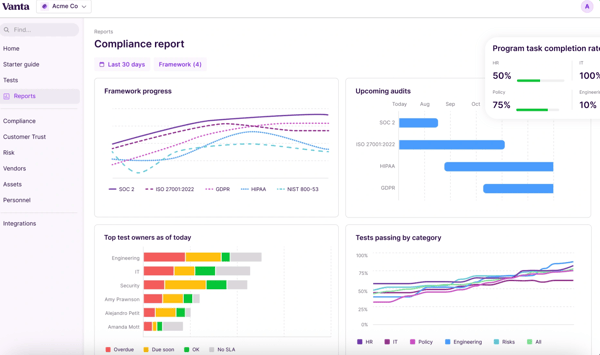
Ease of use is another reason the tool stands out. G2 users consistently described the interface as intuitive, with clean layouts and clear guidance through each compliance step. Even teams new to frameworks found the process manageable through guided workflows. Several reviewers mentioned how quickly they could train others on the platform and maintain compliance without relying on outside experts.
According to G2 reviewers, Vanta’s automation and multi-framework coverage come at a premium price point, making it best suited for growing or scaling organizations. Some small teams mentioned that while the cost initially feels high, the time saved on manual evidence collection quickly offsets it. Reviewers noted that teams managing multiple frameworks gain the most long-term value from the investment. For startups pursuing only one certification, assessing scope before purchase may help align expectations.
G2 reviewers also mentioned that the structured setup ensures audit consistency but offers limited room for customization. The standardized design helps prevent errors and keeps evidence aligned across frameworks, which auditors often prefer. However, some teams expressed interest in adjusting dashboards or workflows to fit internal management styles. Reviewers emphasized that while customization is limited, this trade-off provides predictable, repeatable compliance results. Most agreed that Vanta’s reliability and structure outweigh the need for deeper personalization.
Overall, Vanta helps businesses automate evidence collection, manage multiple frameworks, and stay continuously audit-ready without adding headcount or complexity.
What I like about Vanta:
- Reviews suggest that Vanta’s automation is its biggest strength. It continuously pulls evidence from connected systems, keeping audits organized and reducing manual effort.
- G2 users also highlighted its intuitive dashboard and policy templates, which simplify compliance for teams without dedicated security staff.
What G2 users like about Vanta:
“Vanta’s ability to automate continuous compliance monitoring is a significant operational asset. The platform’s integration with our tech stack allows for real-time evidence collection, which has drastically reduced the manual administrative burden that usually accompanies security audits. I particularly value the centralized dashboard for tracking framework progress; it provides clear visibility into our security posture across SOC 2 and other standards, making it much easier to coordinate internal tasks without relying on fragmented spreadsheets or constant status meetings.”
– Vanta review, Digvijay C.
What I dislike about Vanta:
- G2 reviewers noted that the platform offers a solid range of customization options, although teams seeking deeply tailored dashboards or complex workflow configurations may find room to further expand flexibility.
- G2 users mentioned that the platform’s pricing reflects its advanced automation and support capabilities, though smaller teams may want to assess how its depth of functionality aligns with their specific budget and scale.
What G2 users dislike about Vanta:
“The user access review workflow is tedious — exporting CSVs from each tool, uploading them, and manually matching users is time-consuming, especially for tools without a direct integration. Some integration coverage feels shallow (data syncs but doesn’t always pick up the right evidence), and the UI can be slow to load when navigating between sections. Pricing also scales steeply as you add frameworks.”
– Vanta review, Emilia G.
Related: Find out which audit management tools simplify evidence tracking, automate testing, and strengthen your internal audit process.
2. Sprinto: Best for fast-growing SaaS teams preparing for certification
Sprinto holds a satisfaction score of 98 on G2, second only to Vanta. Most of its users come from small businesses (56%) and mid-market organizations (43%), particularly in software, IT, and financial services.
Across reviews, the most consistent theme was Sprinto’s strength in automated evidence collection. The platform continuously gathers and verifies audit evidence from systems like AWS, Okta, and Google Workspace. G2 reviewers stated that this automation eliminated the need for manual screenshots or repeated follow-ups. Teams appreciated that evidence stayed updated automatically, which meant they were always ready for auditor review.
Reviewers consistently highlighted its framework coverage and control mapping. The platform supports major frameworks with shared controls that can be reused across multiple standards. Reviewers said this overlap saved time and prevented duplication when expanding into new certifications.
The platform’s risk monitoring and issue detection stood out in G2 reviews. Sprinto tracks control health in real time and flags potential gaps before they impact audits. Users said this visibility helped them maintain a continuous security posture rather than scrambling close to audit deadlines. Reviewers noted that these automated alerts enhanced coordination among IT, security, and compliance teams.
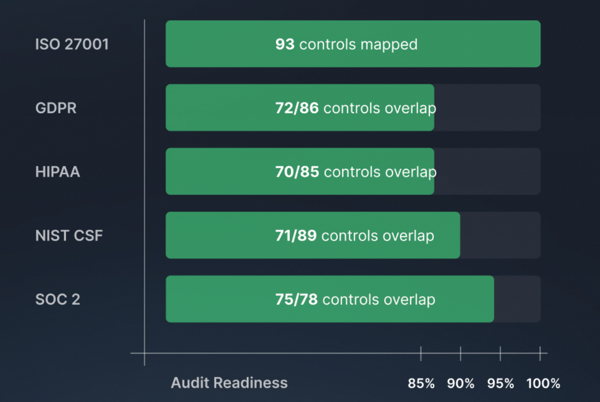
Another strength, frequently noted by reviewers, is Sprinto’s auditor collaboration environment. Auditors can work directly within the platform, reviewing mapped evidence and submitting contextual requests without endless email exchanges. This direct, in-platform communication shortens response cycles and gives compliance teams real-time visibility into audit progress.
Sprinto’s AI-enabled questionnaire module further extends its value. It auto-completes security questionnaires using verified answers from a company’s knowledge base, saving hours of manual work. Teams can upload previous responses, reuse them intelligently, and maintain consistency across RFPs or vendor reviews.
Users consistently praised Sprinto’s customer support for being quick, knowledgeable, and truly committed to their success. Reviewers highlighted that support teams offered both technical and compliance-specific advice, filling gaps for teams lacking in-house experts. Many also noted that their account managers reached out proactively before important audit milestones. The prompt responses and extensive expertise often transformed potentially stressful audits into smoothly managed projects.
Sprinto’s integration coverage focuses on reliability across major systems, which G2 reviewers say makes a strong fit for most teams but slightly restrictive for those with highly customized tech stacks. Some users noted that while integrations with tools like AWS, Okta, and Google Workspace run flawlessly, coverage for niche or regional platforms is relatively limited. Reviewers emphasized that this focus on core systems ensures better data accuracy and fewer sync errors during audits. Teams working in specialized environments may need to handle a few processes manually until broader coverage is added. Still, most agreed that Sprinto’s integration reliability outweighs the narrower scope.
Sprinto’s interface is built for clarity and ease of use, allowing teams to navigate frameworks and tasks without confusion. A few G2 reviewers suggest that refining the visual design could make dashboards feel more modern and dynamic. This feedback points to an opportunity; the foundation is strong, and incremental updates could further elevate user experience. For most teams, the current layout delivers structure and dependability, which remains the platform’s core strength.
All in all, Sprinto is a dependable partner for growing teams that want structure, speed, and confidence in their compliance journey.
What I like about Sprinto:
- Many users found automation to be its biggest advantage. Once set up, it quietly manages evidence collection and control monitoring.
- Reviewers also spoke highly of Sprinto’s customer support and said that they made the audit process far less stressful.
What G2 users like about Sprinto:
“Honestly, what stood out most was how little we had to figure out on our own. Our account manager, Shivang, had everything mapped out, so we always knew what was needed and what was coming next, and nothing fell through the cracks. Compliance work usually comes with a ton of back-and-forth and second-guessing, but this time it just… flowed. It genuinely felt like having someone in our corner who’d done this a hundred times before and made sure we didn’t have to learn the hard way.”
– Sprinto review, Aditya G.
What I dislike about Sprinto:
- G2 reviewers noted that Sprinto’s integrations are optimized for widely used core systems, which makes it a strong fit for standard compliance stacks. Teams using more niche or regional tools saw this as a chance to tailor custom connections, aligning the platform more closely with their unique workflows.
- A few users mention that while Sprinto’s interface is clear and dependable, it could benefit from a more modern visual design. The platform’s structure already works well, and a refreshed look would only enhance the experience that’s otherwise stable and intuitive.
What G2 users dislike about Sprinto:
“There isn’t much to dislike about Sprinto based on our experience. If I had to point out something, it would be that certain parts of the platform feel a bit rigid when you want to customize workflows beyond the standard SOC 2 setup. That said, it didn’t impact us much since their default processes were already well-structured and worked smoothly for our needs.”
– Sprinto review, Paras N.
3. Drata: Best for scaling compliance across multiple frameworks
Drata is designed for teams that want to stay audit-ready without heavy manual oversight. According to G2 Data, 51% of Drata’s users come from small businesses and 47% from mid-market companies, with strong adoption in the software, IT, and financial services industries. Its blend of automation, usability, and proactive monitoring makes it a go-to platform for organizations that take compliance seriously but want to keep the process efficient.
One of the biggest strengths, according to G2 reviewers, is its automated monitoring. The platform continuously checks controls, collects evidence, and validates configurations for frameworks such as SOC 2, ISO 27001, HIPAA, and GDPR. Users said this automation helps maintain continuous compliance without the repetitive, time-consuming manual audits that used to slow them down.
Drata’s integration with key tools was another recurring theme. The platform connects seamlessly with AWS, GitHub, Okta, Google Workspace, Jira, and Slack, syncing data automatically across systems. Users said these integrations simplify workflows by pulling in evidence directly from tools their teams already rely on. Reviewers appreciated that these connections minimize context switching and help maintain data integrity during audits.
The platform’s auditor collaboration and visibility features were also highlighted. Reviewers liked that auditors can log into the platform directly to verify controls and evidence, which removes the back-and-forth of file sharing and email threads. The shared audit environment saves time and ensures clarity during certification reviews. Many users highlighted how this transparency helped strengthen relationships with auditors while cutting audit prep time in half.
Another standout area was its support experience. Users consistently mentioned fast, knowledgeable, and personable customer support. Several G2 users noted that responses were not only fast but also deeply informed, reflecting a genuine understanding of compliance frameworks.
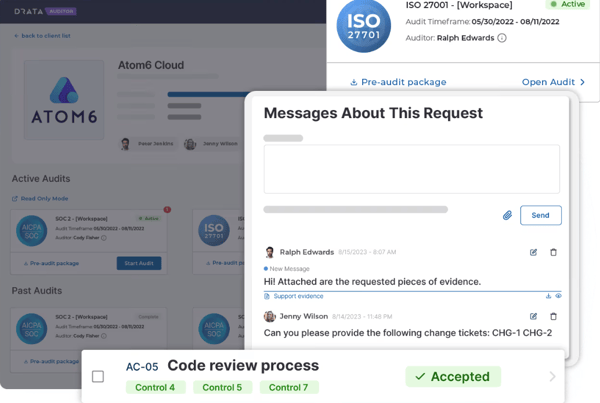
The centralized dashboard was another feature reviewers called out for its clarity and control. It brings all frameworks, controls, and tasks into one unified view, allowing teams to see progress at a glance. For most reviewers, it was the anchor that tied Drata’s automation, integrations, and monitoring capabilities together.
The platform is also widely recognized for being easy to use, even for teams new to compliance automation. Users frequently described its interface as intuitive, clean, and organized. The guided workflows and clear labeling make it simple to assign tasks, track status, and monitor evidence in real time.
Drata’s broad integration coverage offers flexibility and depth but may require additional setup time for teams using niche or legacy systems. While integrations with platforms like AWS, Okta, and Google Workspace were consistently praised for their reliability, some users noted that the initial configuration required extra guidance from the support team. G2 reviewers noted that these challenges typically arose from the tool’s broad coverage and technical depth rather than product limitations. For many, that setup effort was a small trade-off for the long-term benefits of automation and control accuracy.
While its automation features make compliance maintenance seamless in the long term, G2 reviewers mentioned that the transition from manual processes requires some initial adjustment. Teams may need extra time to understand how workflows fit into their existing routines. Reviewers noted that this period is short-lived, and Drata’s guided onboarding, documentation, and proactive support make the process smoother.
If you want to simplify compliance through automation, gain real-time visibility, and maintain readiness across multiple frameworks, Drata stands out as a top choice.
What I like about Drata:
- Drata’s automation and integrations are its strongest combination. Once configured, the platform continues to run evidence collection and control monitoring quietly in the background.
- G2 users consistently praised its support team for being both responsive and knowledgeable, often describing them as partners rather than vendors during audits.
What G2 users like about Drata:
“I use Drata to review and sign off on company policies, ensuring compliance readiness and supporting audit processes by keeping documentation and acknowledgements centralized and traceable. It helps our company stay organized and prepared for audits by providing clear records of policy acceptance and compliance activity. Drata removes the manual overhead of tracking compliance and acknowledgments, storing everything in one centralized system. Specifically, it reduces admin work for me around signing policies, clearly indicates what still needs attention, and prevents missed acknowledgment. It’s straightforward, with clear reminders and required actions to ensure nothing is missed during audits or internal checks. I also appreciate that Drata connects with other platforms, like Microsoft SSO and iHASCO, which greatly reduces the need to manually sync data. Overall, I’m glad we have it.”
– Drata review, Nadeem A.
What I dislike about Drata:
- G2 reviewers mentioned that initial integration setup can take more time for legacy tools or custom environments, though most said the stability afterward makes the effort worthwhile.
- Some G2 users found the early adoption period slightly demanding as teams learned new workflows, but they agreed the long-term automation benefits quickly outweighed the adjustment.
What G2 users dislike about Drata:
“The “tests” for various controls aren’t very intuitive, and at times they feel more arbitrary than helpful. Pricing also seems high relative to the platform’s actual capabilities. During onboarding, the reliability of the tool was oversold, which made it harder to gauge how deep we needed to go with our controls and any supplemental tracking tools. I would have preferred clearer, more practical guidance throughout.”
– Drata review, Emily B.
4. Secureframe: Best for policy management and audit collaboration
Secureframe is a trusted compliance automation platform that makes getting security certifications faster and more manageable. With 96% of reviewers on G2 saying it’s “easy to do business with,” it’s clear that the platform strikes a balance between functionality and simplicity. Most of its users come from small businesses (63%), particularly those in the software, IT, and financial services sectors.
G2 reviewers frequently mentioned Secureframe’s automated evidence collection as one of its strongest advantages. The platform connects with systems like AWS, Google Workspace, and Okta to pull and validate evidence in real time. Users said the continuous verification process ensures compliance gaps are identified early.
Another standout feature is its policy management system. The platform includes a robust library of prebuilt, customizable policies that align with leading frameworks. G2 reviewers appreciated how these templates reduced the time spent creating documents from scratch. Not only that, the tool also has Comply AI for Policies, an AI-powered assistant that helps users revise policies faster by summarizing content, simplifying language, and adjusting tone or structure when needed.
Its control management features are also emphasized for simplifying how teams monitor, assign, and track compliance controls. Reviewers noted that mapping controls across different frameworks minimized duplication and enhanced interdepartmental collaboration. Many noted that Secureframe’s structure allowed them to move from a reactive audit approach to continuous control oversight.
Security awareness training was another highlight in G2 reviews. The platform integrates training modules directly into its platform, helping teams educate employees on compliance and data security best practices. Reviewers said that having training built into the same environment that manages frameworks simplified administration. For organizations seeking to cultivate a culture of compliance, this integration provided a practical and time-saving advantage.
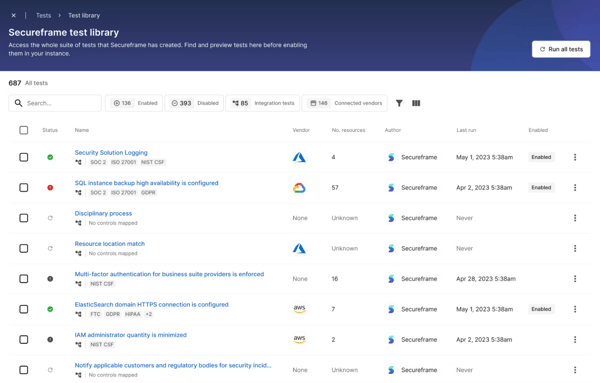
Like other tools in this list, Secureframe also supports multiple frameworks. The platform covers SOC 2, ISO 27001, HIPAA, GDPR, and PCI DSS, allowing teams to manage them all from a single environment. G2 reviewers noted that this flexibility made it easier to scale into new markets or meet industry-specific regulations.
The tool is also valued for its user-friendliness. Users find the interface simple with a low learning curve. Many reported they can easily navigate through frameworks, policies, and dashboards, and they feel the tool makes compliance less daunting.
According to G2 reviewers, Secureframe’s integrations are designed for reliability and audit accuracy. The platform’s focus on stable, pre-validated connections with systems like AWS, Okta, and Google Workspace helps ensure evidence is consistent and audit-ready. Although niche or regional tools may need extra manual setup at the start, once configured, integrations run smoothly.
G2 reviewers noted that the tool’s mobile experience is more limited than its web interface, reflecting its focus on detailed compliance tasks that are better suited for desktop use. Some users mentioned that key tasks, like reviewing dashboards or managing controls, were easier to perform from the main platform. Teams that rely heavily on mobile tools might find this setup restrictive initially, but most agreed that Secureframe’s accuracy on desktops far exceeds the need for mobile parity.
In general, Secureframe is a practical, automation-focused platform offering evidence tracking, guided framework management, and AI-powered policy workflows.
What I like about Secureframe:
- Secureframe’s automation consistently earns praise for keeping evidence collection and control monitoring running in the background with minimal oversight.
- The policy and control management tools, especially the Comply AI for Policies feature, also earned praise. It helps teams edit and refine policy language more efficiently.
What G2 users like about Secureframe:
“I think Secureframe is great. Managing my tasks for outstanding clients is handled well, and I like the integrations with my SaaS and cloud software tools, including cloud architecture and AWS. It sends me reminders when assets are out of the products, which is really handy. The platform integrates everything into one simple place, making it easy to manage tasks seamlessly and assign them to users in my organization. The automated way it provides real-time views of my client’s status with dashboards and integrations is fantastic. The UI and usability are set up great for a fractional CSO like me.”
– Secureframe review, Jon W.
What I dislike about Secureframe:
- G2 reviewers said that while integrations with core systems are stable, teams working with highly customized or regional tools may find setup slightly more hands-on.
- Some G2 users noted that the mobile experience is narrower than the desktop version, though they also said the web platform’s stability and clarity more than make up for it during daily compliance management.
What G2 users dislike about Secureframe:
“I wish there were more integrations, particularly under Training, Vuln Management, and Background checks.”
– Secureframe review, Megan C.
5. JumpCloud: Best for identity management and access compliance
JumpCloud is a cloud-based directory and identity management platform that extends beyond traditional security compliance use cases. While it isn’t a compliance tool by design, it supports IT and security teams in maintaining centralized control over users, devices, and access policies. According to G2 Data, 28% of JumpCloud’s users are from small businesses and 59% from mid-market companies, primarily in IT, computer software, and network security industries, segments where unified access management is essential for compliance readiness.
Reviewers consistently highlight its centralized user and device management. The platform unifies identity, access, and device controls across macOS, Windows, and Linux environments. Users appreciate the ability to manage authentication, enforce security policies, and monitor endpoints through one dashboard. For compliance-driven teams, this consolidation simplifies data access governance and audit preparation.
Another strength is multi-factor authentication and access policy enforcement. G2 feedback notes that administrators can enforce MFA, SSO, and conditional access controls directly through the console. This capability helps companies meet security frameworks that require identity validation, such as SOC 2 and ISO 27001. Reviewers emphasize that these controls strike a balance between security rigor and employee usability.
Users also praise JumpCloud’s cross-platform flexibility, calling it a rare tool that seamlessly manages mixed device ecosystems. For distributed IT teams, the ability to apply consistent policies across operating systems removes one of the biggest friction points in endpoint compliance. Several reviewers mention that patching, password resets, and policy deployment work equally well on Windows and macOS environments.
The integration ecosystem is another major positive. JumpCloud connects easily with Google Workspace, Microsoft 365, Okta, Slack, and various ticketing and endpoint management solutions. G2 reviewers note that these integrations reduce manual provisioning and centralize access logs, which helps streamline internal audits.
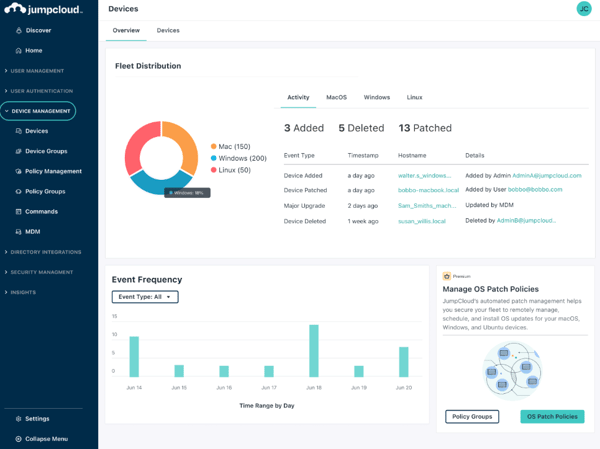
Another aspect users emphasize is ease of use. The admin console is described as straightforward, with clearly labeled sections and an intuitive setup process. Reviewers appreciate how quickly they can deploy security policies, add users, or adjust access rights. This accessibility makes it easier for mid-sized companies to implement and maintain consistent security standards.
The tool earns recognition for its automation capabilities. Reviewers describe automated provisioning, password resets, and device policy enforcement as reliable and scalable. Once configurations are defined, the system applies changes across devices and users automatically, reducing repetitive administrative work. Teams note that this background automation improves compliance consistency and frees IT teams to focus on strategic security planning.
G2 users describe JumpCloud as a powerful enabler for security governance but acknowledge that it lacks native compliance frameworks or evidence-tracking modules. In that sense, the platform is best positioned as part of a broader compliance ecosystem rather than a standalone GRC solution. Teams using JumpCloud for access and device control find it an effective way to satisfy identity-related requirements within security frameworks. For organizations seeking full audit automation, it complements, rather than replaces, dedicated compliance tools.
According to G2 reviewers, JumpCloud’s pricing model is transparent and scalable but benefits from budget planning at higher usage tiers. The per-user structure allows organizations to start small and expand gradually. However, larger environments with extensive endpoint fleets may see costs increase as coverage grows.
Reviewers note that the trade-off is predictable: higher subscription costs result in measurable reductions in manual IT workload and audit preparation time. In practice, most teams view it as an operational investment that scales with organizational maturity rather than an unexpected expense.
JumpCloud ultimately bridges identity management and compliance readiness for IT and security teams who want centralized access control with strong reporting foundations.
What I like about JumpCloud:
- G2 reviewers consistently highlight JumpCloud’s ease of administration, especially its ability to manage diverse endpoints through a single platform.
- I noted frequent mentions of policy and access enforcement tools helping companies align with compliance requirements, such as SOC 2 and ISO 27001.
What G2 users like about JumpCloud:
“Local user management is straightforward, and deployment and removal are both quick. The agent is lightweight and doesn’t use many system resources. Applying Windows policies is also fast and easy, which makes day-to-day administration smoother.”
– JumpCloud review, Paulo L.
What I dislike about JumpCloud:
- G2 reviewers mentioned that JumpCloud delivers the most value when integrated into a broader compliance ecosystem rather than used on its own. Many saw this as an opportunity to connect it with complementary tools, unlocking a more cohesive and scalable compliance framework tailored to their organization’s needs.
- Others mention that pricing requires upfront planning for organizations managing large user or device counts, although they agree that the value holds steady when weighed against the time saved and improved audit readiness.
What G2 users dislike about JumpCloud:
“The billing can be a bit confusing. As a very small business, I sometimes get caught off guard by the high-water mark billing, and it makes it harder to manage a small number of devices while keeping that in mind.”
– JumpCloud review, Peter R.
6. Scrut Automation: Best for control mapping and risk management
Scrut Automation is a unified security compliance platform that helps organizations automate audits, manage multiple frameworks, and maintain continuous readiness. According to G2 Data, it ranks highest for quality of support at 98% and delivers the shortest estimated ROI, in just 5 months, in this list of tools.
G2 reviewers repeatedly cite automation efficiency as Scrut’s defining strength. The platform automatically collects and validates evidence from cloud infrastructure, HR systems, and ticketing tools, ensuring that controls remain continuously updated. Users highlight that automated workflows significantly shorten audit preparation times for SOC 2 and ISO 27001 certifications, with some noting readiness improvements from several weeks down to days.
The comprehensive compliance coverage is another strong factor. It supports over a dozen frameworks, including ISO 27001, NIST AI RMF, and PCI DSS, all mapped within a single control library. This cross-framework mapping lets teams reuse evidence between certifications instead of maintaining separate documentation trails. Reviewers note that this structure simplifies scaling to new frameworks as the business grows.
The platform also excels in training and policy attestation management. G2 reviewers highlight the ability to assign training, track completion, and log attestations without leaving the Scrut dashboard. Built-in awareness modules help security and HR teams maintain proof of compliance with minimal overhead. Several users note that this integrated training workflow helps establish accountability at every employee level, which is particularly valuable during third-party or external audits where proof of policy acknowledgment is required.
Scrut’s visibility and reporting capabilities are another standout area. Dashboards display audit readiness metrics, overdue evidence, pending controls, and ownership breakdowns in real time. This enables compliance leads and executives to identify any holdups early, distribute workloads more evenly, and monitor performance across departments. The result is a single source of truth for audit readiness.
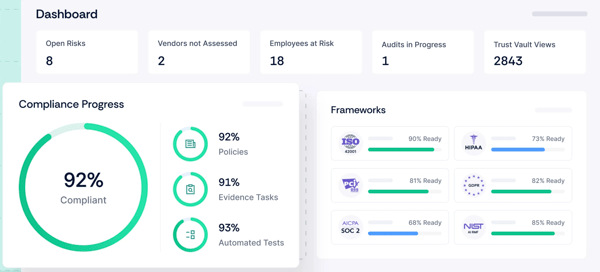
Another consistent theme across G2 Data is the quality of support. Users describe the customer success team as responsive, technically skilled, and proactive about offering tailored guidance. Many reviewers mention that the team’s intervention directly helped them complete audits ahead of schedule or resolve complex control-mapping issues. For smaller teams without dedicated compliance specialists, this level of support translates directly into faster ROI and sustained confidence during audit cycles.
Users acknowledged that Scrut’s interface design has matured considerably over recent updates. G2 reviewers describe the platform as well-organized, with clear navigation between frameworks, risk registers, and reports. Tasks like mapping new controls, reviewing auditor comments, or checking evidence progress are intuitive, even for users with limited prior compliance experience.
G2 reviewers generally find Scrut stable and dependable for everyday compliance tasks. A few note that performance can fluctuate slightly when the platform is processing multiple large audits or heavy evidence uploads. These temporary slowdowns are typically linked to the volume of concurrent automation tasks. Reviewers also emphasize that such instances are short-lived and quickly resolved through support interventions.
The onboarding process is described as methodical and detailed, requiring configuration of frameworks, owners, and integrations before full automation begins. While it may appear time-intensive initially, users recognize it as an intentional setup phase that ensures stability and data accuracy once the system is live. Several G2 reviewers mention that teams completing onboarding with close support achieve smoother automation and fewer manual interventions later.
On the whole, Scrut Automation combines robust automation, broad framework coverage, and one of the strongest customer success records in the category, delivering a measurable ROI.
What I like about Scrut Automation:
- Scrut’s automation engine handles most of the evidence work without needing repeated human input.
- I saw consistent recognition for the support team’s technical competence and response speed, which reviewers say directly influenced their ability to complete audits ahead of schedule.
What G2 users like about Scrut Automation:
“Scrut Automation simplifies compliance and audit workflows through automation and continuous monitoring. The platform is easy to use, integrates well with existing tools, and significantly reduces manual effort during audits. The support team is responsive, and overall it has improved visibility and efficiency in compliance management.”
– Scrut Automation review, Lakshmi R.
What I dislike about Scrut Automation:
- From G2 reviews, some users mention that performance dips slightly during very large audits but remains stable under typical workloads, making it well-suited to standard audit cycles.
- Others find onboarding highly structured at the start, though most agree it’s a short learning phase that unlocks smoother, ongoing compliance management afterward.
What G2 users dislike about Scrut Automation:
“Scrut Automation provides a strong set of features, but there is a noticeable learning curve, especially for users who are new to compliance. Initially, the terminology and controls can feel a bit daunting. It would also be helpful if there were more options to customize specific workflows or reports. However, as you spend more time with the platform and get accustomed to its capabilities, these early difficulties become much less significant.”
– Scrut Automation review, Eric .
7. Thoropass: Best for audit readiness and managed compliance support
Thoropass combines software-driven tracking with hands-on audit expertise to keep progress visible and documentation under control. According to G2 Data, 75% of Thoropass users are small businesses in the software, IT, and financial services sectors.
The platform’s in-house auditors bring rigor and technical depth to every engagement, helping organizations meet frameworks like SOC 1, SOC 2, HITRUST, PCI, and ISO 27001. Reviewers describe the experience as collaborative, with clear expectations, structured timelines, and a balance between speed and quality.
Thoropass automatically maps controls, gathers evidence, and updates readiness dashboards as changes happen across connected systems. G2 users mention that this ongoing visibility helps keep their compliance programs up to date between audits, and they value being able to see compliance health in real time rather than waiting for quarterly evaluations.
The tool also differentiates itself with built-in penetration testing capabilities. Instead of relying on external vendors, users can perform vulnerability assessments and penetration tests directly through the platform. G2 reviewers note that these tests are not based on generic templates, ensuring reports align closely with real-world environments. This all-in-one approach saves time, maintains consistency, and strengthens overall audit preparedness.
The platform’s AI-assisted audit functionality is another widely praised innovation. Thoropass utilizes AI to pre-screen evidence, identify documentation gaps, and minimize manual QA loops prior to submission. G2 reviewers say this significantly shortens audit cycles, reducing the back-and-forth between teams and auditors.
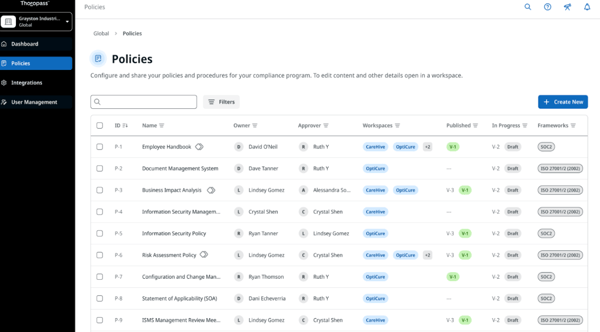
Another feature reviewers highlight is the automation of security questionnaires. Using GenAI, Thoropass reviews a company’s internal library of past responses, policies, and documentation to auto-suggest answers for new questionnaires. Reviewers note that this reduces repetitive work during vendor assessments and sales security reviews, helping teams respond faster without compromising accuracy.
Customer support receives consistent praise in G2 feedback, too. Reviewers describe the support team as proactive, approachable, and deeply knowledgeable about compliance frameworks. Many users say their onboarding and audits ran smoother thanks to responsive guidance and clear communication.
G2 reviewers generally find Thoropass intuitive but mention that certain areas of the interface could benefit from more modern visuals or streamlined layouts. Navigation is functional and reliable, but some users say additional visual cues would make complex audit dashboards easier to scan. Overall, reviewers say that the platform’s strength lies in its structure and clarity. This works well for teams that prioritize workflow reliability over aesthetic minimalism.
Thoropass provides guided onboarding and clear workflows, though some G2 reviewers note that new users may need additional context to understand how each module connects. The training materials cover the basics effectively, but teams new to compliance may want deeper tutorials or more interactive walkthroughs. This approach suits experienced teams looking for flexibility, while first-time users might benefit from extra orientation during initial setup.
In general, Thoropass combines experienced auditing, automation, and intelligent tooling in one place, making it easier for businesses to stay compliant and confident year-round.
What I like about Thoropass:
- G2 reviewers consistently highlight Thoropass’s blend of human expertise and intelligent automation, saying it brings both confidence and speed to audits.
- I found strong appreciation for its built-in pentesting and AI features, which eliminate the need for multiple tools and reduce repetitive evidence work.
What G2 users like about Thoropass:
“I appreciate the dedicated customer success manager who works with us during the process. Thoropass keeps us on track with reminders for recurring tasks and handles policy and security training tracking efficiently. I’m happy with the product and their addition of new features like the access review to enhance our experience. The setup was simple too. The platform let us get everything set up and validated for SOC 2 Type 1 and move right into the monitoring period for the Type 2 audit.”
– Thoropass review, Pete L.
What I dislike about Thoropass:
- According to G2 reviews, the interface follows a more traditional layout, which suits teams that prioritize structure and familiarity over ultra-modern SaaS styling. Users who prefer sleeker, consumer-like interfaces may find this approach more function-driven than design-first.
- Some G2 users mentioned that the initial training includes detailed context to guide first-time users through compliance processes. This depth is particularly useful for teams handling full audit cycles, even if it takes some extra time to become second nature.
What G2 users dislike about Thoropass:
“Some questions took a while to get answered, which slowed the overall process. The system is very self-guided, and that can be challenging for users who are new to compliance activities and may need a bit more direction.”
– Thoropass review, Ben R.
8. Scytale: Best for small teams seeking guided compliance support
Scytale is a dedicated AI-powered compliance platform that streamlines audits and maintains continuous readiness across 30+ frameworks. According to G2 Data, 74% of its users are from small businesses, primarily in the software, IT, and financial services sectors.
G2 reviewers often describe Scytale as an efficient compliance workspace that consolidates everything from evidence to audit updates into a single platform. Its automation engine works with cloud services, HR systems, and project tools to gather evidence continuously. Users indicate that this reduces manual effort, which typically impedes audits, and guarantees that control mapping remains current.
A major differentiator, as noted in both G2 reviews and industry feedback, is expert-led guidance. Every customer is paired with a dedicated compliance specialist who manages the audit roadmap, advises on control implementation, and ensures a tailored experience from day one. Reviewers highlight that this expert involvement helps demystify the audit process, especially valuable for startups handling their first certification.
The platform also introduces an AI-driven questionnaire feature. Instead of manually responding to repetitive vendor questionnaires, the system uses AI and human review to generate compliant, framework-aligned responses in minutes. Users say this not only saves time but also helps standardize communication with customers and auditors, shortening deal cycles while maintaining accuracy.
Audit Hub is another area G2 users frequently highlight. It creates a shared workspace where auditors, internal teams, and Scytale experts can communicate directly. Evidence requests, approvals, and feedback all live in one thread, eliminating the typical back-and-forth across tools or emails. Reviewers say this collaborative workflow turns what used to be a disjointed process into a single, trackable timeline that keeps everyone aligned until certification.
Scytale’s framework mapping and automation depth further strengthen its value proposition. G2 reviewers note that controls can be reused across frameworks, and evidence automatically remaps as companies expand into new certifications. This interoperability is particularly useful for startups scaling quickly across multiple geographies or customer requirements.
Reviewers also mention Scytale’s clarity in progress tracking. Dashboards visualize readiness scores, pending evidence, and control ownership at a glance. For small teams juggling other responsibilities, this structured visibility ensures nothing slips through the cracks.
G2 reviewers describe Scytale’s integration coverage as strong for popular SaaS and cloud tools, though some niche or on-premise systems may still require manual uploads. Users say it reflects Scytale’s focus on fast-moving, cloud-first businesses. The current integrations meet the needs of most teams, and new connectors are rolled out frequently based on customer demand.
Scytale’s dashboards deliver clear visibility into audit progress and control ownership, though teams managing large evidence libraries may notice slightly slower refresh times. This typically appears in multi-framework audits rather than standard workflows. Reviewers note that responsiveness remains consistent for most users and improves steadily with platform updates, and that the trade-off favors real-time clarity over unnecessary interface complexity.
Overall, Scytale blends automation, human expertise, and collaborative audit management in a way that makes enterprise-level compliance achievable for small and growing businesses.
What I like about Scytale:
- G2 reviewers frequently highlight the blend of automation and expert support, saying it brings structure and confidence to teams navigating their first audit.
- I also noticed strong appreciation for the AI-driven security questionnaire automation and Audit Hub, which together remove much of the repetitive back-and-forth that slows down audit preparation and client responses.
What G2 users like about Scytale:
“The platform is easy to use and very intuitive. The integrations also make it simpler to gather evidence in one place. Support has been extremely important for us and has helped throughout the entire process. The AI feature has been especially helpful in reducing support queries for smaller items, such as figuring out where to find certain functions.”
– Scytale review, Camille P.
What I dislike about Scytale:
- G2 reviewers noted that Scytale’s specialized integrations are best suited for teams already operating in cloud-native environments. Those needing on-premise or highly customized setups may find that manual configuration offers more control
- Some G2 users mentioned that Scytale’s dashboards prioritize real-time visibility and structured reporting, which can momentarily slow during large-scale audits. This design caters to teams that value immediate insights and data transparency over static speed, aligning with the platform’s goal of live compliance monitoring.
What G2 users dislike about Scytale:
“While the overall experience has been very positive, there are a few areas that could be improved. Some parts of the platform can feel a bit rigid, especially when trying to adapt workflows to specific internal processes. Greater flexibility in customization would make it even more powerful.
These are relatively minor issues, and they don’t outweigh the overall value the platform provides.”
– Scytale review, Kateryna O.
Compliance is only one part of the security equation. If you’re ready to move from audit readiness to proactive risk reduction, explore the best AI SPM software to monitor cloud security posture, surface vulnerabilities faster, and strengthen overall resilience.
Frequently asked questions about the best security compliance software
Got more questions? We have the answers.
Q1. Which security compliance platforms are most trusted by managers at enterprise organizations based on user reviews?
Drata and Vanta are among the most trusted security compliance platforms for enterprise organizations. Both support multiple compliance frameworks, integrate with widely used enterprise tools, and provide continuous monitoring that helps large teams stay audit-ready. Thoropass is another strong option for enterprises looking for a combination of compliance automation and hands-on audit expertise.
Q2. Which are the highest-rated security compliance platforms for companies with 51–200 employees optimizing operational workflows at scale?
Vanta, Sprinto, and Drata are highly rated by mid-market organizations with 51–200 employees. These platforms automate evidence collection, map controls across multiple frameworks, and centralize compliance workflows, allowing growing companies to scale compliance programs without significantly increasing manual effort.
Q3. What are the most reliable security compliance solutions based on implementation success and user satisfaction ratings?
Vanta, Sprinto, and Scrut Automation stand out for their high user satisfaction and successful implementations. Vanta and Sprinto receive consistent praise for automation and ease of use, while Scrut Automation is recognized for its customer support and fast return on investment. Together, these platforms help organizations simplify compliance and maintain continuous audit readiness.
Q4. Which security compliance platforms maintain consistent performance and stability under enterprise workloads?
Drata and Vanta are well-suited for organizations managing enterprise-scale compliance programs. Their automation, continuous monitoring, and broad integration ecosystems allow teams to manage multiple frameworks and large volumes of evidence efficiently. Scrut Automation is another strong choice for organizations handling multiple concurrent compliance initiatives.
Q5. Which security compliance software generates measurable return on investment without extensive customization services?
Scrut Automation delivers one of the fastest estimated returns on investment in this category, with G2 Data showing an estimated ROI of just five months. Its prebuilt frameworks, automated evidence collection, and responsive customer support reduce manual effort without requiring extensive customization. Sprinto and Vanta also help organizations realize value quickly through automation and guided implementation.
Q6. What are the best security compliance solutions for non-technical teams requiring minimal training and implementation time?
Secureframe and Vanta are excellent choices for non-technical teams. Both provide intuitive interfaces, guided workflows, prebuilt policy templates, and automated evidence collection that simplify compliance without requiring extensive security expertise. Scytale is another strong option thanks to its dedicated compliance specialists and guided onboarding experience.
Q7. Which security compliance platforms integrate seamlessly with existing enterprise systems and tools?
Drata, Vanta, and JumpCloud offer some of the strongest integration ecosystems in this category. They connect with popular platforms such as AWS, Google Workspace, Microsoft 365, Okta, GitHub, Jira, and Slack, allowing organizations to automate evidence collection and synchronize compliance data across existing systems.
Q8. What security compliance software delivers measurable business value within the first three months of deployment?
Sprinto and Vanta deliver value quickly by automating evidence collection, reducing manual audit preparation, and providing real-time visibility into compliance status. Organizations replacing spreadsheet-based processes or preparing for their first certification often see immediate productivity gains after deployment.
Q9. What are the top security compliance solutions that reduce manual processing and improve team productivity quickly?
Vanta, Sprinto, and Secureframe significantly reduce manual compliance work through automated evidence collection, policy management, and continuous monitoring. By eliminating repetitive documentation tasks and centralizing compliance activities, these platforms allow security teams to focus more on risk management and less on audit preparation.
Q10. What are the best security compliance platforms for teams managing complex workflows without dedicated IT staff?
Scytale, Secureframe, and Sprinto are strong options for organizations without dedicated IT or compliance teams. They combine automation with guided workflows, prebuilt templates, and expert support, making it easier for lean teams to manage multiple compliance requirements while reducing administrative overhead.
Q11. Which security compliance software is best for workforce compliance?
JumpCloud is the best choice for workforce compliance because it centralizes identity, device, and access management. It enables organizations to enforce multi-factor authentication (MFA), single sign-on (SSO), and conditional access policies across users and devices, helping businesses meet workforce-related requirements within frameworks such as SOC 2 and ISO 27001.
Q12. Which security software company has the best CMMC compliance offerings?
Organizations pursuing CMMC should look for platforms that support multiple security frameworks and continuous compliance. Vanta and Drata are strong options because they automate evidence collection, continuously monitor controls, and simplify managing multiple compliance programs. Before making a decision, verify each vendor’s current CMMC support, as framework coverage and certification requirements continue to evolve.
Q13. What is the best compliance software for automated security questionnaires?
Sprinto and Scytale are among the best options for automating security questionnaires. Sprinto uses AI to generate responses from an organization’s existing knowledge base, while Scytale combines AI-powered responses with expert review for greater accuracy. Thoropass is another strong choice, offering GenAI-assisted questionnaire automation for vendor assessments and customer security reviews.
Ready to make compliance effortless?
Audits and frameworks will always evolve, but managing them doesn’t have to be painful. As regulations tighten and customers demand greater transparency, security compliance software has become less about ticking boxes and more about proving trust through automation, visibility, and collaboration.
The eight platforms featured here: Vanta, Drata, Sprinto, Secureframe, Scrut Automation, JumpCloud, Scytale, and Thoropass, stood out in G2 Data for their real-world impact. Whether it’s continuous monitoring, audit readiness, or managed compliance support, each of these tools helps teams stay ahead of changing standards and reduce audit fatigue throughout the year.
If your compliance process still relies on spreadsheets, screenshots, or last-minute evidence hunts, it’s time to upgrade. These platforms can help your business transition from reactive to always-on compliance, building trust faster, passing audits with confidence, and maintaining security without slowing down growth.
Explore more platforms that unify governance, risk, and compliance in our guide to the best GRC software.
[ad_2]
Source link


