
[ad_1]
Key Points
- HDT Robotics deployed Hunter WOLF unmanned ground vehicles for military training and operational evaluation to demonstrate multi-mission battlefield support roles.
- The robotic platform is being used to train soldiers in logistics transport, communications support, casualty evacuation, and mobile power generation missions.
HDT Robotics announced that it has deployed several Hunter WOLF unmanned ground vehicles for military training and operational evaluation activities, introducing soldiers to the robotic platform in field-based scenarios.
The deployment is intended to familiarize military operators with the Hunter WOLF system and demonstrate how unmanned ground vehicles can support soldiers by transporting equipment, generating power, and performing multiple support roles during missions.
According to a news release from HDT Robotics, the vehicles are being used during training exercises where personnel learn how to operate, configure, and maintain the robotic platform under realistic operational conditions.
– ADVERTISEMENT – CONTINUE READING BELOW –
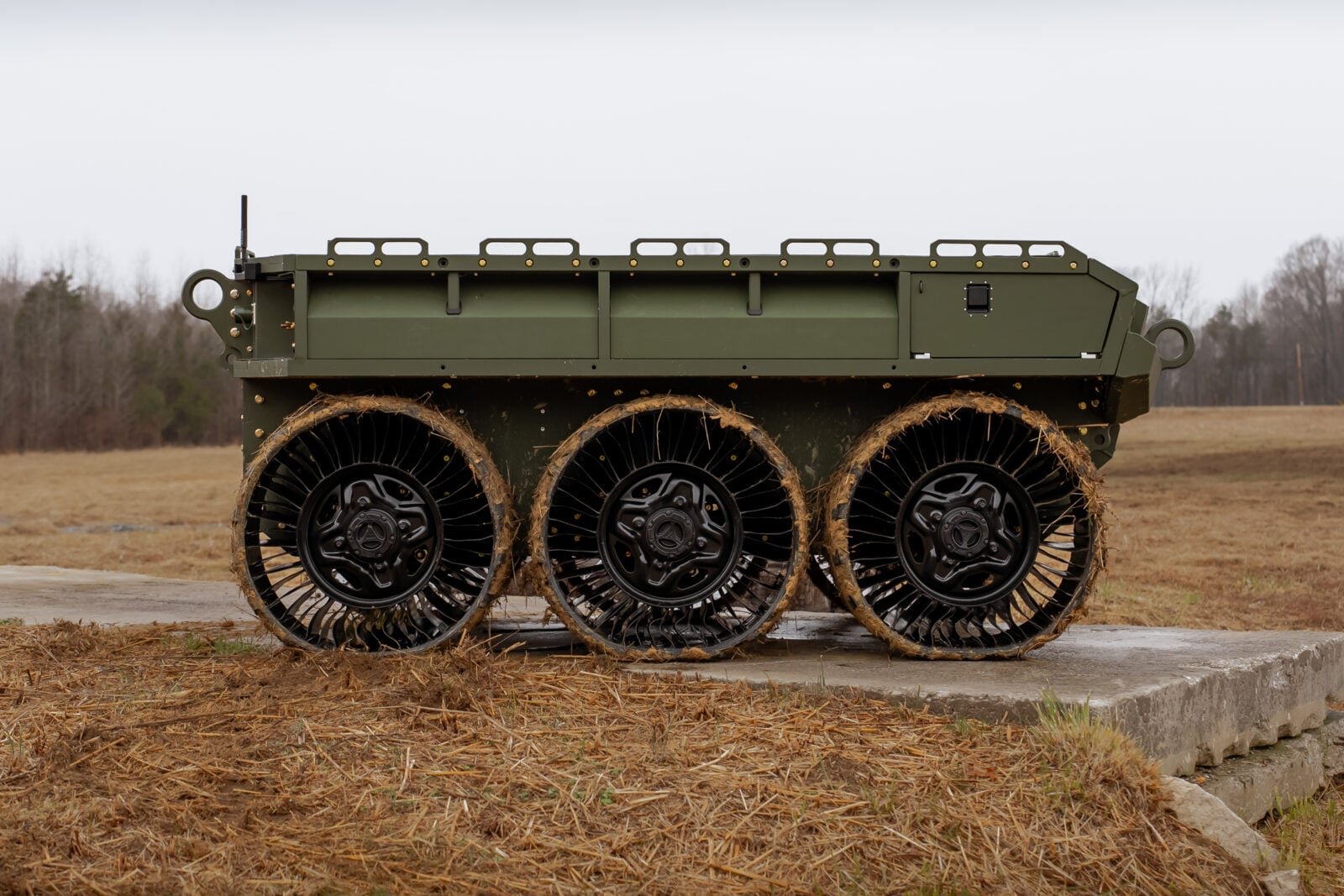
The Hunter WOLF system is designed as a multi-mission unmanned ground vehicle capable of performing several battlefield support functions. The platform can be configured as a logistics transporter, a communications relay node, a casualty evacuation system, or an intelligence, surveillance, and reconnaissance platform.
According to the company, the training activities allow soldiers to operate the system in various configurations while gaining hands-on experience with the platform’s autonomy features and mission support equipment. The vehicle originated from the company’s Advanced Battle Lab development program and is intended to reduce the physical burden placed on soldiers during extended operations.
“We’re focused on giving soldiers a capability that helps them do their job while reducing their exposure to risk. The Hunter WOLF has gone through rigorous testing, is battlefield tested, and ready now,” said Tom Van Doren, President of the Robotics Sector at HDT.
During the training sessions, the unmanned vehicles are equipped with several operational systems that allow them to support deployed units in different roles.
The configurations demonstrated during training include two vehicle-mounted tactical radios identified as AN/VRC-158 systems. These radios allow the robotic vehicle to function as a mobile communications node supporting units operating across dispersed areas.
The vehicles also carry five Universal Battery Chargers, which allow soldiers to recharge multiple electronic devices in the field. Battery management has become an increasing concern for modern military units as soldiers rely on radios, sensors, and digital equipment during extended operations.
Another system integrated during training is a 60-gallon water purification capability. This configuration allows the robotic vehicle to assist units operating in remote locations by producing potable water in the field.
The Hunter WOLF can also be configured for casualty evacuation. In this role, the unmanned vehicle can transport injured personnel away from the front line, allowing soldiers to evacuate casualties while reducing exposure to enemy fire.
The training configuration also includes a mobile power generation system capable of exporting 15 kilowatts of electrical power using a 120/240-volt inverter system. This feature allows the vehicle to power field equipment, communication nodes, or other support systems during operations.
Extended cargo rails are mounted on the platform to allow transport of equipment, supplies, and mission-specific payloads.
The Hunter WOLF unmanned ground vehicle is designed to use commercially available components, which the company says simplifies maintenance and logistics support in the field.
Unmanned ground vehicles are increasingly being evaluated by military forces as a way to reduce the load carried by soldiers and improve operational endurance. Modern infantry units often carry large quantities of equipment, including radios, batteries, sensors, and protective gear.
Robotic logistics platforms such as Hunter WOLF are intended to transport equipment, deliver supplies, and provide mobile support functions without placing additional strain on soldiers.
[ad_2]
Source link


