
[ad_1]
Key Points
- Raytheon, an RTX business, received a $515.8 million contract modification to continue integration and production support for the AN/SPY-6(V) radar.
- The contract covers the U.S. Navy (74%) and Germany via Foreign Military Sales (26%), with work expected to be completed by May 2027.
The U.S. Navy is doubling down on what it considers its most capable air and missile defense radar at sea, committing $516 million to keep the system integrated, tested, and ready across the fleet.
Raytheon Missiles and Defense, the Marlborough, Massachusetts-based defense arm of RTX Corporation, secured a $515.8 million contract modification this week to continue work on the AN/SPY-6(V), a next-generation radar designed to detect and track threats that older systems can simply miss.
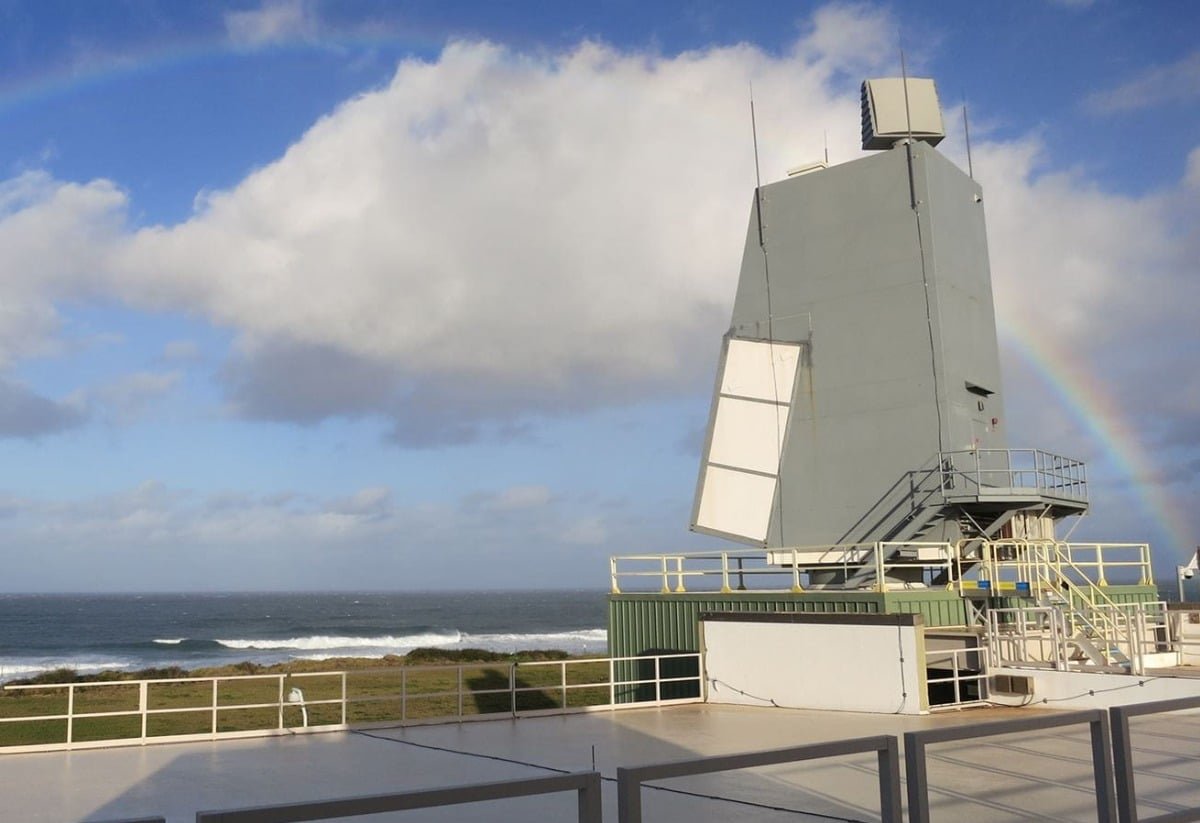
The AN/SPY-6(V) is not a modest upgrade to existing technology. It is a ground-up redesign, built around gallium nitride radar module technology that gives it dramatically greater sensitivity than the legacy AN/SPY-1 radar it is replacing on new Navy destroyers. In plain terms, it can see smaller objects at longer ranges and track multiple threats simultaneously at a resolution the previous generation could not match. The Navy has described it as the most technically advanced radar ever installed on a U.S. surface warship.
– ADVERTISEMENT – CONTINUE READING BELOW –
The contract, a modification to a previously awarded agreement designated N00024-25-C-5501, covers what the government calls “continued integration and production support.” That means Raytheon’s engineers are not just building the hardware but continuously refining how it functions aboard ships, running tests, resolving technical issues as they emerge, and ensuring that software and hardware work as a unified system in real operational environments. The work is expected to wrap up by May 2027.
Funding for the contract comes from a layered mix of Navy appropriations, some stretching back nearly a decade. Shipbuilding and conversion funds from fiscal years 2017 through 2026 contribute multiple tranches, joined by research and development money, operations and maintenance allocations, and other procurement funds. The oldest funding bucket in the mix, $956,000 from fiscal year 2017, reflects just how long the SPY-6 program has been in development and how contracts of this kind absorb years of prior investments into a single continuing effort.
Roughly 26 percent of the contract value flows through the Foreign Military Sales program, the U.S. government mechanism that allows allied nations to purchase American military equipment through official channels. Germany is explicitly named as a participant, with an additional provision allowing other countries to be added as the contract evolves. Berlin has been systematically rebuilding its naval and air defense capabilities following Russia’s full-scale invasion of Ukraine in 2022, and acquiring advanced radar technology through the FMS channel is consistent with that broader investment pattern.
Work will be distributed across ten states, with the largest share, 54 percent, remaining at Raytheon’s Marlborough facility. Pascagoula, Mississippi, home to Huntington Ingalls Industries’ shipyard where several SPY-6-equipped destroyers are built, accounts for 14 percent. Moorestown, New Jersey, a longstanding center of naval radar development, takes 9 percent. Newport News, Virginia, known for its shipbuilding operations, and Kauai, Hawaii, which hosts naval test ranges in the Pacific, each contribute additional work shares. Wallops Island, Virginia, along with Bath, Maine, Chesapeake, Virginia, Portsmouth, Rhode Island, Aurora, Colorado, and San Diego, California, round out the geographic spread.
The geographic spread reflects the physical reality of integrating a radar of this complexity. Testing happens at ranges in Hawaii and Virginia. Ships are built and fitted out in Mississippi, Virginia, and Maine. Software and systems engineering runs from New Jersey and Massachusetts. Getting SPY-6 to work is not a factory problem; it is a network problem, and the contract structure mirrors that.
The Naval Sea Systems Command in Washington, D.C., the Navy organization responsible for building, delivering, and maintaining ships and systems, is overseeing the contract. Of the total obligation, $17.5 million in fiscal year 2026 operations and maintenance funds must be spent before the end of the current fiscal year or they expire, adding a near-term execution pressure to what is otherwise a multi-year effort.
The SPY-6 program has been one of the Navy’s most closely watched modernization investments for the better part of a decade. The radar is the sensing backbone of the Flight III Arleigh Burke-class destroyer, the newest variant of the most prolific surface combatant in the American fleet. Without a radar that can reliably detect modern threats, from ballistic missiles to low-observable cruise missiles to drone swarms, the rest of the destroyer’s weapons are shooting blind. The Navy has been emphatic that SPY-6 closes a detection gap that adversaries, particularly China and Russia, have been actively working to exploit.
[ad_2]
Source link


