
Table of Contents
Walk into any supermarket in January and you can buy strawberries, avocados and Kenyan green beans. Nobody blinks. A few centuries ago, that simple trip would have seemed like magic. What changed the world wasn’t a single invention, but a shift in how human beings turned nature into power. Historians call that shift the Industrial Revolution.
It started quietly in the mid-1700s in British textile mills and coalfields, then spread like a slow fuse through Europe, the United States and, eventually, the whole planet. To understand how it reshaped everything in its path, it helps to see the Industrial Revolution not as an event but as a long chain reaction. It built on thousands of years of earlier breakthroughs, a story you can trace in the fuller panorama of world history, and turned them into a force no one could slow down.
Why the Revolution Started in Britain
Why Britain and not France, China or India? Because an odd set of circumstances lined up at exactly the right moment. Britain had accessible supplies of coal, a legal system that protected private inventors and a large class of workers who had been pushed off communal farmland. Add cheap raw cotton from the American colonies, and you have the perfect laboratory for industrial change.
These factors worked together, not alone:

- Cheap coal: Britain had coal seams close to the surface and near water transport, and burning coal for heat and power freed factories from the limits of wind, water and muscle.
- A workforce in motion: Enclosure laws turned common farmland into private property, pushing rural families into towns where they needed paid work.
- An empire to sell to: Colonial trade routes gave English manufacturers customers on four continents, so new machines never lacked a market.
Coal, Iron and Cotton: The New Trinity
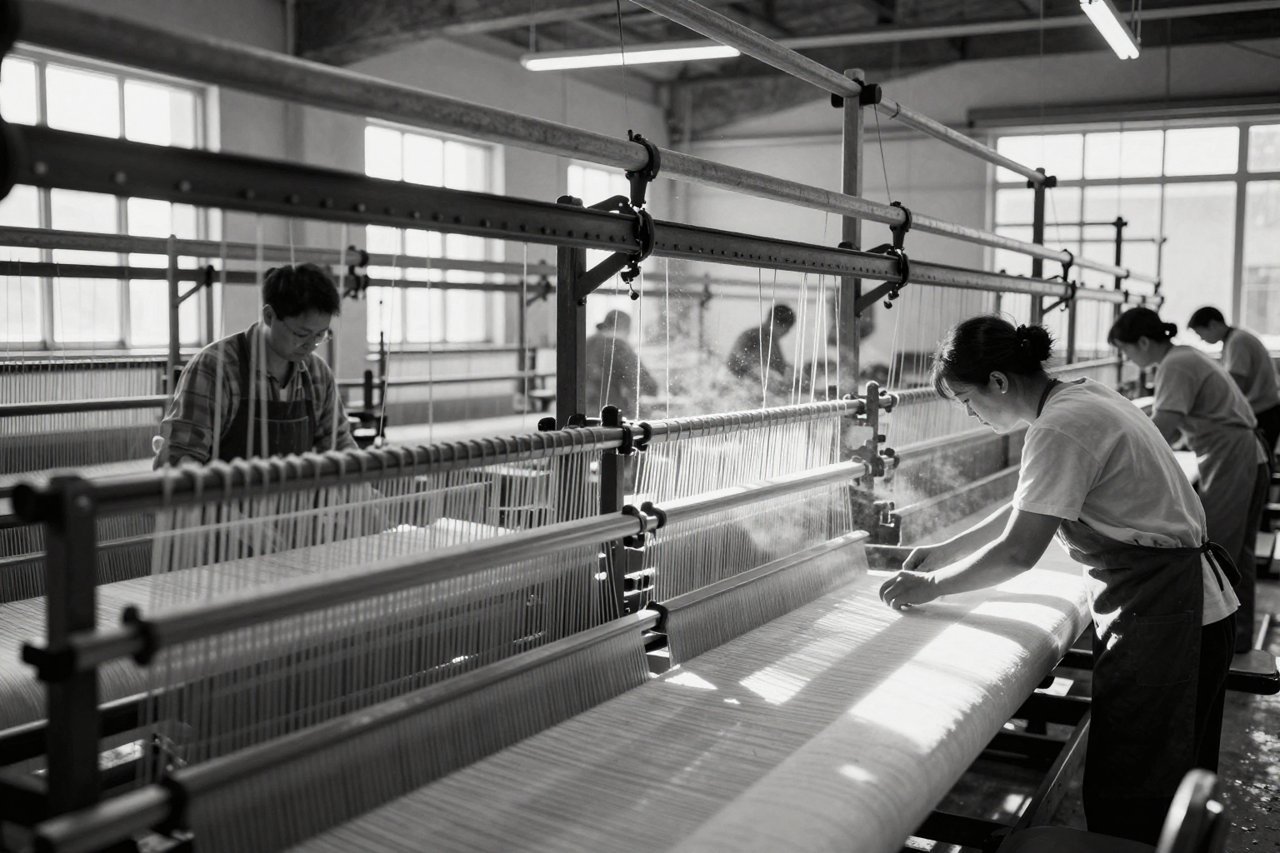
Three materials did the heavy lifting. Coal powered the engines. Iron gave the machines strength. Cotton gave factories a product that ordinary people actually wanted to buy. At the beginning of the eighteenth century, Britain imported about one million pounds of cotton fibre a year. By the 1780s, that figure had passed twenty million. The mechanised textile industry became the beating heart of the revolution.
James Watt’s improved steam engine, patented in 1769, turned coal heat into mechanical motion with an efficiency that older engines could not reach. Spinning frames, water frames and mules were crude, noisy and dangerous, but they belong on any list of inventions that changed the world forever. Together, this first generation of machines produced more goods in a single factory than a village of weavers could make in a year.
The World the Factory Made
Before factories, most people lived according to sunrise, season and harvest. The factory demanded something new: synchronised labour. Thousands of workers under one roof, all starting at the same bell, stopping at the same bell, doing the same small task hundreds of times a day.
Time became a machine too
The factory whistle replaced the church bell. In cotton towns like Manchester, workers clocked in at 6 a.m., ate dinner at noon and returned until 8 p.m. Six days a week. The discipline didn’t just shape the factory floor; it changed cities, schools, railways and eventually the way you check your calendar today.
A new social contract
The Industrial Revolution didn’t just create new machines. It created a new class of factory owners who grew enormously wealthy, and a new working class whose labour, paid or not, built the foundations of modern cities. The richest families in Manchester lived surrounded by soot and smoke, while their workers slept in cramped terraced housing. At the worst moments, children as young as five worked sixteen-hour shifts in textile mills and crawled through coal seams too narrow for adults. That gap between industrial profit and industrial suffering shaped trade unions, school reform and political protest for the next two centuries.
America and the Second Surge
The Industrial Revolution crossed the Atlantic in the early nineteenth century, and on the other side it grew even faster. In 1793, Samuel Slater built the first successful cotton mill in Rhode Island; by 1860, the northern states had more factory spindles than Britain. The United States added something new: interchangeable parts, mass production and later the electrical grid. That expansion was inseparable from the contradictions running through American history, from the cotton plantations that fed New England mills to the railroad corporations that connected the continent.
Then came the second wave, from roughly 1870 to 1914, when steel, chemicals and electricity replaced iron, water and steam. The Bessemer converter made steel cheap. Alternating current made it possible to light whole cities. The telephone, the automobile and the aeroplane all emerged in this period.
When Industry Learned to Kill
The same coal, factories and engine power that built the modern world were also turned toward destruction. The American Civil War, the Franco-Prussian War and eventually World War I all used rifles, railways and industrial logistics. In 1914, armies made by factories faced each other across trenches; industry made it possible to kill hundreds of thousands of soldiers in a single campaign. The 20th century’s deadliest conflicts were not a break from the Industrial Revolution. They were its fully developed expression. As the battlefields darkened and the artillery batteries multiplied, the Great War became the first industrial event that rewired the modern world.
Smoke on the Horizon
The Industrial Revolution did not only change economics. It changed the air, the earth and the water. London’s famous pea-soup fogs were thick clouds of sulphur and coal smoke. Rivers beside factories became open sewers. The move from clean timber to coal energy multiplied emissions in a way that still builds up in the atmosphere today. Every contemporary conversation about climate change starts in the same place: the moment human beings decided to burn fossilised sunlight at scale.
Still Running, Right Now
The Industrial Revolution is often taught as a period with a start and an end. But the underlying pattern, innovation produces productivity, productivity produces surplus, surplus produces new demand, is still running through the global economy. When you order a product online and it arrives at your door, you are using a logistical machine built from railway timetables, container shipping and assembly lines, all descendants of industrial methods. When you plug in a phone, you are using an electrical grid that first lit up city streets in the 1880s. The Industrial Revolution didn’t end; it mutated. The next mutation is already rattling the gates, and like the first one, it will change what work, time and money mean.


