
Table of Contents
Finding the Perfect Feline for Your Family
Choosing a cat for your family is a big decision. You want a breed that’s gentle with children, tolerant of noise and activity, and affectionate enough to become a true member of the household. While every cat has its own personality, certain breeds are known for their family-friendly temperaments. Here are seven of the best cat breeds for families, with details on their personalities, care needs, and why they fit so well into busy homes.
1. Maine Coon: The Gentle Giant
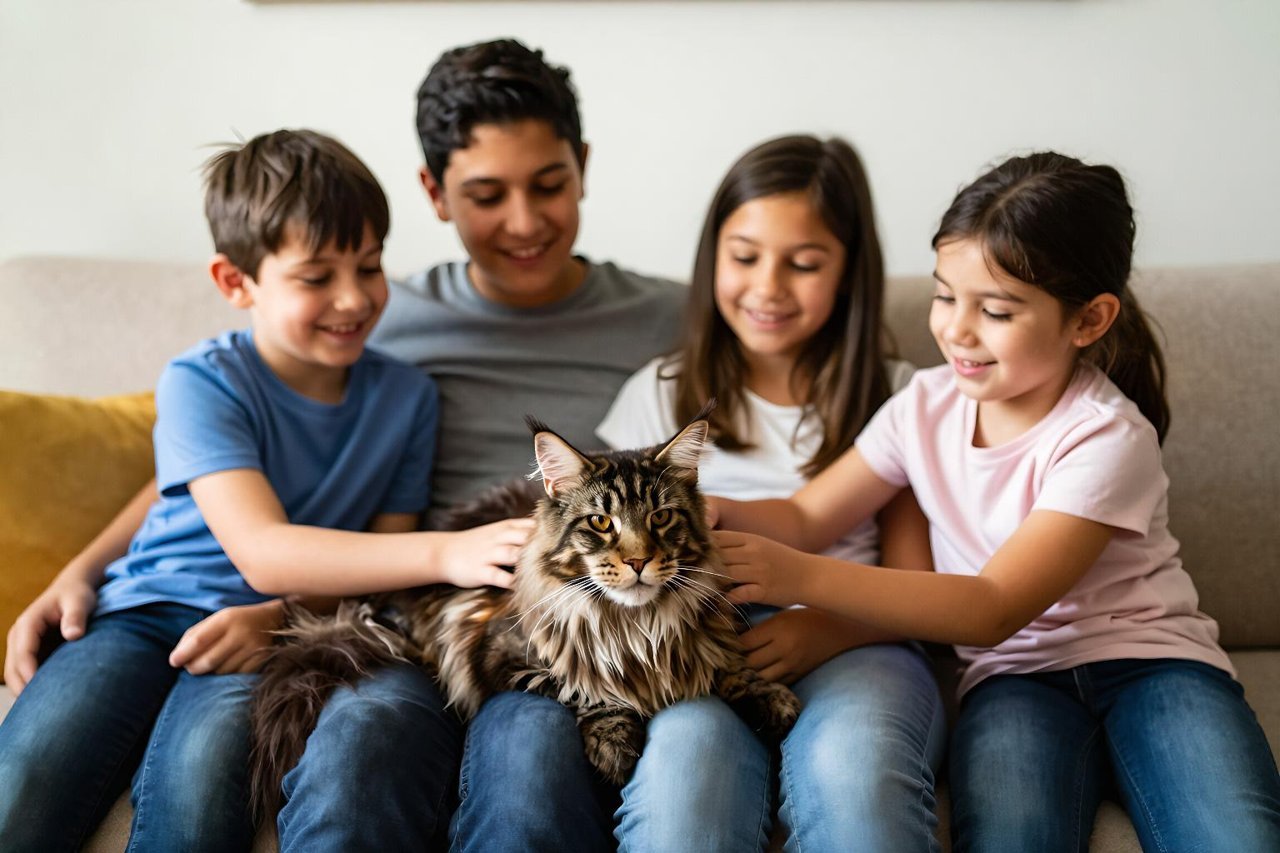
Maine Coons are one of the largest domestic cat breeds, but their size is matched by their sweet, laid-back nature. They’re often called “gentle giants” for good reason. These cats are patient with children, even when they’re being handled a bit clumsily. They’re also playful and enjoy interactive games, but they’re not overly demanding of attention. Maine Coons tend to get along well with other pets, including dogs, making them a versatile choice for multi-pet families.
Their thick, water-repellent coat requires regular brushing—at least twice a week—to prevent mats. But their easygoing temperament makes grooming sessions a bonding experience rather than a battle. Expect a Maine Coon to follow you from room to room, curious about what you’re doing, but they’re not needy about it.
2. Ragdoll: The Floppy Companion
Ragdolls earned their name because they go limp like a ragdoll when held. These cats are famously docile and affectionate, often seeking out laps and cuddles. They’re generally quiet and adapt well to the hustle and bustle of family life. Ragdolls are also known for their striking blue eyes and semi-long coat, which is surprisingly low-maintenance (a weekly brush usually suffices).

They’re not as independent as some breeds; Ragdolls thrive on human interaction and may become anxious if left alone for long periods. If your family is home often and enjoys a cat that wants to be part of the action, a Ragdoll is a wonderful fit. They’re also known to be good with children and other pets, though their trusting nature means they should be supervised around very young kids who might be too rough.
3. Siamese: The Social Butterfly
Siamese cats are one of the most vocal and social breeds. They love being involved in everything the family does, from mealtime to movie night. Their short coat is easy to care for, needing only occasional grooming. Siamese are playful and intelligent, often learning tricks or playing fetch. They form strong bonds with their humans and can be quite talkative, expressing their opinions with a distinctive, loud meow.
This breed is best for families who want a cat that’s interactive and not shy. They may not suit a home where everyone is out all day, as they can become lonely and destructive. But if you have older children who can engage them in play, a Siamese will be a loyal and entertaining companion.
4. Persian: The Calm Lap Cat
Persians are the epitome of a calm, serene cat. They’re not particularly active or playful, preferring a cozy spot on the sofa or a sunny windowsill. This makes them ideal for families with older children who respect the cat’s space. Persians are gentle and quiet, rarely causing trouble. Their luxurious long coat requires daily brushing to keep it mat-free, but many owners find this routine relaxing.
Due to their flat faces, Persians can have breathing issues and are prone to eye discharge, so daily cleaning of the eye area is necessary. They’re not the best choice for very young children who might be loud or unpredictable, but in a calm home, a Persian offers unmatched affectionate companionship.
5. Abyssinian: The Energetic Explorer
If your family is active and looking for a cat that can keep up, the Abyssinian is a fantastic choice. These cats are among the most athletic and curious breeds. They love to climb, jump, and explore every corner of the house. Abyssinians are also very social and enjoy being part of the action, often following family members around.
Their short, ticked coat is low-maintenance—a weekly brush is plenty. But they need plenty of mental and physical stimulation. Puzzle toys, cat trees, and interactive play sessions are essential to keep them happy. They’re generally good with children and other pets, especially if raised together. However, their high energy might be overwhelming for very young kids, so they’re best for families with school-age children or teens.
6. Scottish Fold: The Owl-Like Sweetheart
Scottish Folds are known for their unique folded ears, which give them an owl-like expression. They’re typically affectionate, calm, and adaptable. These cats tend to get along well with children and other animals, and they’re not as demanding as some breeds. Scottish Folds are moderately playful and enjoy interactive toys, but they also appreciate quiet cuddle time.
Their coat can be short or long, and both types need weekly brushing. One important health note: the gene that causes folded ears can also lead to joint issues, so it’s crucial to adopt from a responsible breeder who screens for health problems. Overall, Scottish Folds make gentle, loving family companions.
7. Birman: The Sacred Cat of Burma
Birmans are similar to Ragdolls in their sweet, affectionate nature, but they’re a bit more active and playful. They have striking blue eyes and a silky, medium-long coat that doesn’t mat easily. Birmans are known for being gentle with children and are often described as “people-oriented.” They’ll greet you at the door and follow you around the house, but they’re not overly vocal.
Weekly grooming is sufficient, and they adapt well to most home environments. Birmans are particularly good with families because they balance playfulness with a calm demeanor. They can be left alone for reasonable periods, but they thrive on interaction. If you want a cat that’s both beautiful and loving, a Birman is a superb choice.
Tips for Choosing the Right Cat
While breed tendencies are helpful, every cat is an individual. When selecting a family cat, consider the following:
- Energy levels: Match the cat’s activity level to your family’s lifestyle.
- Grooming needs: Long-haired breeds require more time and commitment.
- Age: Kittens are energetic and need training; adult cats often have established temperaments.
- Socialization: Look for a cat that’s been raised in a home environment and is used to children.
- Health: Ask about genetic conditions common in certain breeds.
Whichever breed you choose, adopting from a shelter or rescue is a wonderful option. Many purebred cats end up in rescues too, so you might find your perfect match waiting for a forever home. A family cat can bring years of joy, companionship, and purrs—choose wisely, and you’ll have a loyal friend for life.


