
Table of Contents
If you’re serious about building muscle, you already know protein is non-negotiable. But let’s be honest—chicken breast and rice gets old fast. The real challenge isn’t hitting your macros; it’s doing it without dreading every meal. I’ve spent years experimenting in the kitchen and tracking results, and I’ve found that the best high protein meals for muscle gain are the ones you actually look forward to eating. Here’s everything I’ve learned.
Why Protein Matters for Muscle Gain (Beyond the Obvious)
Muscle protein synthesis—the process that repairs and grows muscle tissue—requires a steady supply of amino acids. Most research suggests consuming 1.6 to 2.2 grams of protein per kilogram of body weight daily for optimal gains. For a 180-pound (82 kg) person, that’s roughly 130–180 grams of protein per day. Spreading that across 4–5 meals helps maintain a positive nitrogen balance and keeps your body in an anabolic state.
But protein alone isn’t enough. You also need enough total calories and carbohydrate to fuel workouts and recovery. The meals I’ll share are designed to be nutrient-dense, not just protein bombs.
Breakfast: The Most Overlooked Muscle-Building Meal
Most people skimp on breakfast or grab a sugary pastry. That’s a missed opportunity. A high-protein breakfast sets the tone for the day and can reduce cravings later. Here are three of my go-to morning meals:

Greek Yogurt Power Bowl
Mix 1 cup (240g) plain Greek yogurt (24g protein) with 1 scoop vanilla whey protein (25g protein). Top with 1/2 cup oats, 1 tablespoon chia seeds, and a handful of berries. That’s over 50 grams of protein, plus fiber and healthy fats. The texture is creamy and satisfying—like eating dessert for breakfast.
Egg White & Turkey Scramble
Whisk 6 egg whites (21g protein) with 3 oz (85g) lean ground turkey (22g protein). Cook in a non-stick pan with spinach and mushrooms. Serve with 1 slice whole-grain toast. Total: ~45g protein, 350 calories. The turkey adds flavor, and the spinach provides iron and micronutrients.
Protein Oatmeal
Cook 1/2 cup oats in water, then stir in 1 scoop of chocolate or cinnamon protein powder. Add 2 tablespoons peanut butter for extra protein (8g) and healthy fats. Top with sliced banana. This clocks in at about 40g protein and tastes like a warm hug.
Lunch: Midday Fuel That Keeps You Going
Lunch should be substantial enough to power through afternoon workouts or meetings. These meals are portable and reheat well.
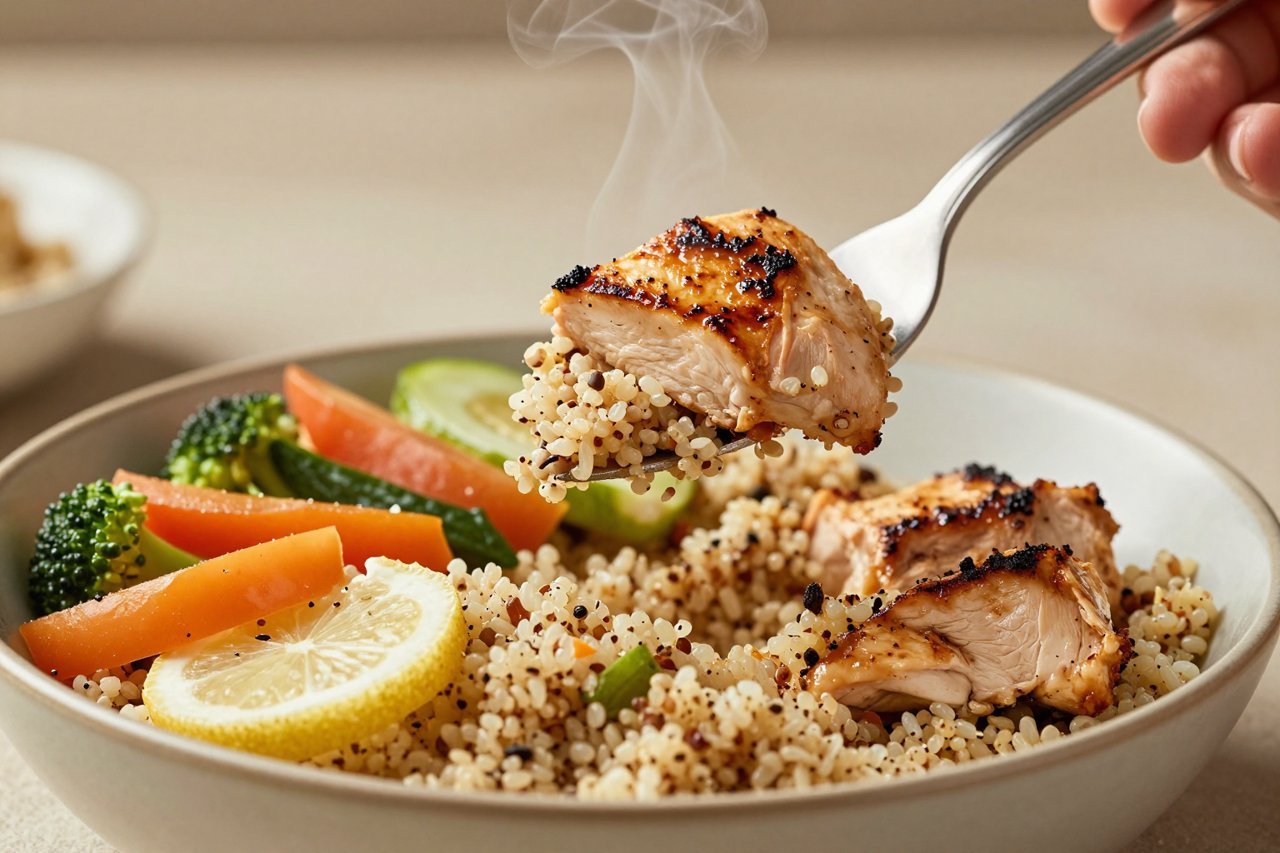
Quinoa Chicken Bowl
Combine 6 oz (170g) grilled chicken breast (42g protein) with 1 cup cooked quinoa (8g protein), roasted sweet potatoes, and a handful of arugula. Drizzle with tahini lemon dressing. The quinoa provides all nine essential amino acids, making it a rare plant-based complete protein. Total: ~50g protein, 550 calories.
Salmon & Lentil Salad
Top 5 oz (140g) grilled salmon (30g protein) over 1 cup cooked lentils (18g protein) with cucumber, cherry tomatoes, and red onion. A simple olive oil and lemon vinaigrette ties it together. Lentils are rich in fiber and iron, which supports oxygen delivery to muscles. Total: ~48g protein.
Dinner: High Protein Meals for Muscle Gain That Impress
Dinner is where you can get creative. Don’t be afraid to experiment with spices and global flavors.
Lean Beef Stir-Fry
Slice 6 oz (170g) sirloin steak (42g protein) into thin strips. Stir-fry with broccoli, bell peppers, and snap peas. Use low-sodium soy sauce, ginger, and garlic. Serve over 1/2 cup brown rice. Beef is packed with creatine, zinc, and B vitamins—all crucial for muscle repair. Total: ~50g protein, 500 calories.
Turkey & Black Bean Chili
Brown 1 lb (450g) lean ground turkey (72g protein total; adjust for serving size). Add 1 can black beans (15g protein per cup), diced tomatoes, chili powder, cumin, and onions. Simmer for 20 minutes. Garnish with Greek yogurt and avocado. This makes 4 servings, each with ~35g protein. It’s a one-pot wonder that freezes beautifully.
Snacks & Small Meals: Bridging the Gaps
Between main meals, aim for snacks that provide 15–25g protein. Here are my favorites:
- Edamame (1 cup shelled: 18g protein) – steam and sprinkle with sea salt.
- Cottage cheese & pineapple (1 cup low-fat: 28g protein) – a sweet and savory combo.
- Turkey roll-ups – 4 slices turkey (20g protein) wrapped around cucumber and mustard.
- Protein shake with whole milk – 1 scoop whey (25g) + 1 cup whole milk (8g) = 33g protein.
Timing Your Protein Intake for Maximum Gain
The concept of the “anabolic window” is often exaggerated, but timing still matters. Aim for 0.4–0.5 g/kg of protein per meal, spread every 3–4 hours. That means 4–5 meals per day. For most, the most critical times are post-workout (within 2 hours) and before bed.
A pre-sleep snack like casein-rich cottage cheese or Greek yogurt can supply amino acids overnight, reducing muscle breakdown. I often blend 1 cup cottage cheese with a scoop of casein protein and a few berries—it’s like pudding and keeps me full until morning.
Common Mistakes People Make with High Protein Meals
Even with the best intentions, it’s easy to slip up. Here are pitfalls to avoid:
- Ignoring total calories – Protein is satiating, but you still need enough carbs and fat for energy and hormone function. Don’t replace all calories with protein.
- Relying on shakes for every meal – Whole foods provide fiber, vitamins, and minerals that powders lack. Use shakes for convenience, not as meal replacements.
- Overcooking protein – Dry, tough meat is unappetizing. Use a meat thermometer: chicken breast to 165°F, steak to 135°F for medium-rare, fish to 145°F.
- Neglecting variety – Rotate your protein sources to ensure a diverse amino acid profile and avoid food boredom. Include red meat, poultry, fish, eggs, dairy, and plant options.
Sample Day of High Protein Meals for Muscle Gain
Here’s what a full day might look like for someone needing ~180g protein:
- Breakfast: Greek Yogurt Power Bowl (50g protein)
- Lunch: Quinoa Chicken Bowl (50g protein)
- Snack: Turkey roll-ups (20g protein) + apple
- Dinner: Lean Beef Stir-Fry (50g protein)
- Pre-bed: Cottage cheese with berries (28g protein)
Total: ~198g protein, with plenty of carbs and fats from the oatmeal, quinoa, rice, avocado, and dressings. Adjust portions based on your specific needs.
Building muscle doesn’t require a culinary degree or a restrictive diet. It’s about consistency, flavor, and smart choices. Start with one or two of these meals, and soon you’ll have a rotation that keeps your muscles—and your taste buds—happy.


