
Table of Contents
When we think of ancient civilizations, we often picture crumbling ruins, dusty artifacts, and names that feel more like legend than reality. But these societies were not just precursors to our own; they were dynamic, innovative, and sometimes startlingly advanced. From the first cities in Mesopotamia to the vast empires of Rome and China, the story of ancient civilizations is a tapestry of human ingenuity, ambition, and fragility. Understanding them isn’t just about satisfying historical curiosity—it’s about seeing the foundations of everything we take for granted today.
What Makes a Civilization Ancient?
The term “ancient civilization” typically refers to complex societies that emerged after the Neolithic Revolution, around 3500 BCE, and persisted until the fall of the Western Roman Empire in 476 CE (or comparable endpoints in other regions). These societies shared key traits: urban centers, organized governments, written language, monumental architecture, and specialized labor. But within that broad definition lies immense diversity. The wonders they left behind still inspire awe today.
The Cradle of Civilization: Mesopotamia
Mesopotamia, the land between the Tigris and Euphrates rivers (modern-day Iraq), is often called the cradle of civilization. Here, the Sumerians built the world’s first cities around 4000 BCE. They invented cuneiform writing, the wheel, and the 60-minute hour. The most fascinating archaeological discoveries from this region include the Royal Tombs of Ur, which revealed incredible wealth and ritual practices.
Mesopotamia also gave us the first legal code—Hammurabi’s Code—and epic literature like the Epic of Gilgamesh. But their innovations weren’t just cultural. They developed advanced irrigation systems that turned arid plains into breadbaskets. Yet despite their achievements, constant warfare and environmental degradation eventually eroded their power.

The Rise and Fall of Babylon
Babylon, under King Nebuchadnezzar II, became a symbol of opulence and power. The Hanging Gardens of Babylon, one of the Seven Wonders of the Ancient World, may have been a masterpiece of engineering with terraced plants watered by a complex pump system. But even Babylon couldn’t withstand the Persians. Its fall reminds us that no empire lasts forever.
Ancient Egypt: The Gift of the Nile
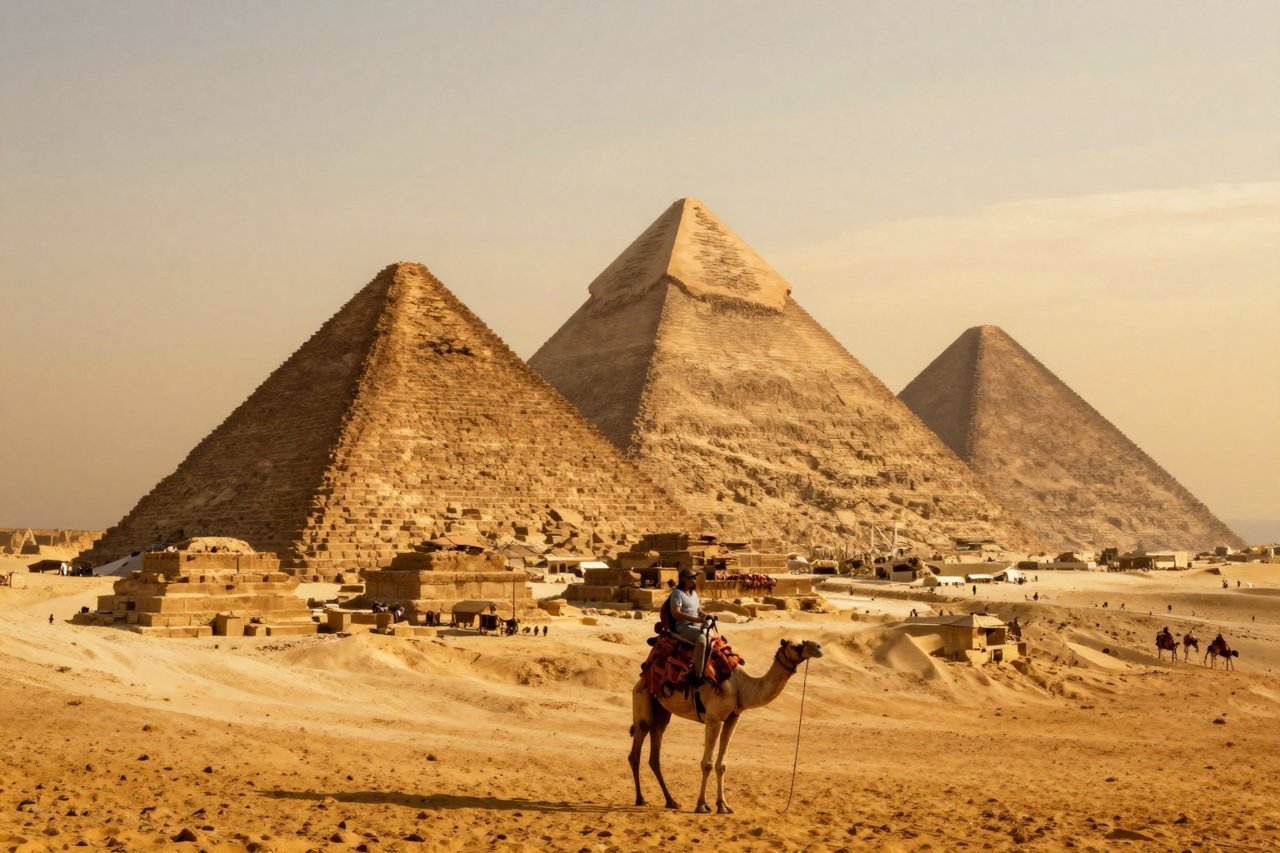
Few civilizations capture the imagination like ancient Egypt. For over 3,000 years, the pharaohs ruled a kingdom that stretched along the Nile. Their achievements in architecture, medicine, and astronomy were staggering. The Great Pyramid of Giza, built around 2560 BCE, remained the tallest man-made structure for nearly 4,000 years. It required the labor of thousands, but recent evidence suggests workers were skilled laborers, not slaves.
Egyptian hieroglyphs, deciphered thanks to the Rosetta Stone, reveal a society obsessed with order and the afterlife. Their mummification practices preserved bodies for eternity, though we now know that ancient airbursts might have also left marks on the landscape, showing how environmental events shaped their world.
The Mystery of Akhenaten
Pharaoh Akhenaten tried to revolutionize Egyptian religion by promoting a single sun god, Aten. This early monotheism was short-lived; after his death, traditional polytheism returned. His reign left a unique archaeological record, including the city of Amarna, which was abandoned and preserved in the desert sands.
The Indus Valley: A Peaceful Enigma
While Egypt and Mesopotamia built monuments to gods and kings, the Indus Valley civilization (c. 2600–1900 BCE) in present-day Pakistan and India focused on urban planning. Cities like Mohenjo-Daro and Harappa had grid layouts, advanced drainage systems, and standardized brick sizes. They also created the earliest known toilets and public baths.
Remarkably, there is little evidence of warfare or palaces. No grand temples or royal tombs have been found, suggesting a more egalitarian society. Their script remains undeciphered, leaving us with ancient symbols and sacred wisdom that we can only guess at. The civilization declined around 1900 BCE, possibly due to climate change or river shifts.
Ancient China: A Continuous Legacy
China’s ancient civilization is unique in its continuity. The Shang dynasty (c. 1600–1046 BCE) left the first written records on oracle bones—turtle shells used for divination. The Zhou dynasty followed, introducing the concept of the Mandate of Heaven, which justified rulers as chosen by divine will.
The unification of China under Qin Shi Huang in 221 BCE led to the construction of the Great Wall and the Terracotta Army, thousands of life-sized soldiers guarding his tomb. Later, the Han dynasty expanded trade along the Silk Road, connecting China to the Mediterranean. This exchange of goods and ideas shaped the ancient world profoundly.
The Maya: Masters of Time
In the dense jungles of Central America, the Maya civilization flourished from 2000 BCE to 900 CE. They developed a sophisticated writing system, the only fully developed script in the pre-Columbian Americas. Their calendar was astonishingly accurate, tracking solar years, lunar cycles, and the movements of Venus with precision.
Maya cities like Tikal and Palenque were centers of astronomy, mathematics, and art. They invented the concept of zero independently of the Old World. But their civilization experienced a mysterious collapse around 900 CE. Theories range from drought to overpopulation to political strife. Recent research using LiDAR technology has revealed vast hidden structures, showing how much we still don’t know.
Lessons from the Ancients
Ancient civilizations were not static. They rose, adapted, innovated, and often fell. Their stories echo in our own challenges: climate change, resource management, inequality, and the search for meaning. By studying them, we gain perspective. The discovery of carbon-14 dating opened a window into their timelines, allowing us to piece together their narratives with greater accuracy.
Perhaps the most humbling lesson is that no society is immune to collapse. The ancient Romans believed their empire would last forever, but it didn’t. The Maya thought their kings were divine, but their cities were abandoned. Yet their legacies endure—in our languages, laws, mathematics, and even the food we eat. The next time you look at a map, read a clock, or write a letter, remember: you are touching the work of hands that turned to dust millennia ago.


