
Table of Contents
Every generation thinks they’ve reached the peak of innovation. Then something comes along—a new material, a radical idea, a breakthrough in computing—and the world shifts again. The future inventions heading our way aren’t just faster versions of what we have now. They’re fundamentally different: from self-repairing cities to brain-computer interfaces that let you control devices with thought. Let’s explore the technologies that are likely to define life in the next two decades.
Transportation Revolution: Beyond the Wheel
The way we move has barely changed in a century. Cars still run on rubber tires over asphalt, and planes burn kerosene at 35,000 feet. But a wave of future inventions is about to turn transportation on its head.
Electric Vertical Takeoff and Landing (eVTOL) Aircraft
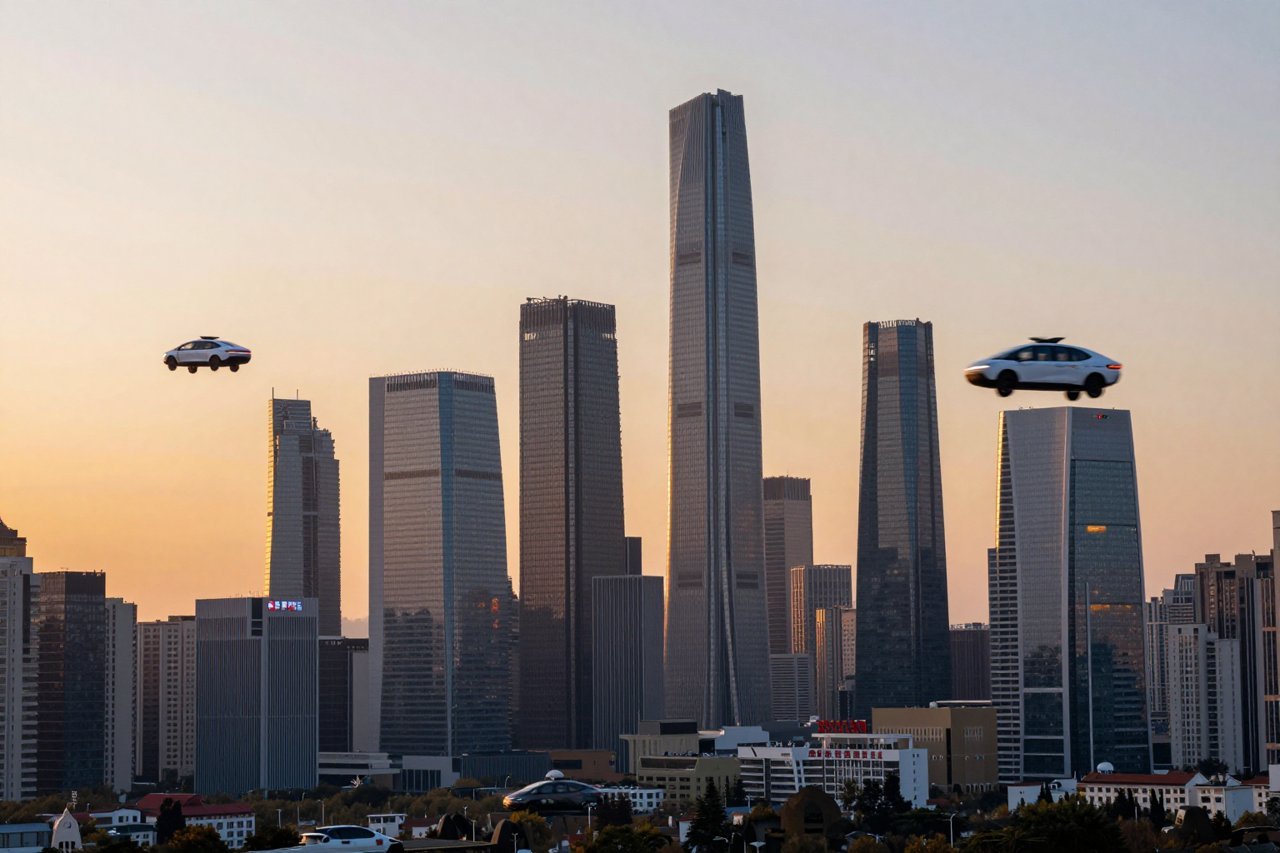
Imagine hailing a flying taxi as easily as you order an Uber. Companies like Joby Aviation and Lilium are testing eVTOLs—small, electric aircraft that take off and land vertically. They aim to carry passengers across cities in minutes, slashing commutes from an hour to under 15. The first commercial routes could be operational by 2025 in cities like Los Angeles and Dubai. These future inventions promise quiet, zero-emission urban flight.
Hyperloop and Superfast Trains
Elon Musk’s Hyperloop concept is inching closer to reality. A system of low-pressure tubes could propel passenger pods at speeds over 700 mph—think Los Angeles to San Francisco in 35 minutes. Virgin Hyperloop ran its first human test in 2020, and several countries are now building test tracks. Meanwhile, Japan’s superconducting maglev trains are already hitting 375 mph in trials. These future inventions could shrink continents.

Autonomous Everything
Self-driving cars are still imperfect, but the technology improves every year. Waymo already operates a fully driverless taxi service in Phoenix, and Tesla’s Autopilot steadily advances. The real shift will come when trucks, delivery vans, and even ships navigate without human input. The rise of autonomous transport will reshape supply chains, reduce accidents, and free up hours of human attention.
If you want a deeper timeline of what’s coming in transport and energy, read our post on Future Technology: The Inventions That Will Reshape Our World by 2030.
Healthcare: From Treating Disease to Editing Biology
Medicine is on the cusp of a revolution that goes far beyond new drugs. Future inventions in healthcare will let us rewrite our own genes, grow replacement organs, and stop cancer before it starts.
CRISPR and Gene Editing
CRISPR-Cas9 is a tool that lets scientists precisely alter DNA. Already used to treat sickle-cell disease in clinical trials, this technique could eventually eliminate inherited disorders like cystic fibrosis or Huntington’s. Beyond that, researchers are exploring gene editing to make cells resistant to HIV or to engineer immune cells that hunt down cancer. The first gene-edited babies were born in 2018 (with much controversy), but the therapeutic potential is staggering.
Nanomedicine and Cellular Repair
Nanobots—microscopic machines—could one day travel through your bloodstream. The vision: they detect damaged cells, deliver drugs exactly where needed, or even repair tissues at the molecular level. In 2021, researchers at MIT demonstrated nanobots that could unclog arteries in mice. Human trials are years away, but these future inventions could make surgery a thing of the past.
Personalized Cancer Vaccines
Cancer treatment is moving from chemotherapy’s scorched-earth approach to precision immunotherapy. Experimental mRNA vaccines—similar to the COVID-19 shots—are now being tailored to an individual’s tumor DNA. Early trials show remarkable results against melanoma and pancreatic cancer. The field is advancing fast, as we discussed in The New Frontier: How Cancer Research Is Rewriting the Rules of Treatment.
Living Beyond Earth: Space as the Next Frontier
For decades, space exploration was the domain of governments. Now private companies like SpaceX and Blue Origin are driving future inventions that could make humans a multiplanetary species.
Mars Colonies and Lunar Bases
SpaceX’s Starship is designed to carry 100 people to Mars. Elon Musk hopes to start crewed missions by 2029. NASA’s Artemis program aims to return astronauts to the Moon and build a permanent base near the south pole, where water ice could be mined for rocket fuel. These aren’t sci-fi fantasies; hardware is being built and tested. If successful, they’ll be the most ambitious future inventions of the century.
Asteroid Mining
One asteroid, 16 Psyche, is thought to contain enough nickel, iron, and precious metals to be worth $10,000 quadrillion. Robotic mining missions could harvest these resources to supply rare-earth elements for electronics and even create fuel depots for deeper space travel. Several companies are already designing the technology. The economic implications are mind-boggling.
For a broader look at how space technology can change life on Earth, check out The Next Giant Leap: How Space Exploration Is Transforming Our Future.
Artificial Intelligence and Everyday Life
AI is already embedded in our phones, search engines, and entertainment. But the next wave of future inventions will bring intelligence into the physical world in a much more intimate way.
Brain-Computer Interfaces (BCI)
Neuralink, Synchron, and other companies are developing implants that let you control computers with your mind. So far, they’ve enabled paralyzed patients to type, use social media, and even play chess. As the technology shrinks and becomes wireless, it could restore movement for people with spinal cord injuries, treat depression, and eventually let anyone interact with digital devices purely by thinking. Privacy and safety are huge concerns, but the potential is immense.
Smart Clothing and Wearables
Your next pair of sneakers might track your heart rate, correct your running form, and generate electricity from your steps. Smart fabrics with embedded sensors can monitor signs like temperature and glucose levels. By 2030, experts predict that a majority of clothing will include some form of connectivity. These future inventions blur the line between fashion and medicine.
Home Robots Beyond Roombas
The Roomba is a century ahead of its ancestors like the broom, but the real household robots are still coming. Imagine a humanoid robot that folds laundry, washes dishes, and even prepares meals. Companies like Tesla (Optimus), Boston Dynamics, and Figure are racing to build general-purpose robots for domestic use. Early versions are already working in factories. In a decade, they may be as common as dishwashers.
- Key areas where future inventions will disrupt daily life:
- Energy: Compact fusion reactors like those from Commonwealth Fusion Systems could provide unlimited clean power.
- Materials: Self-healing concrete, ultralight graphene composites, and programmable matter that changes shape.
- Communication: Holographic calls and immersive VR meetings that feel face-to-face.
These are not just gadgets. They represent a fundamental shift in how we interact with the world. To appreciate how far we’ve come, it’s worth looking back at the inventions that set the stage. Our article From Wheel to Web: 10 Inventions That Changed the World Forever puts today’s innovations in historical context.
Energy and Environment: The Cleantech Transformation
Climate change is the biggest challenge of our era, and future inventions in energy and ecology are our best bet for solving it. The shift from fossil fuels to renewables is already underway, but the game-changers are still in the lab.
Nuclear Fusion
For decades, fusion has been thirty years away. That may finally be changing. In 2022, the National Ignition Facility achieved a net energy gain from fusion—a milestone. Private firms like Helion and TAE Technologies aim to have commercial reactors by 2030. Fusion offers virtually unlimited, carbon-free energy with no long-lived radioactive waste. If it works, it’s the ultimate future invention.
Advanced Carbon Capture
Even as we cut emissions, we need to remove CO2 already in the air. Direct air capture plants, like those from Climeworks, suck CO2 from the atmosphere and store it underground or use it to make synthetic fuels. New future inventions in this space include electrochemical cells that pull carbon from seawater and convert it into minerals. Scaling these technologies could help reverse global warming.
Vertical Farming and Lab-Grown Meat
By 2050, the world will need to feed 10 billion people. Traditional agriculture uses 70% of our fresh water and generates huge emissions. Vertical farms, where greens grow under LEDs in stacked trays, use 95% less water and no pesticides. Lab-grown meat, grown from animal cells without killing animals, could eliminate the environmental impact of livestock. Both industries are growing rapidly, and their costs are dropping. These future inventions will redefine food production.
The pace of change is dizzying. Some of these ideas will fail, but many will succeed. What’s certain is that the next two decades will see more technological transformation than the last fifty years combined. The future inventions described here are not fantasies—they are projects under development, with billions in funding and ambitious timelines. We’ll be living with the results sooner than you think.


