
Table of Contents
Humanity is stepping back into the cosmos with renewed ambition. After decades of relative quiet following the Apollo era, space exploration has roared back to life. Governments and private companies are racing to the Moon, planning Mars settlements, and launching telescopes that peer into the dawn of time. This isn’t just about flags and footprints—it’s about transforming life on Earth, accelerating technology, and answering age-old questions about our place in the universe.
The New Space Race: Public Vision Meets Private Ambition
The space race of the 1960s was a geopolitical showdown. Today’s version is more complex and collaborative. NASA’s Artemis program aims to return humans to the Moon by 2025, this time with the goal of building a permanent presence. Meanwhile, SpaceX, Blue Origin, and other commercial players are developing reusable rockets that slash launch costs. The competition is healthy—it’s driving innovation faster than any single agency could alone.
Why the Moon Matters Again
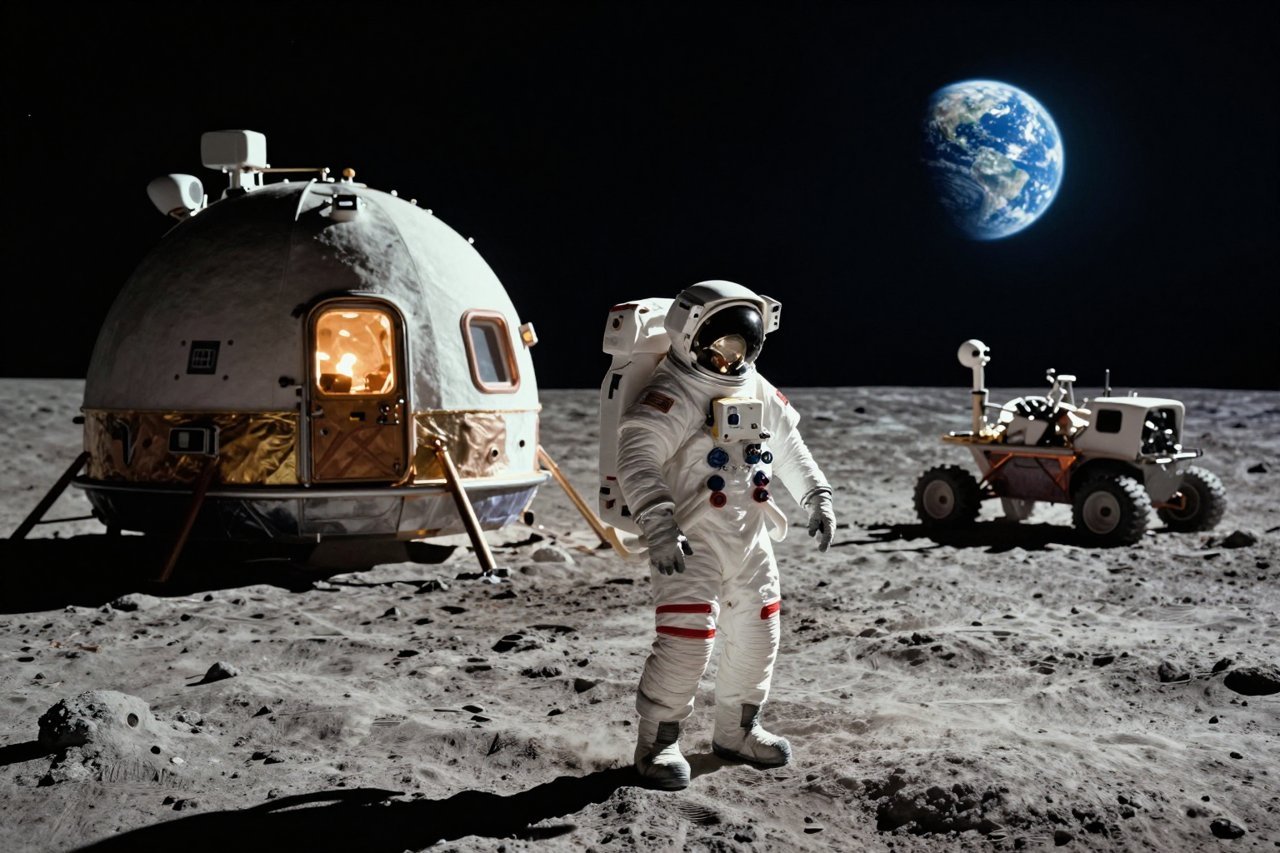
The Moon is more than a destination; it’s a proving ground. Prospecting for water ice at the poles could provide drinking water, breathable oxygen, and rocket fuel. NASA’s Artemis base camp, along with concepts from international partners, will test technologies needed for longer missions. Private companies like SpaceX are also eyeing the Moon as a stepping stone for Mars. The lunar surface offers a low-gravity environment to practice landing, living, and working on another world.
The Commercial Revolution in Low Earth Orbit
Orbital launches are no longer government monopolies. SpaceX’s Falcon 9 rockets have landed over 100 times, driving down costs. This commercial ecosystem has enabled everything from Starlink’s global internet to private astronaut missions to the International Space Station. The vast scale of our solar system becomes more approachable when launch costs drop. Companies are even planning space hotels and research labs, opening space to more than just astronauts.

Mars: The Next Horizon
Mars has captivated human imagination for centuries. Now, multiple missions are converging on the Red Planet. NASA’s Perseverance rover is caching rock samples for eventual return to Earth, while the Ingenuity helicopter has proven powered flight in the thin Martian atmosphere. China’s Tianwen-1 orbiter and rover are adding to the science. The ultimate prize—a human footprint—remains perhaps a decade away, but progress is real. For an in-depth look at what we’ve learned, check out Life on Mars: What We Know and What Comes Next.
Sending humans to Mars presents enormous challenges: the 9-month journey exposes crews to cosmic radiation, isolation, and low gravity. Solutions range from lightweight shielding to artificial gravity habitats. SpaceX’s Starship, a fully reusable stainless-steel rocket, is designed to carry 100 people at a time. First uncrewed cargo missions could happen in the late 2020s, with crewed flights following shortly after.
How Space Exploration Benefits Life on Earth
It’s easy to view space exploration as a luxury, but its spinoffs touch nearly every sector. Satellite technology underpins GPS, weather forecasting, and global communications. Earth observation satellites track climate change, monitor deforestation, and improve agriculture. Even cancer research has benefited: microgravity experiments on the ISS have revealed how cells grow and how drugs crystallize, leading to more effective treatments.
- Materials science: Alloys and optics developed for space applications end up in consumer electronics and medical devices.
- Robotics: Mars rovers have driven advances in autonomous navigation, now used in self-driving cars and factory automation.
- Energy: Solar panel efficiency has soared thanks to research for deep-space probes, feeding directly into terrestrial renewable energy.
- Food preservation: Freeze-dried packaging and nutrient-dense foods originally for astronauts have become staples for hikers and emergency relief.
Space exploration also inspires. The iconic Earthrise photo from Apollo 8 helped spark the environmental movement. The mind-blowing discoveries from space telescopes—like exoplanets in the habitable zone—reshape our perspective on life’s potential.
The Challenges Ahead: Radiation, Psyche, and the Cost Barrier
Despite the momentum, space exploration faces hard problems. Cosmic radiation remains the biggest obstacle for deep-space travel. Without Earth’s magnetic field, astronauts face increased cancer risk and potential cognitive damage. Active shielding using magnetic fields or water walls is under study. Another challenge is the human psyche: long-duration isolation in confined habitats is mentally taxing. Mission simulations on Earth and in orbit help prepare crews, but real deep-space voyages will test human endurance.
Cost is another barrier. Even with reusable rockets, sending humans to Mars is estimated at hundreds of billions of dollars. International partnerships and public-private collaborations spread the burden. NASA’s Commercial Crew Program shows the model works: SpaceX transports astronauts for far less than the Space Shuttle ever did. Emerging nations like India and the UAE are also contributing, making space exploration a truly global endeavor.
What’s Next: From Asteroids to Interstellar Probes
The next few years promise historic milestones. NASA’s Artemis II will send astronauts around the Moon in 2024, the first crewed lunar flyby since 1972. The James Webb Space Telescope is already revolutionizing astronomy, revealing details of the early universe. Upcoming missions like the asteroid Psyche—a metal-rich world that could be the core of a planetesimal—and the Dragonfly quadcopter to Saturn’s moon Titan will expand our knowledge dramatically. For a look at how these technologies fit into the broader future, see Future Technology: The Inventions That Will Reshape Our World by 2030.
Private industry is also pushing boundaries. SpaceX is developing orbital refueling, which would allow spacecraft to carry more payload beyond Earth orbit. Blue Origin’s Blue Moon lander and Axiom Space’s commercial station modules aim to create a permanent low-Earth orbit economy. Even asteroid mining is moving from science fiction to business plans—companies like Planetary Resources (now part of ConsenSys) envision extracting platinum-group metals and water from near-Earth objects.
Space exploration is not a luxury; it’s an investment in our species’ future. Every mission, every failure, every breakthrough builds knowledge that trickles down to everyday life. As we stand on the cusp of returning to the Moon and reaching for Mars, the message is clear: the final frontier is open for business, for science, and for anyone who looks up and wonders.


