
Table of Contents
The word “superfood” gets thrown around a lot. One week it’s kale, the next it’s spirulina, and somehow pomegranate seeds are supposed to change your life. But here’s the thing: the term itself has no legal or scientific definition. It’s mostly marketing. That doesn’t mean certain foods aren’t exceptionally good for you—it just means you need to separate the actual science from the hype. Your food choices shape everything from your energy levels to your long-term health, and the relationship between nutrition and vein health is a prime example of how diet affects the body in unexpected ways.
What Makes a Food a “Superfood” Anyway?
If you look at the foods that consistently earn the label, three patterns emerge. They’re unusually dense in vitamins or minerals, they carry high levels of antioxidants, and they contain bioactive compounds that have measurable effects on the body. In other words, a superfood is simply a food with an outsized nutrient-to-calorie ratio.
That doesn’t mean you need a dictionary of exotic terms. It means you need to know which foods deliver the most payoff per forkful.
The Heavy Hitters Worth Your Money
Leafy Greens (And Why Arugula Stands Out)
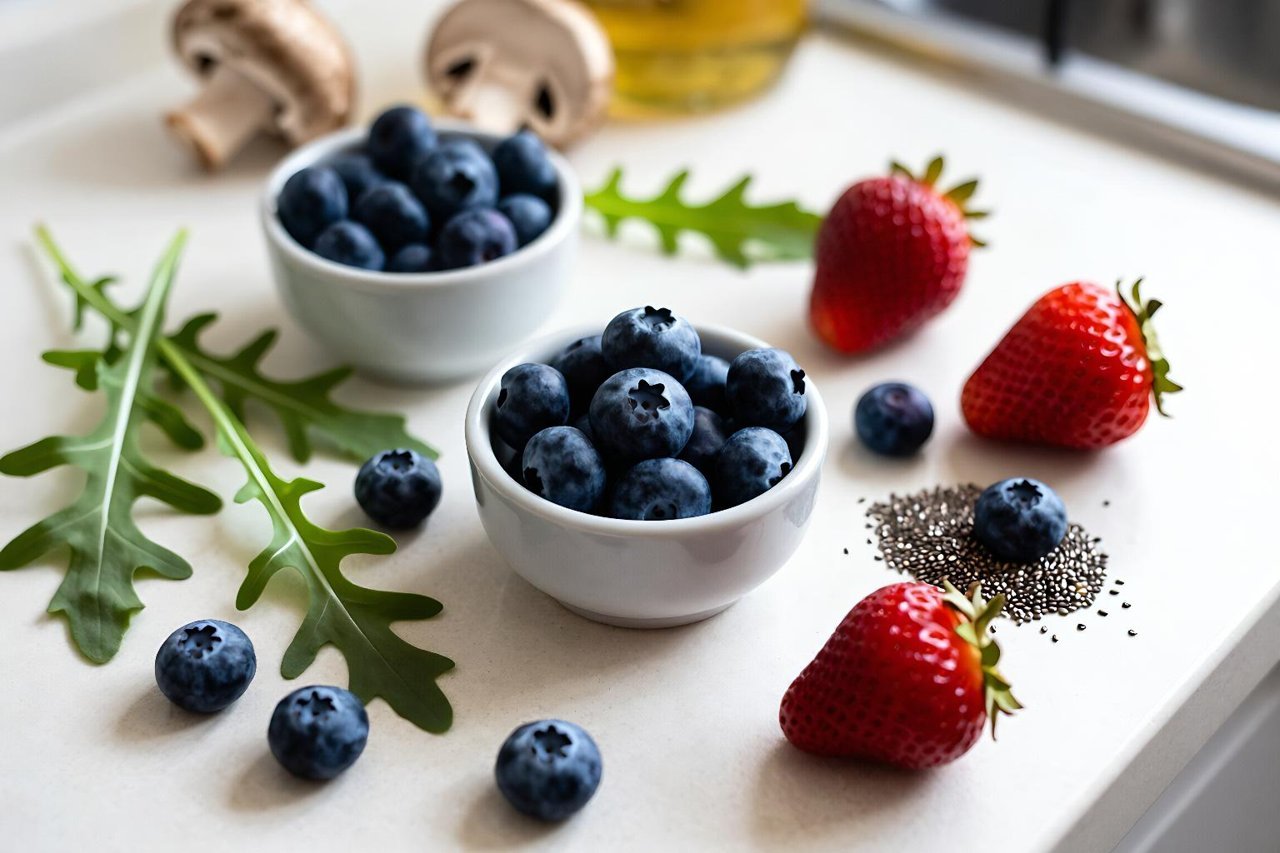
Spinach, kale, Swiss chard—they’re all excellent. But if you’re looking for one green to lean on, arugula deserves more attention. It’s rich in vitamin K, folate, and glucosinolates, which are sulfur-containing compounds that your body converts into cancer-fighting agents. The science-backed benefits of superfood arugula go far beyond its peppery flavor in salads.

Berries: Small Fruits, Big Payoff
Blueberries get most of the glory, and for good reason—a single cup has about 9 grams of fiber and more anthocyanins than almost any other fruit. Anthocyanins are the pigments that give berries their deep blue and red colors, and they’ve been linked to improved memory, lower blood pressure, and reduced inflammation. Frozen wild blueberries are just as nutritious as fresh ones, and often a fraction of the price.
Fermented Foods: The Gut Connection
Your gut microbiome plays a role in everything from digestion to mood. Fermented foods like yogurt, kefir, kimchi, and sauerkraut introduce live beneficial bacteria that help diversify your gut ecosystem. A single serving of kefir can contain more probiotic strains than an entire bottle of supplement pills.
The Problem with Superfood Marketing
Here’s where things get murky. A smoothie bowl with dragon fruit, açai, and coconut chips photographs beautifully, but the actual health benefit is modest. You’re paying a premium for a few extra antioxidants when a handful of frozen blueberries does the same job for pennies.
The term “superfood” is mostly a sales tool. Some popular superfoods, like goji berries and wheatgrass, have very little evidence behind them. Others are just ordinary foods with good PR. If you’re constantly tracking the latest health fads, you might end up chasing expensive trends that do little for your body. Many people turn to nutrition apps to make sense of it all, but there’s a real learning curve. A balanced look at the effects and precautions of popular health platforms can help you decide whether that approach is right for you.
How to Build a Superfood Routine Without Breaking the Bank
You don’t need to shop at a specialty grocery store or buy every “cleanse” kit on the market. A superfood diet is just a pattern of smart choices.
- Buy frozen berries – They’re picked at peak ripeness and frozen within hours, locking in nutrients.
- Eat more tinned fish – Sardines and mackerel are packed with omega-3s and cost a fraction of fresh salmon.
- Keep seeds on hand – Chia, flax, and pumpkin seeds add fiber and minerals to anything.
- Cook with mushrooms – They’re a source of vitamin D if exposed to UV light and provide umami flavor without much sodium.
- Grow your own greens – A window box of arugula costs a few dollars and gives you fresh leaves for months.
Mushrooms deserve extra attention because they’re one of the few non-animal sources of vitamin D. A comforting way to eat more of them is a homemade cream of mushroom soup, which beats the canned version on both flavor and nutritional honesty.
Simple Swaps to Boost Everyday Meals
You don’t need a complete kitchen overhaul. Substitute smarter ingredients in things you already cook.
- Oatmeal: Stir in a tablespoon of chia seeds. You get protein, fiber, and omega-3s.
- Sandwiches: Swap lettuce for arugula to add a peppery kick plus extra vitamin K.
- Stir-fries: Add a handful of frozen berries at the end and cook just until warm.
- Rice: Mix in cooked lentils or riced broccoli for extra fiber.
A Practical Approach to Superfoods That Lasts
The most effective “superfood” is the one you’ll actually eat repeatedly. Consistency beats novelty. If you’re not going to eat chia pudding, don’t buy a bag of chia seeds. If you hate kale, eat cabbage instead—it has similar glucosinolate content and costs less.
Build your plate around vegetables, vary your protein sources, and let the science guide you rather than the next influencer post. That’s how you get the real benefits of superfoods: not by chasing trends, but by making small, sustainable changes you can maintain for decades. Your blood vessels, brain, and gut will all notice the difference.


