
Table of Contents
The gym used to be the default place to get fit. But over the last few years, the living room, garage, or even a hotel room has proven just as effective. A home workout is no longer a compromise — for many people, it’s the better option. You skip the commute, avoid waiting for equipment, and train on your own schedule. That’s a serious advantage when you’re juggling work, family, and everything else.
That said, training at home falls apart fast without a plan. You can’t just wander into a bedroom and hope for the best. You need structure, a few key exercises, and a way to stay consistent. That’s exactly what this guide covers.
Why Home Workouts Actually Work
Consistency beats intensity every time. A home workout removes the biggest barriers to showing up: distance, time, and intimidation. When your gym is ten steps from your bed, you have no excuse to skip. Research backs this up — people who exercise at home tend to log more sessions per week than those who drive to a gym, simply because it’s easier to fit in.
You also save money. Gym memberships, commuting costs, and overpriced shakes add up. A simple home setup can cost less than two months of a standard membership and last for years. Plus, you get privacy. If you’re new to lifting or feel self-conscious in a crowded gym, your living room is a judgment-free zone.

The Smallest Equipment Setup That Still Gets Results
You don’t need a rack of kettlebells and a squat rack to see serious progress. In fact, you can build a complete home workout with just a few pieces. Here’s what I’d recommend:
- A pair of adjustable dumbbells — covers nearly every strength exercise from lunges to overhead presses.
- Resistance bands with handles — great for warm-ups, lighter accessory work, and travel.
- A yoga mat — for floor work and core training.
- A pull-up bar (if you have a sturdy doorway) — one of the best upper-body tools you can own.
If you want to upgrade your space properly, take a look at how to build a simple home gym that supports long-term healthy living — it covers flooring, storage, and equipment choices without overcomplicating things.
For those who travel often, a couple of dumbbells can fit in a suitcase. This winter travel dumbbell workout circuit shows how to run a full-body session in a tiny hotel room, proving that a home workout doesn’t require a dedicated room.
A Smart Home Workout Schedule for Busy Weeks
Instead of guessing what to do each day, set a simple weekly rhythm. A three-day full-body split works well for most beginners and intermediates. It gives you enough rest between sessions and leaves room for walking or stretching on off days.
Monday: Full-Body Strength
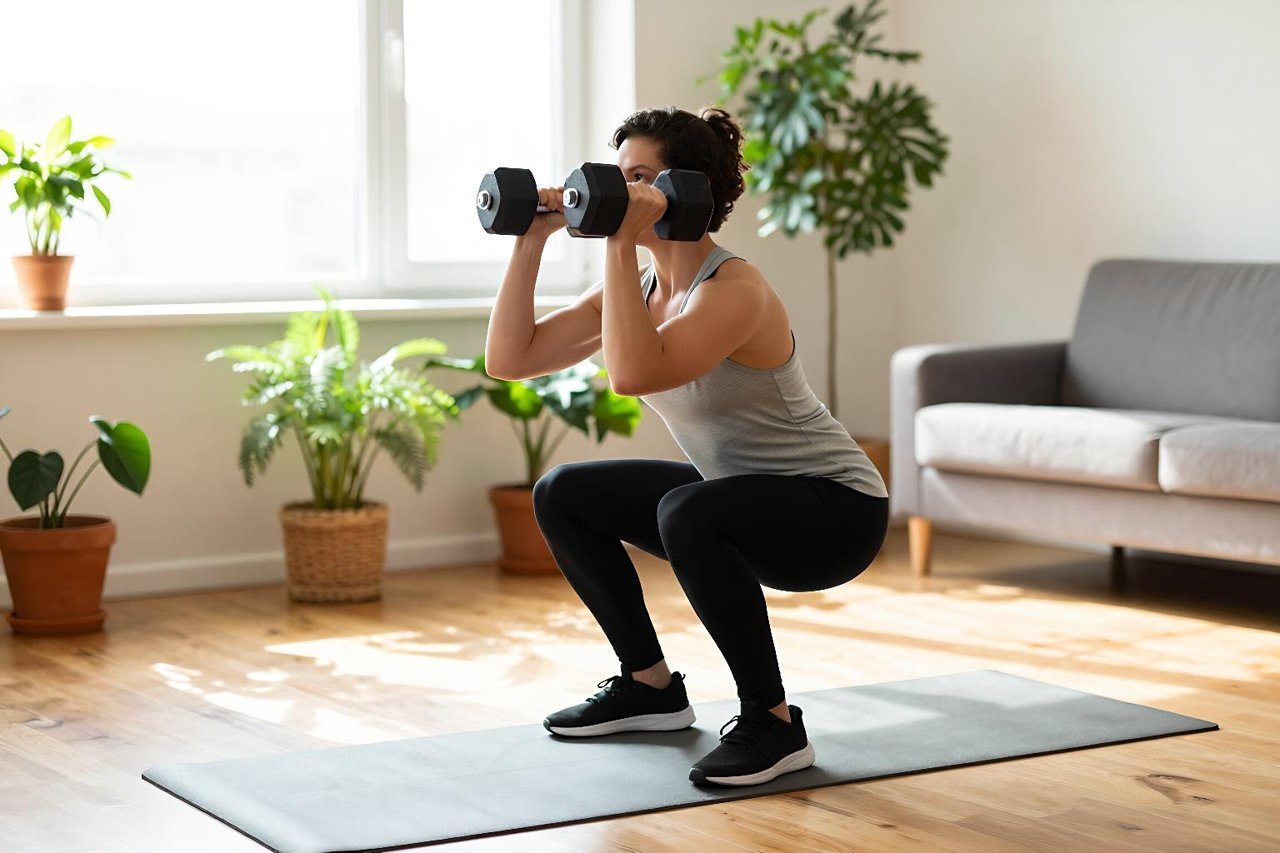
Warm up with 5 minutes of jumping jacks or high knees. Then do three sets of each exercise: goblet squats, push-ups, dumbbell rows, glute bridges, and plank holds. Keep rest between sets to 60–90 seconds.
Wednesday: Interval Cardio + Core
Alternate 30 seconds of burpees with 30 seconds of mountain climbers for 10 rounds. That’s ten minutes of work. Finish with a 10-minute core circuit: dead bugs, side planks, and bird dogs.
Friday: Full-Body Strength (Lighter)
Same as Monday but reduce the weight by about 20% and add an extra set. Focus on slow, controlled reps. This develops muscular endurance and reinforces good form.
This schedule is a starting point. If you’re more advanced, you can split it into upper/lower days or add a fourth session. The key is consistency — something a home workout makes much easier to maintain.
How to Make Your Space Work for You
Training in a cluttered room kills motivation. You don’t need a Pinterest-perfect studio, but you do need a clear area where you can move safely. A 6-by-6-foot rectangle of floor space is enough for most exercises. Keep a pair of dumbbells visible, not buried in a closet. That simple visual cue reminds you to train.
Lighting and airflow matter too. If your space feels like a cave, you’ll avoid it. Open the curtains, turn on a fan, and make sure the temperature is comfortable. The way a room looks and feels has a bigger impact on your consistency than you might think. For more tips on this, check out this guide to creating a workout space that motivates you.
Avoid the Boredom Trap: Fun and Functional Training
One of the biggest risks with a home workout is doing the same three exercises for six months until you quit. Monotony kills progress. That’s why it pays to mix in functional fitness workouts you can do at home.
Functional training focuses on movements that translate to real life — carrying groceries, climbing stairs, playing with kids. Think kettlebell swings, suitcase carries, step-ups, and rotational throws. These exercises engage multiple muscle groups and keep your brain engaged, which makes the workout feel less like a chore.
Try adding a functional circuit once a week. For example:
- Kettlebell or dumbbell deadlifts — 3 x 10
- Offset carries (heavy dumbbell in one hand) — 3 x 30 steps each side
- Box step-ups — 3 x 8 per leg
- Push-up to shoulder tap — 3 x 8 per side
It’s challenging, it’s useful, and it breaks the monotony of standard sets and reps.
The First 10 Minutes Matter Most
Most home workouts fail because people skip the warm-up and then complain about aches. A proper warm-up primes your muscles and nervous system, reducing injury risk and improving performance. Spend at least 5–10 minutes on the following:
- Light cardio: jogging in place, jumping jacks, or skipping (no rope needed).
- Dynamic stretches: leg swings, arm circles, and torso twists.
- Bodyweight activation: 10 bodyweight squats, 5 push-ups, and 10 glute bridges.
That’s it. You don’t need to stretch for 20 minutes like a yoga instructor. Get the blood flowing, wake up the joints, and then get to the main work.
Tracking Progress Without Obsessing
If you only step on a scale, you’ll miss the real gains. Instead, track simple performance metrics. Write down how many push-ups you can do in one set, how much weight you used for goblet squats, or how long you held a plank. Aim to beat those numbers every two weeks.
Photos and measurements also help. Take a front and side photo once a month, and measure your waist, hips, and chest. This gives you a more complete picture than any machine at the gym.
One more thing: don’t obsess over the occasional missed workout. Home training is flexible by design. If you miss Monday, aim for Tuesday. The goal isn’t perfection — it’s consistency over months and years. Set a timer, press play, and remember that the best workout is the one you actually do.


