
Table of Contents
Blood sugar control can feel like a numbers game, especially after meals. The goal isn’t perfection. It’s keeping glucose from spiking and crashing so you feel steady, focused, and full of energy. Certain foods actively slow digestion, blunt glucose spikes, and help your body process carbs more efficiently. That doesn’t make them miracle cures, but it does make them worth building your plate around.
How Food Affects Blood Sugar
When you eat carbohydrates, your body breaks them down into glucose. Insulin moves that glucose into cells for energy. The speed of that process depends heavily on the food itself. A slice of white bread can flood your bloodstream with sugar quickly. A bowl of oatmeal with berries releases glucose far more slowly, thanks to fiber and the physical structure of the oats.
Protein and fat slow stomach emptying, which also smooths out glucose response. That’s why chicken, eggs, nuts, and olive oil show up in just about every blood sugar conversation. Pairing a carbohydrate with protein, fat, or fiber lowers the overall glycemic load of a meal.
The Best Foods That Lower Blood Sugar
None of these foods work alone, but they all bring something real to the table. Some are high in soluble fiber. Others have minerals linked to insulin sensitivity. Many are surprisingly low in carbs while still making meals satisfying.

Leafy Greens and Non-Starchy Vegetables
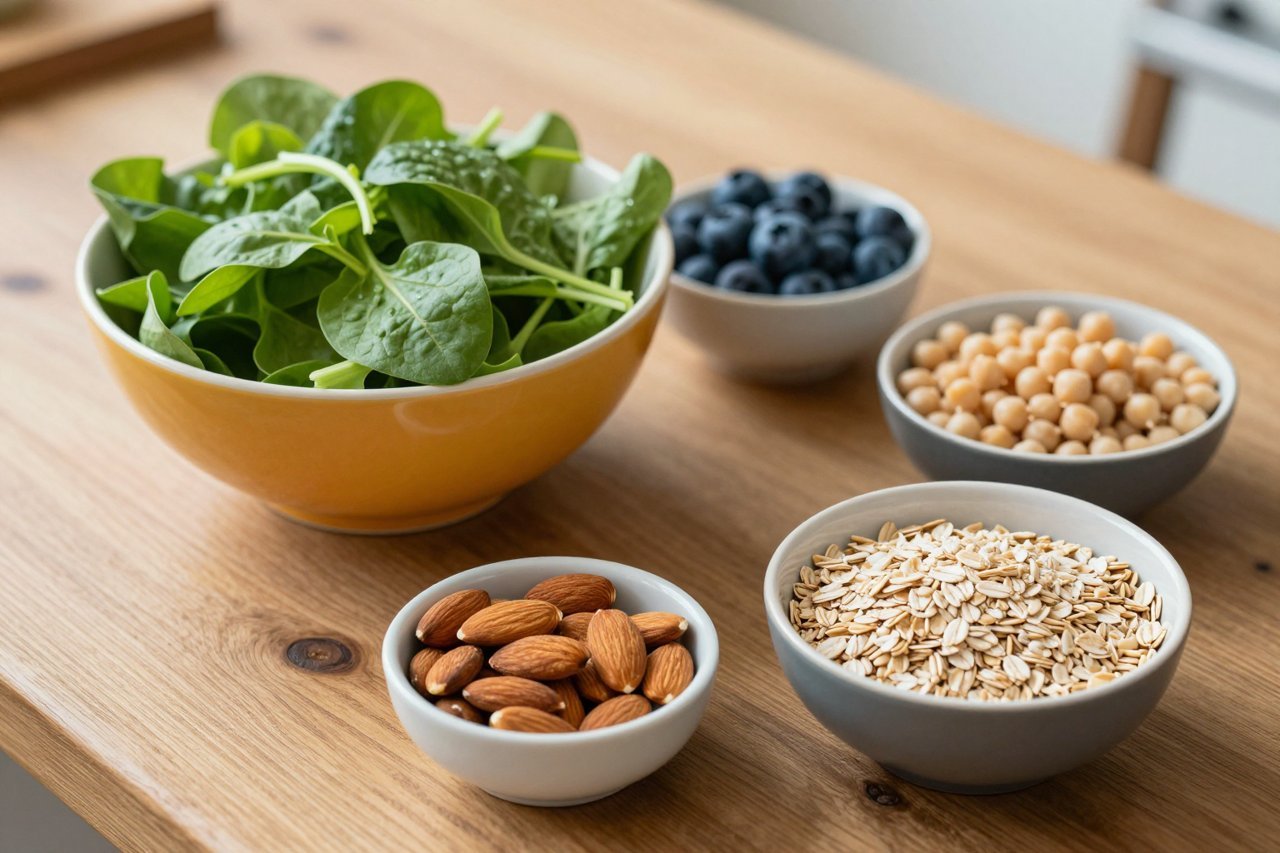
Spinach, kale, Swiss chard, arugula, broccoli, zucchini, and cauliflower all have a tiny effect on blood sugar. A cup of cooked spinach has almost zero digestible carbs, yet it gives you magnesium, potassium, and a host of compounds that support metabolic health. Non-starchy vegetables also add bulk to your plate, so you feel full without driving up glucose.
These vegetables often get lumped into the loose category of superfoods because they pack a lot of nutrition into very few calories. The term is overused, but for leafy greens it’s honestly not far off.
Beans and Lentils
Black beans, chickpeas, lentils, and kidney beans are loaded with soluble fiber and plant protein. That combination slows digestion and reduces the glucose spike after a meal. Eating about half a cup of lentils with rice can blunt the blood sugar response of the rice considerably.
Beans also contain resistant starch, which feeds gut bacteria and improves insulin sensitivity over time. If you want to eat more of them without discomfort, this practical guide to foods high in fiber covers soaking, rinsing, and how to add volume without bloating.
Nuts and Seeds
Almonds, walnuts, pistachios, chia seeds, and flaxseeds are rich in healthy fats and magnesium. Fat slows the transit of food through your stomach, so blood sugar rises more gradually. A handful of almonds taken before a meal can reduce the post-meal glucose spike in some people.
Nuts are calorie-dense, so treat them as a snack, not a free-for-all. A proper serving is about 30 grams, or one small handful. Chia seeds are simpler to portion: two tablespoons added to yogurt or smoothies give you 10 grams of fiber and a creamy texture.
Whole Grains That Have Kept Their Fiber
Not all carbs are equal. Steel-cut oats, barley, quinoa, farro, and brown rice still have their outer bran and germ, which means more fiber and a slower release of glucose. Barley is especially potent because of beta-glucan, a soluble fiber that thickens like porridge and delays emptying of the stomach.
Swapping white rice for barley or cracked wheat is one of the easiest changes you can make. It can cut the glycemic index of a dish almost in half. The texture takes a little getting used to, but within a week it becomes the new normal.
Berries and Low-Sugar Fruit
Blueberries, raspberries, strawberries, and blackberries are remarkable. A cup of raspberries has about 7 grams of fiber and only 15 grams of carbs. Because of that fiber, berries cause only a modest rise in blood sugar when eaten on their own.
Pair them with full-fat Greek yogurt or a spoonful of almond butter. The protein and fat turn a small bowl of berries into a snack that keeps you satisfied for hours, not just minutes.
Yogurt and Fermented Foods
Unsweetened Greek yogurt, kefir, and fermented vegetables like sauerkraut have shown some benefit in blood sugar control. Fermented foods promote a healthier gut microbiome, which plays a role in insulin sensitivity. Greek yogurt also delivers protein and calcium. Keep the added sugar near zero by choosing plain versions and adding your own flavorings.
Build a Plate That Doesn’t Spike Glucose
You don’t need to memorize a glycemic index chart. Instead, use a simple plate equation:
- Fill half your plate with non-starchy vegetables
- Reserve a quarter for lean protein like chicken, fish, eggs, or tofu
- Use the remaining quarter for whole-food carbs like beans, quinoa, or sweet potato
- Add a small amount of healthy fat, such as olive oil, avocado, or a few nuts
That visual model works for lunch and dinner. It guarantees a mix of protein, fat, and fiber, which are the three things that flatten glucose curves. If you are trying to eat more volume without extra calories, adding more leafy vegetables is a smart move. The ultimate guide to low-calorie foods that fill you up goes into more detail on the science behind that.
Easy Food Swaps to Lower Blood Sugar All Day
Small changes compound. Here are practical swaps that cut glucose peaks without making food feel like a punishment:
- Swap white rice for barley or quinoa. You lose almost nothing in convenience and gain fiber, protein, and a chewier texture.
- Replace fruit juice with whole fruit. A glass of orange juice can spike blood sugar like soda. An actual orange comes with fiber and takes longer to eat.
- Choose plain Greek yogurt over sweetened yogurt. Flavored yogurts often contain 15 grams of added sugar. Add berries and a sprinkle of cinnamon instead.
- Snack on nuts or hummus instead of crackers. Crackers are refined carbs. Hummus gives you fiber and protein; nuts add fat that slows digestion.
- Add vinegar to your meals. A splash of vinegar on a salad or roasted vegetables may reduce the post-meal glucose rise.
A Simple Day of Blood-Sugar-Friendly Eating
Putting these foods into practice is easier with a template. Here’s how a day might look.
Breakfast: Steel-Cut Oats with Berries and Nuts
Cook 1/4 cup of steel-cut oats with water or unsweetened almond milk. Top with 1/2 cup of blueberries, a spoonful of almond butter, and a sprinkle of chia seeds. That combination gives you fat, protein, and soluble fiber to carry you through the morning.
Lunch: Big Salad with Chickpeas, Grilled Chicken, and Olive Oil
Start with a huge bed of spinach and arugula. Add 3/4 cup of roasted chickpeas, some sliced chicken breast, cherry tomatoes, and cucumber. Dress with olive oil and red wine vinegar. The chickpeas and chicken are a solid source of protein and fiber, which is exactly the kind of meal that prevents an afternoon slump.
Dinner: Salmon with Barley and Roasted Broccoli
Serve salmon with 1/2 cup of cooked barley and as much roasted broccoli as you like. Drizzle everything with olive oil and lemon. Salmon supplies omega-3 fats, which are linked to better insulin sensitivity. Barley’s beta-glucan helps keep glucose levels steady into the evening.
For more protein-focused meal ideas with actual numbers, this foods high in protein reference is a useful companion. It shows how much protein common foods really have, so you can hit the right portion without guessing.
The goal is to make foods like these the default. Keep frozen spinach in the freezer, canned beans in the pantry, and a bag of oats on the counter. When your kitchen is set up for stable blood sugar, you don’t have to think about it every single meal. It just happens.


