
Table of Contents
You’ve heard protein is important. Maybe you’re trying to build muscle, lose weight, or simply stop feeling hungry an hour after lunch. The good news? Eating more is simpler than most people think, and the options go far beyond dry chicken breast and chalky shakes.
This guide covers foods high in protein that actually deserve space on your plate, with specific numbers you can use, plus practical tips for fitting more into your day. No fads, no unnecessary supplements, just food.
Why your protein intake deserves a second look
Protein is the building block for muscles, skin, hair, and enzymes. It also steadies blood sugar and keeps you fuller than carbs or fats, which is why nutrition experts put it at the centre of weight-loss diets. Research shows high-protein diets preserve lean body mass during a calorie deficit, meaning you lose mostly fat instead of muscle. If that’s your goal, the best high-protein foods for weight loss are a good starting point.
How much do you need? A common baseline is 0.8 grams per kilogram of body weight for inactive people. If you exercise regularly, aim for 1.6 to 2.2 grams per kilogram. That’s roughly one palm-sized portion of chicken, fish, or tofu at each meal.

Animal-based foods high in protein (the classics, with numbers)
Animal proteins are complete, meaning they contain all nine essential amino acids. Here’s how the most popular options stack up.
Chicken breast
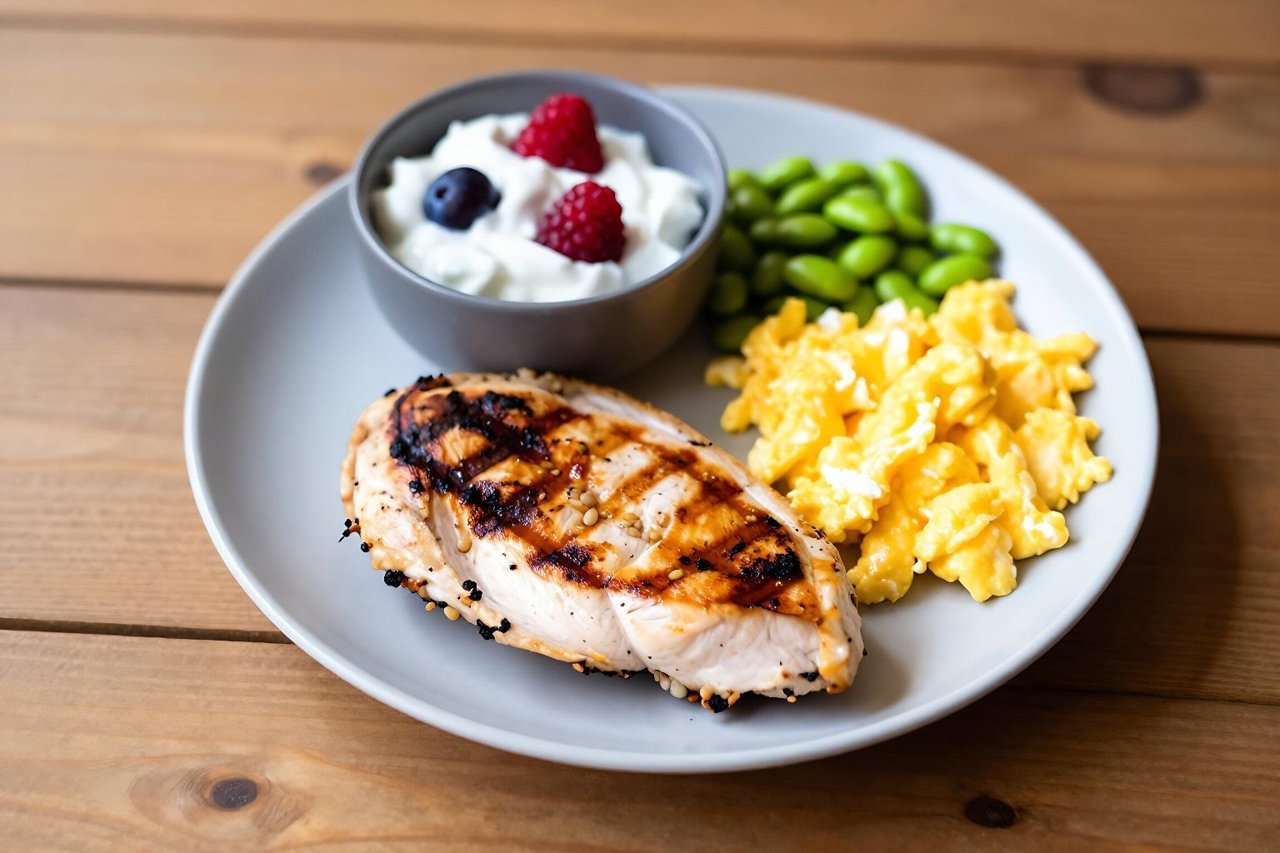
A cooked 100-gram portion of skinless chicken breast delivers around 31 grams of protein and just 165 calories. It’s lean, takes any seasoning, and works in stir-fries, salads, or soups. The only downside is dryness, so cook it hot and fast or poach it in stock.
Eggs
Each large egg has 6 grams of protein and only 70 calories, plus choline for brain health and vitamin D. They’re affordable, quick, and versatile. If you train with weights, protein is non-negotiable, and eggs are a staple in any list of best high-protein foods for muscle gain. A couple at breakfast can set up your whole day.
Greek yogurt
Plain Greek yogurt is a dense source: about 20 grams per 200-gram serving. It’s also rich in calcium and probiotics. The plain version has no added sugar, but you can mix in fruit, nuts, or a little honey. For a savory twist, use it as a dip or in place of sour cream.
Fish (salmon, tuna, cod)
Cooked salmon provides 25 grams per 100 grams, plus omega-3 fats that support heart health. Canned tuna has about the same and is a cheap, shelf-stable option. White fish like cod is lower in fat but still gives you 20+ grams per serving.
Plant-based foods high in protein (so you’re not just eating tofu)
Plant proteins often come with fiber and antioxidants, which meat lacks. The caveat is that many are lower in certain amino acids, but eating a variety covers that. Here are the ones that pull their weight.
Lentils
Cooked lentils pack 9 grams of protein and 8 grams of fiber per 100 grams. They cook in about 20 minutes, no soaking needed. Because they’re high in fiber, increase them gradually or you’ll feel bloated. That’s where the high-fiber guide comes in handy if you’re new to them.
Chickpeas
Chickpeas are the base of hummus and a star in curries and salads. They give you 8.9 grams per 100 grams cooked, plus iron and folate. Roast them with olive oil and spices for a crunchy snack.
Edamame
Edamame are immature soybeans and one of the few complete plant proteins. A 100-gram shelled, cooked portion has 11 grams of protein. They make a great snack straight from the steamer, and a bowl of edamame will keep you busy for a while.
Seitan
Seitan is made from wheat gluten and offers a shocking 25 grams per 100 grams. It has a meaty texture and absorbs marinades well. If you don’t have celiac disease, it’s a great way to add volume to vegetarian meals.
Overlooked foods high in protein (that are worth a spot in your kitchen)
Even if you’ve covered the obvious sources, a few other foods deserve attention. These add variety and make hitting your target that much easier.
Cottage cheese
Cottage cheese is making a comeback. A 100-gram portion of low-fat cottage cheese has 11 grams of protein, along with calcium and B12. It’s creamy, slightly tangy, and works both sweet (with pineapple) and savory (with black pepper and chives).
Pumpkin seeds
Give pumpkin seeds a chance. A 30-gram handful provides about 9 grams of protein, which is surprisingly high for a seed. They also contain zinc and magnesium, and they make a crunchy topping for salads or yogurt without adding much fat.
Sardines
Sardines pack 25 grams of protein per 100 grams, and you don’t have to remove the tiny bones, which are soft and full of calcium. They’re a convenient canned source of omega-3s. If you’re not into them straight from the tin, add them to tomato pasta or a spread.
Portions, timing, and easy ways to get more protein
You don’t need to track every gram, but a few guidelines help. A serving of protein at breakfast sharpens focus and reduces the lure of the vending machine at 10 a.m. Spreading protein across meals also triggers muscle-building signals throughout the day.
Try these practical swaps:
- Swap sugary cereal for Greek yogurt or eggs. You’ll get three times the protein.
- Add a scoop of collagen or peanut powder to your coffee or smoothie.
- Choose chicken or turkey slices over bread-heavy deli items at lunch.
- Mix lentils into ground beef dishes. That boosts protein and fiber.
- Keep frozen edamame or canned tuna in the pantry for emergency meals.
One more thing: protein powders are convenient, but whole foods should be your primary source. They supply vitamins, minerals, and other nutrients you don’t get from a scoop. Save shakes for days when you’re short on time or after a workout.
As you increase your intake, go slowly. Going from 70 to 150 grams overnight can cause digestive discomfort. Give your gut a couple of weeks to adapt, and drink plenty of water.
And the real secret? Make it taste good. The best high-protein foods to fuel your body and taste buds are the ones you’ll actually eat repeatedly. That might mean trying one new recipe each week or learning to cook with spices you’ve never touched.
Start with one meal. Make it the one you most often skip or rush. Once you’ve turned that meal into a protein habit, move to the next. Before long, you’ll hit your target without even thinking about it.


