
Table of Contents
Europe is a small peninsula jutting off the western edge of Asia. Yet from that rocky and temperate sliver, an outsized share of the world’s political thought, scientific discovery, and destructive fury has flowed. The history of Europe is a story of borrowing and brawling, of merchants and monks, of empires that collapsed so quickly they left only ruins, and ideas that proved tougher than any wall.
No single narrative can contain it. What we call Europe has no fixed geographical border in the east and no fixed cultural border anywhere. It has been redefined by every generation, often with blood.
The Ancient Roots: Greece, Rome, and the European Idea
To ask where the history of Europe begins is to start in the eastern Mediterranean. Around 800 BCE, Greek-speaking city-states began to develop a new way of thinking. Socrates walked the streets of Athens raising questions no one could answer; by the fourth century BCE, Aristotle was cataloguing everything from dolphin anatomy to political systems. The Greek experiment with democracy, however imperfect, created a template for citizen self-rule that would never entirely disappear.
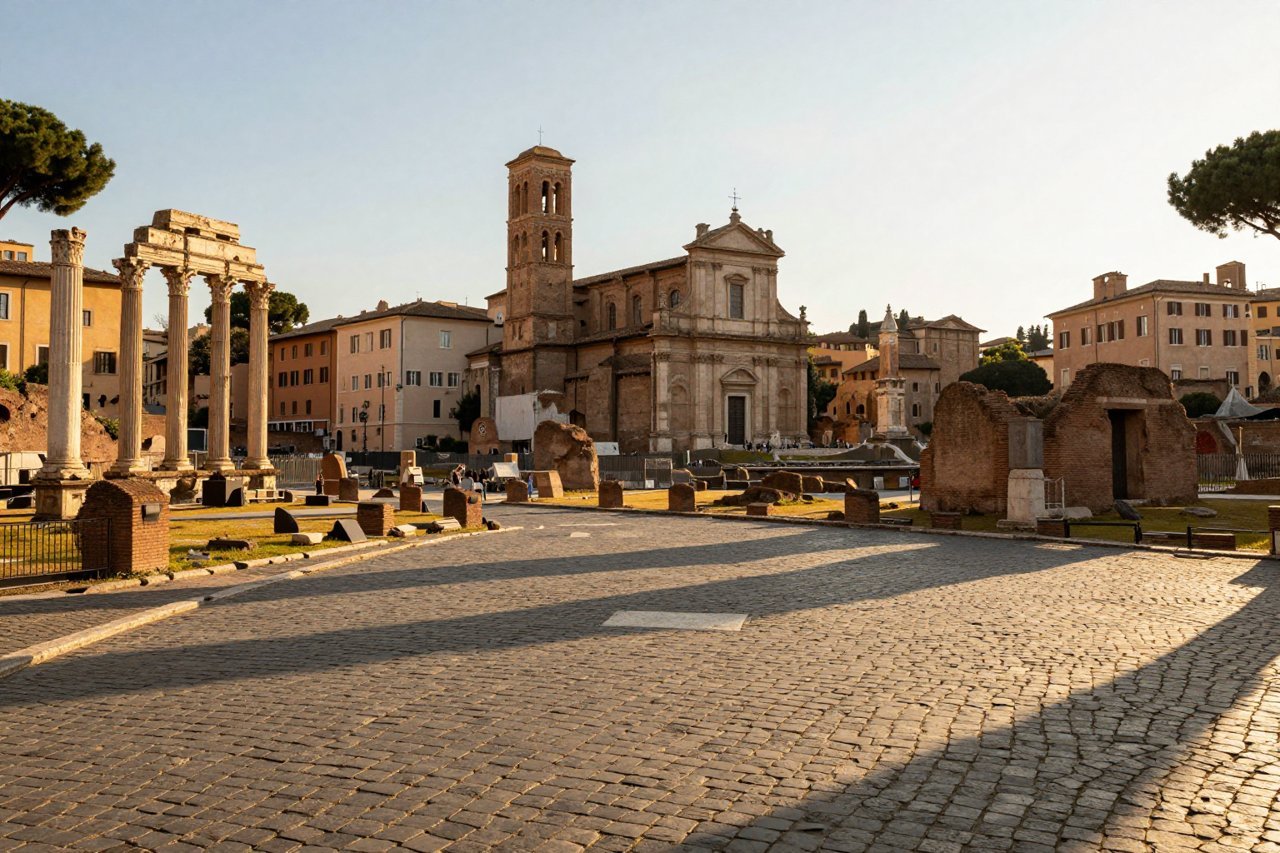
Rome took up the template and made it engineering. By the second century CE, the Empire stretched from Hadrian’s Wall to the Euphrates. Roman law, Latin prose, and the network of stone roads set the stage for almost everything that followed. When the Empire collapsed in the west in the late fifth century, it didn’t just vanish. It left behind the ruins, the roads, and haunting questions about who would inherit the universal Roman dream.

The Greek Miracle and the Roman Framework
The Greeks gave Europe philosophy and the theatre. The Romans gave it law, infrastructure, and a sense of a common civilization. Both shaped the continent’s languages: Latin evolved into French, Italian, Spanish, and Portuguese, while Greek remained the language of learning in the Byzantine Empire for another thousand years.
But by 600 CE, the western half of the old Empire was a patchwork of small Germanic kingdoms. The cities had thinned. The coins felt cheaper in the hand. And yet, the ground had been seeded.
The Middle Ages: Faith, Feudalism, and the Long Forging
Over the next millennium, Europe went through what many come to call the medieval millennium, and the history of Christianity is inseparable from the history of Europe. The Church was the largest landowner, the primary banker, and the ultimate arbiter of cultural meaning. Monasteries copied classics that would otherwise have vanished, and pilgrims walked thousands of miles to a saint’s bones.
The medieval period wasn’t a single static block. It was a period of constant adaptation. In the eighth century, the Umayyad Caliphate conquered much of Iberia. That’s where the history of Islam and Europe first seriously intertwined, and the libraries of Cordoba became a beacon for scholars.
At the same time, from the north, Norse seafarers descended on Britain and the Atlantic coast. The real Viking history is less about horned helmets and more about wide-ranging trade routes that stretched from Dublin to Constantinople.
Feudalism took shape out of the wreckage of strong central authority. It was a managed chaos. Let’s list some of the mechanisms that held medieval Europe together:
- Monastic networks that preserved writing and new farming techniques.
- Guilds that protected trades and trained apprentices in city workshops.
- Parliaments and the first stirrings of representative government, especially in England and León.
- Universities, from Bologna to Oxford, where canon law and natural philosophy were debated in Latin.
- Internally, a shared calendar shaped by the church built a slow rhythm across the continent.
But with the Black Death in 1347-1351, roughly a third of the population died. Village fields went fallow. Manors collapsed. Those who survived discovered they could demand better wages, and the old system began to crack.
Renaissance, Reformation, and the Shock of the New
From that earlier trauma came the Renaissance. Surviving Greek manuscripts, many of which had been preserved in the Islamic world, flowed back into Italy and then across the Alps. Artists like Leonardo da Vinci and Michelangelo turned curiosity into an aesthetic. Machiavelli looked at power with a cold, secular gaze. It was a period of profound rebirth, but also of instability.
When Martin Luther nailed his 95 theses to a Wittenberg church door in 1517, the unity of Christendom shattered. A generation of religious wars followed, and one result was the idea of the sovereign nation-state. The Peace of Westphalia in 1648 fixed borders and gave princes the right to determine their own religious paths. Europe would now be a system of competing states, not a single spiritual order.
Exploration had already begun. Under the patronage of Isabella and Ferdinand, Columbus crossed the Atlantic in 1492. Soon the Portuguese rounded Africa and opened a sea route to India. Europe began to wrench global commerce, and the Atlantic slave trade, into its own orbit. This was not a simple story of progress; it was also one of coercion and extraction.
The Age of Revolutions: Reason, Rights, and the Nation-State
The Enlightenment of the 1700s challenged the hereditary order. Philosophers like Locke, Voltaire, and Rousseau argued for natural rights and the separation of powers. To see those ideas put into practice, many Europeans watched the unfolding of the American Revolution. The history of the United States is, in some ways, a laboratory for European ideas, and it fed back across the Atlantic when Thomas Paine’s pamphlets were devoured in Paris and London.
Then came the French Revolution of 1789. The French Revolution turned Enlightenment principles into a universal slogan: liberty, equality, fraternity. It destroyed the old aristocracy and terrified every crowned head on the continent. Napoleon then spread the Napoleonic Code through his conquests, creating a new legal framework even as he brutally violated the revolution’s ideals. The subsequent century saw nationalism rise, and Europe unified as a patchwork of nation-states, from Italy in 1861 to Germany in 1871.
The Industrial Transformation
Underneath the political upheaval, the Industrial Revolution was restructuring daily life. In 1750, nearly everyone worked the fields. By 1900, industrial cities like Manchester produced millions of tons of cotton cloth, and the railways cut travel times in half. Europe’s population boomed, its armies grew, and the pressure for raw materials abroad made empires appear necessary to European finance.
The Great War and the Second Catastrophe
The continent tripped into the First World War in 1914 with a mixture of nationalism, alliance systems, and misplaced optimism. Four years of industrial slaughter killed around 9 million soldiers. The aftermath, however, was not a true peace. The Treaty of Versailles left Germany humiliated, and the empires of Austro-Hungary and the Ottomans were dismantled into fragile new states.
The interwar years were a broken mirror: economic depression, fascist movements, and a deep cultural despair. The Second World War followed, and from 1939 to 1945 Europe became the primary battlefield of a global catastrophe. The Holocaust remains the darkest stain in the history of Europe, an industrial murder of six million Jews and millions of others. When the war ended in 1945, most of the continent lay in ruins.
A Contested Union: Europe Since 1945
Out of the ashes, European leaders sought new structures that would make war unthinkable. A first step came in 1951 with the European Coal and Steel Community, which tied the fortunes of former enemies. Over the following decades, that grew into the European Union. The EU has no single army, but it enlists trade, a common currency, and open borders between member states. For many, it is the most ambitious political project of the modern age.
Yet the road has not been smooth. The Cold War split Europe into East and West, with the Berlin Wall a concrete symbol. When the Wall fell in 1989, the continent rejoined itself. But the sudden reunification brought economic divergence, and in the 2010s, the euro crisis, migration flows, and Brexit all tested the idea of a shared destiny.
Europe today remains a paradox: it can absorb more history in a single weekend than most nations pack into a century. Ancient ruins sit next to high-speed rail; farmers plough around Roman walls; separate languages thrive under a single bureaucracy. The history of Europe is unfinished, and that is exactly why it remains so compelling to follow.


