
Table of Contents
The best fat-loss exercises aren’t the ones you see on late-night infomercials. They’re not the glitzy machines that promise to “tone” your thighs while you watch TV. Instead, they’re fundamental, compound movements that demand a lot from your body. When you train with these, you’ll feel your heart pound, your muscles shake, and your calorie burn continue long after you’ve left the gym.
What Makes an Exercise Truly Effective for Fat Loss?
Getting lean comes down to burning more calories than you consume. But the type of exercise you choose influences how many calories you burn, both during and after your session. Here are two key factors that separate the best fat-loss exercises from the rest.
The Afterburn Effect (EPOC)
High-intensity work, especially compound lifts and metabolic circuits, creates something called excess post-exercise oxygen consumption (EPOC). That means your body keeps burning extra calories for hours after you finish training as it restores oxygen levels and repairs muscle tissue. Burpees, kettlebell swings, and heavy squats all trigger a noticeable afterburn. Easy cardio on a treadmill? Not so much.
Muscle Mass Means a Higher Metabolic Rate
Compound exercises build more muscle because they engage multiple joints at once. Muscle tissue is metabolically active—it requires more calories at rest than fat. So while a single set might not burn a huge number of calories compared to steady-state cardio, the muscle you build keeps paying you back. Over time, you get a slightly faster baseline metabolism.

The Top 7 Exercises for Fat Loss
There are countless exercises you could pick, but these seven set the standard. They’re simple, effective, and don’t require a massive home gym. For each one, you’ll get the form cues and the reason it deserves a place in your program.
1. Goblet Squat
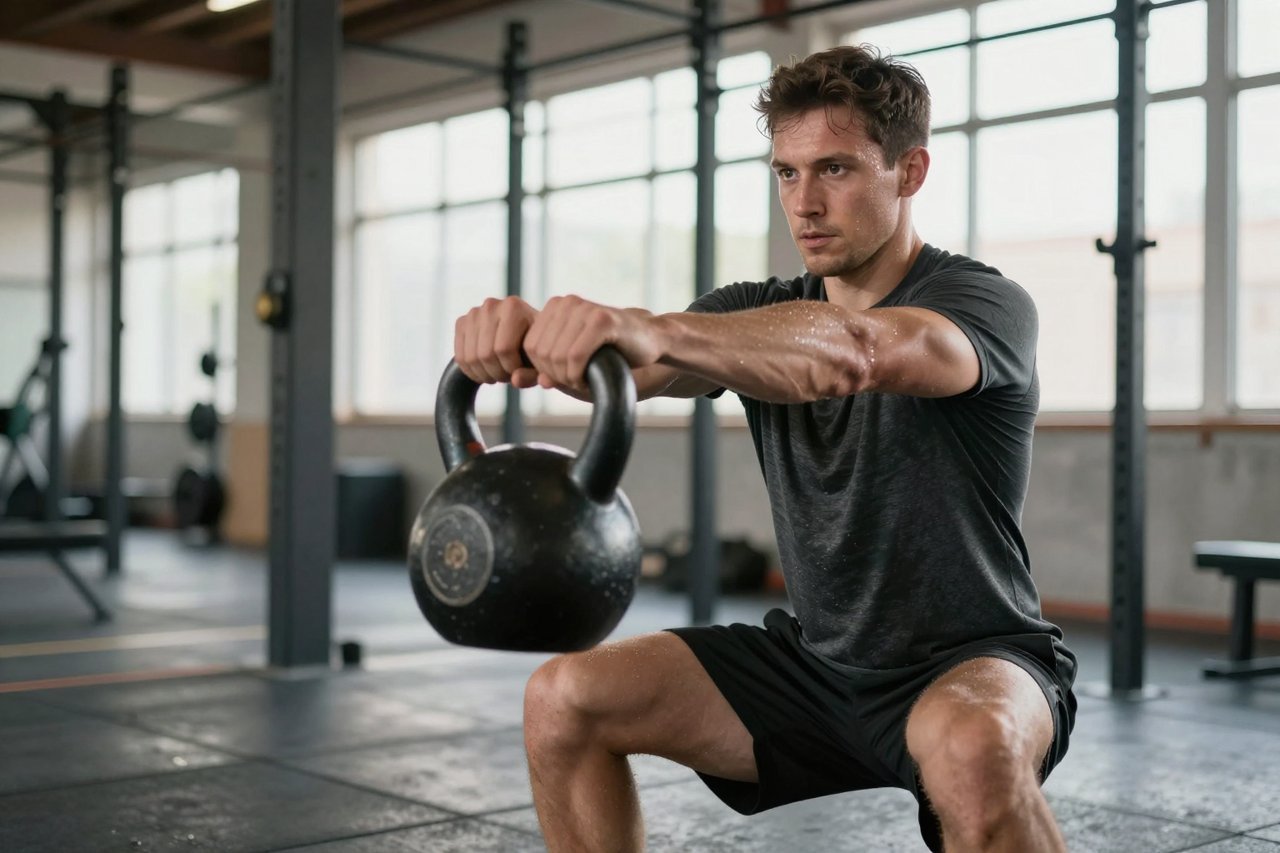
The goblet squat is a squat variation where you hold a dumbbell or kettlebell at your chest. It’s one of the best exercises for fat loss because it works your legs, glutes, and core while keeping your heart rate high. Stand with your feet shoulder-width apart, hold the weight tight against your chest, and squat until your thighs are at least parallel to the floor. Drive up through your heels. Aim for 3 sets of 10–15 reps with a challenging weight.
2. Kettlebell Swing
The kettlebell swing is a powerful hip-hinge move that targets your posterior chain—glutes, hamstrings, and lower back. It’s also a serious conditioning tool. When done properly, your hips do most of the work; your arms are just hooks. Keep your back flat, hinge at the hips, and snap forward to swing the bell up to chest height. Do 3 sets of 15–20 reps, focusing on explosive power rather than just rushing the reps.
3. Push-Up
The humble push-up never goes out of style. It works your chest, shoulders, triceps, and core all at once. You can make it easier by placing your hands on a bench, or harder by elevating your feet. For fat loss, do them with controlled speed and full body tightness. Round out your session with 3 sets of 8–20 reps, depending on your strength.
4. Inverted Row
You might not think of pulling exercises as fat burners, but the inverted row is a game-changer. It hits your back, biceps, and rear delts while forcing you to keep your entire body rigid. Set a barbell in a rack at hip height, hang underneath it, and pull your chest to the bar. Your core will fire hard to keep your hips from sagging. Try 3 sets of 8–12 reps.
5. Walking Lunge
Lunges are unilateral, so each leg works independently, which generates high muscle activation in the quads, glutes, and hamstrings. The walking version adds a balance challenge and elevates your heart rate. Hold a pair of dumbbells and take deliberate steps forward, lowering your back knee just above the floor. Do 3 sets of 10–12 steps per leg.
6. Burpee
Love them or hate them, burpees are a staple in fat-loss training. They combine a squat, a plank, a push-up, and a jump in one continuous movement. That’s why they spike your heart rate and burn serious calories. If a full burpee is too much in the start, skip the push-up or the jump. Keep your chest hitting the floor and push up explosively. Aim for 3 sets of 10–15 clean reps. If your concern is stubborn belly fat, keep in mind that no single exercise can spot-reduce fat from your midsection. You need to lower your overall body fat, and this guide on reducing abdominal fat walks you through lifestyle and diet strategies that work.
7. Farmer’s Carry
The farmer’s carry might not look like a fat burner, but it’s one of the most underrated tools on this list. Pick up a heavy dumbbell in each hand, brace your core, and walk with perfect posture for 40–50 meters. It raises your heart rate, destroys your grip, and works your traps, core, and legs simultaneously. Because it’s so demanding, it builds tremendous work capacity, which means you’ll get better results from all your other workouts.
How to Turn These Seven Exercises into a Fat-Loss Workout
Selecting exercises is only half the battle. You need a structure. Here’s a simple circuit format you can use with these seven moves, along with some tips on how to integrate them into your overall fat-loss program.
The Circuit Format
To build a full-body metabolic circuit, do each exercise for 40 seconds of work, followed by 20 seconds of rest. After you finish one round of all seven exercises, rest for 2 minutes and repeat for 3–5 rounds. Here’s an example of what a starter session looks like:
- Goblet Squat: 40 sec
- Kettlebell Swing: 40 sec
- Push-Up: 40 sec
- Inverted Row: 40 sec
- Walking Lunge: 40 sec
- Burpee: 40 sec
- Farmer’s Carry: 40 sec
If 40 seconds feels impossible at first, cut it to 30 seconds. The goal is to move continuously with good form, not to hack the clock.
Daily Movement Still Counts
A circuit like this might last 20–30 minutes, but it shouldn’t replace the rest of your daily movement. Your metabolism is influenced by how much you move outside the gym too. Walking is one of the most underappreciated fat-loss tools. It’s easy on the joints and can be done anywhere. If you want to maximize its impact, this guide to walking for weight loss explains how to structure your walks with intensity and duration to see real results. It’s an ideal complement to the energetic sessions above.
Nutrition Does the Heavy Lifting
You can do all seven exercises until you’re exhausted, but if your diet is off, you’ll struggle to see results. A calorie deficit is non-negotiable for burning stored fat. For some people, tracking every bite feels structured and effective. For others, it becomes a source of stress and obsessive behavior. If you fit into the second camp, this how to stop tracking macros guide offers practical tips for easing off the scale and the app while still keeping your portions in check.
Alternatively, you might prefer a simpler framework like intermittent fasting. It’s not magic, but many find it helps them stick to a calorie deficit without constant planning. If you’re curious about how the body adapts during a fast, this breakdown of the stages of fasting shows what to expect in terms of hunger, energy, and body fat changes over consecutive hours.
Keep the Results Coming
Your body is remarkably good at adapting to any routine. After about four weeks, the same workout that felt brutal will start to feel manageable. That’s why you need progressive overload—small, consistent increases in difficulty. Aim to lift a little heavier, add an extra rep, or shave a few seconds off your rest between rounds. Write everything down and try to beat your previous numbers each week.
Equally important is recovery. These exercises are demanding, and your muscles rebuild during sleep, not in the gym. Prioritize 7–9 hours of quality rest, and don’t ignore joint pain or excessive fatigue. One of the smartest things you can do is view this as a long-term project. Be consistent, eat well, move more, and let the body do what it does best.


