
Table of Contents
Protein is having a moment. Walk into any grocery store and you’ll see protein bars, protein cereal, even protein water. But for most of us, the real goal is simpler: eat meals with enough protein to stay full, stay strong, and keep things working. If you’re just getting comfortable with nutrition, this guide is for you. I’ll walk through the 7 highest protein foods in their most basic forms, how much protein you actually need, and a few easy ways to put them on your plate.
Protein 101: Why Your Body Wants It
Before we talk about foods, let’s clear one thing up. Protein isn’t just for bodybuilders. It’s made of amino acids that your body uses to build and repair muscles, skin, hair, and nails. It also helps produce enzymes and hormones that regulate everything from your appetite to your mood. When you don’t eat enough protein, you might notice sluggishness, cravings, or slow recovery after workouts. That’s why getting a steady supply matters.
Protein also has a special ability to keep hunger at bay. I’ve written more about that in the top 7 highest protein foods to keep you full and fueled, but the short version is that it takes longer to digest than carbohydrates.
How Much Protein Do You Actually Need?
Most nutrition guidelines suggest a baseline of 0.8 grams of protein per kilogram of body weight. That’s about 0.36 grams per pound. For a 68 kg (150 lb) person, that comes to roughly 55 grams per day. However, if you’re active, trying to lose weight, or hoping to gain muscle, your needs are higher – closer to 1.2 to 2.0 grams per kilogram. That may sound like a lot, but it’s very doable once you know which foods deliver.

If you’re the type who wants to compare portion sizes side by side, this guide comparing the 7 highest protein foods will help you pick what fits your plate.
The 7 Highest Protein Foods You’ll Actually Eat
These are real, normal foods. Most are cheap, easy to cook, and available at any supermarket. Numbers are based on standard kitchen servings.
1. Chicken Breast
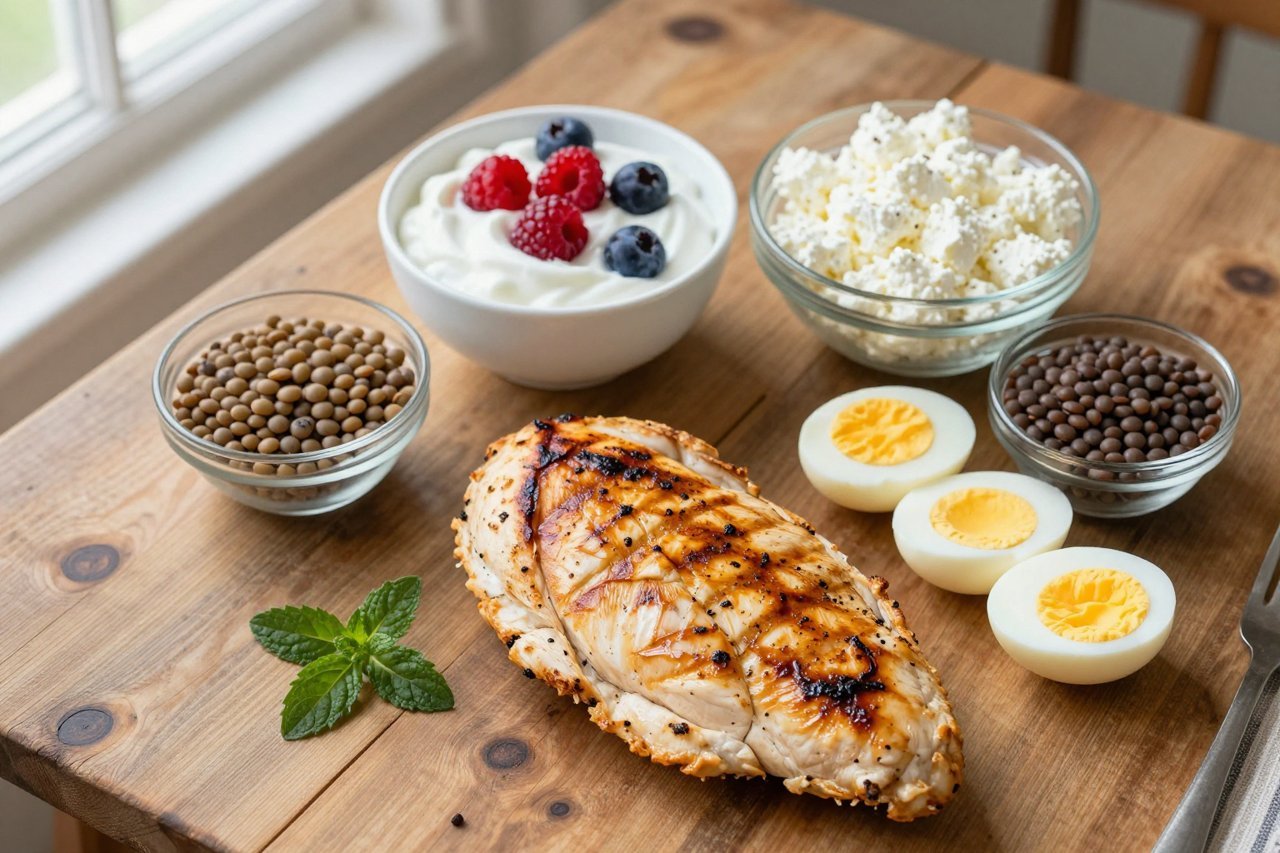
Chicken breast is the undisputed king of lean protein. A 100 g (about the size of a deck of cards) cooked chicken breast gives you roughly 31 g of protein with very little fat. Grill it, bake it, or chop it into salads. For beginners, it’s hard to go wrong.
2. Lean Beef
Beef is a bigger flavor punch. A 100 g serving of cooked lean beef (like sirloin) delivers around 26 g of protein, plus iron and zinc. Choose cuts with the least marbling to keep saturated fat in check. If red meat isn’t your thing, ground turkey or chicken can fill the same niche.
3. Eggs
Eggs are nature’s original protein bar. One large egg has about 6 g of protein, but eat two or three and you’re looking at 12–18 g. The yolk carries most of the vitamins and fat, so don’t skip it unless you have a specific health reason. Scramble them with spinach or hard-boil a few for the week.
4. Greek Yogurt
Greek yogurt is a cold, creamy way to hit your daily number. A 170 g plain, non-fat Greek yogurt contains about 17 g of protein. That’s more than regular yogurt because the straining process concentrates the protein. Add berries and a sprinkle of granola for a balanced snack.
5. Cottage Cheese
Cottage cheese is underrated and cheap. Half a cup (about 113 g) packs roughly 12–14 g of protein. Many people enjoy it with pineapple or black pepper. It’s also a great source of casein, a slow-digesting protein that works well before bed.
6. Canned Tuna
Tuna is a pantry hero. A single 150 g can of tuna in water gives you about 25 g of protein, sometimes more. It’s ready to eat, which makes it perfect for lunches. Just be mindful of mercury if you eat it daily – swapping in canned salmon is an easy alternative.
7. Lentils
Lentils are the best plant-based option on this list. One cup of cooked lentils (about 200 g) supplies around 18 g of protein and 15 g of fiber. They’re also inexpensive and cook in 20 minutes. Pair them with rice to create a complete protein profile.
Simple Ways to Add More Protein to Your Day
Knowing which foods are high in protein is one thing. Getting them into your routine is another. These small habits work for beginners:
- Start with two eggs at breakfast instead of a pastry.
- Add a scoop of Greek yogurt to your morning smoothie.
- Keep a few cans of tuna or hard-boiled eggs in the fridge for emergency lunches.
- Swap your afternoon chips for cottage cheese or a small serving of lean beef jerky.
- When making dinner, make protein the centerpiece and fill the rest of your plate with vegetables and whole grains.
Common Protein Mistakes Beginners Make
Even smart people trip up when they’re starting out. The most common blunders: eating all your protein in one giant dinner, forgetting to factor in sauces and breadcrumbs, and assuming that plant-based sources don’t count. I’ve broken down these traps in more detail in 7 highest protein foods: the mistakes most people make. Check that out if you want to dodge the learning curve.
Another mistake is choosing a protein source just because it sounds trendy. Instead, let your lifestyle guide you. If you’re always in a rush, canned tuna and eggs win. If you cook in batches on Sunday, chicken breast and lentils are your friends. There’s a whole practical guide on how to actually use the 7 highest protein foods step by step that walks through meal prep ideas.
And remember, the ‘highest’ doesn’t always mean ‘best for you.’ A food’s fat content, sodium, and how it makes you feel all matter. Sometimes the right protein for you is the one you’ll actually eat consistently. That’s the real starting point.
Start with one simple change. Replace one meal today with something from the list above. That’s all it takes to begin building the habit. Once you’ve mastered that, you’re ready to explore the rest of what protein can do – from better energy to a more satisfying table.


