
Table of Contents
You probably breathe more than 20,000 times a day without noticing. Each inhale brings in oxygen, each exhale clears carbon dioxide, and the whole process runs on autopilot. But here’s the thing: when you deliberately change how you breathe, you’re not just moving air in and out. You’re sending a direct signal to your brain and body, one that can quiet a racing heart, settle a churning stomach, or clear a foggy mind.
Breathing exercises have been around for centuries, but they’re not just yoga-class filler. They’re practical, portable tools you can use at your desk, in the car, or in the three minutes before a scary meeting. The best part? They’re completely free, need no equipment, and work within minutes.
In the sections below, I’ll walk you through the science behind why these techniques work, five specific breathing exercises I actually recommend, and how to weave them into your day without turning it into a full-time project.
What Breathing Exercises Actually Do to Your Body
When you’re stressed, your breathing becomes fast and shallow. That’s your sympathetic nervous system (the “fight or flight” branch) doing its job. But you can flip the switch: slow, deep breathing activates the parasympathetic nervous system, sometimes called the “rest and digest” branch. The key player here is the vagus nerve, which runs from your brainstem down to your abdomen. Slow exhales, in particular, increase vagal tone, which tells your heart to slow down and your muscles to relax.

Research on breathing exercises shows they can also improve heart rate variability (HRV), a measure of how well your body adapts to stress. Higher HRV is generally linked to better resiliency. In one small study, participants who practiced slow breathing for five minutes a day for a week saw both reduced anxiety and improved HRV. No expensive gadgets needed—just time and attention.
The Five Breathing Exercises Worth Your Time
Not every breathing technique is created equal. Here are five that have solid evidence behind them and are simple enough to remember, even mid-meltdown.
4-7-8 Breathing
Developed by Dr. Andrew Weil, the 4-7-8 pattern is a simple reset for a frazzled nervous system. Inhale through your nose for a count of four, hold for seven, then exhale slowly through your mouth for a count of eight. The extended exhale is what does the heavy lifting here—it forces your body into a slower, more relaxed rhythm.
Try it in bed if you’re struggling to fall asleep. Do four cycles to start, and work up to eight. If you feel dizzy, go back to your natural breathing for a minute.
Box Breathing
Box breathing (also called square breathing) is used by Navy SEALs to stay calm under pressure. The pattern is simple: inhale for four seconds, hold for four, exhale for four, hold for four. Imagine tracing the sides of a square with your breath.
What makes box breathing different is the evenness of each phase. The holds don’t necessarily make you more relaxed, but they do give your nervous system a steady, predictable rhythm to follow. It’s a solid choice before a job interview, a difficult conversation, or a big test.
Diaphragmatic (Belly) Breathing
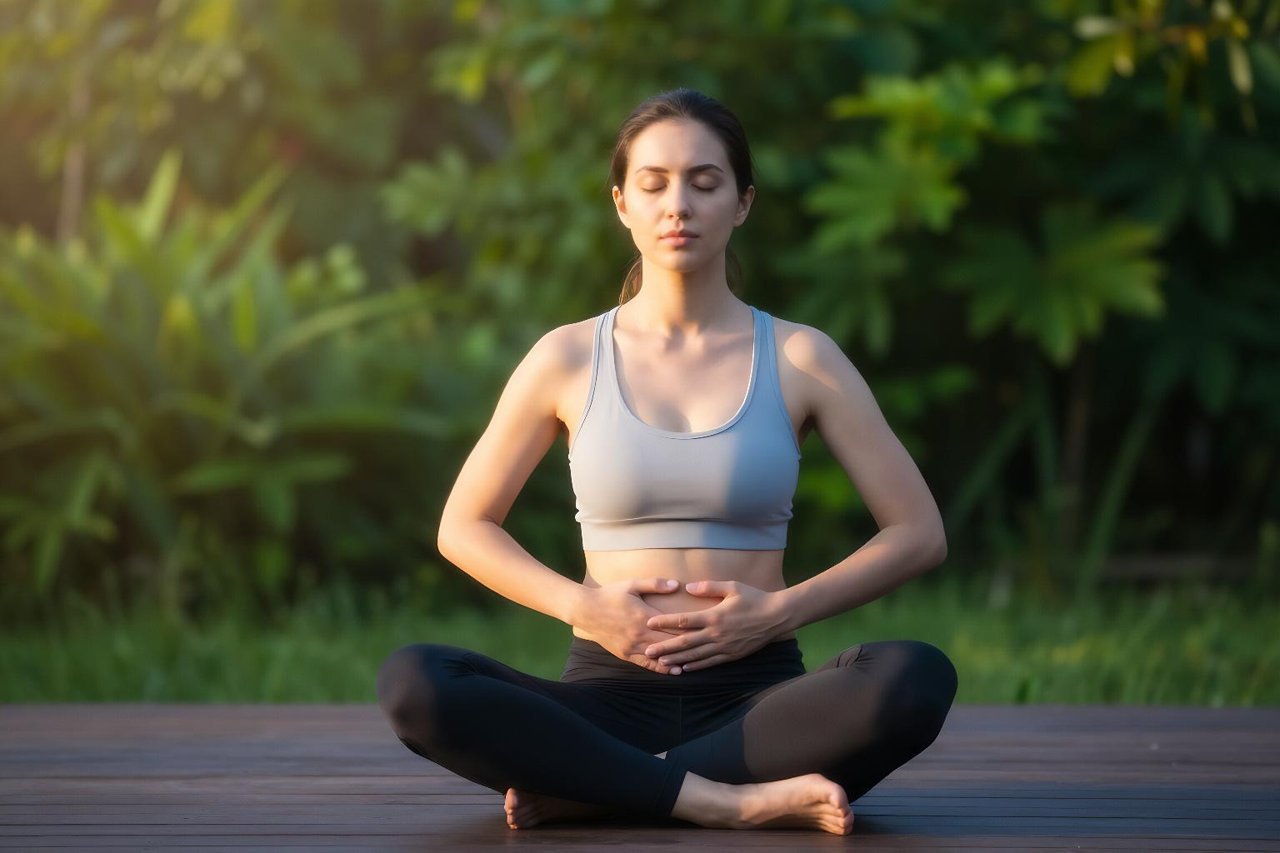
Lie on your back with your knees bent and one hand on your chest, the other on your belly. As you breathe in through your nose, let your belly push your hand up. The hand on your chest should barely move. Exhale through pursed lips, gently pulling your belly button toward your spine.
Diaphragmatic breathing trains you to use your lungs’ full capacity. Many of us breathe into our chests all day, which is less efficient and keeps the neck and shoulders tense. Practicing this for a few minutes a day can make proper breathing feel automatic.
Alternate Nostril Breathing
In yogic tradition, this one is called nadi shodhana. Sit comfortably and use your right thumb to close your right nostril. Inhale through your left nostril, then close the left nostril with your ring finger, release the right thumb, and exhale through the right nostril. Continue alternating: inhale right, close, exhale left.
If that sounds fiddly, you’re not wrong—it takes a few tries. But the act of switching sides seems to balance the two hemispheres of the brain and has a measurable calming effect. It’s a core part of many yoga traditions, and if you’re new to the mat, this practical guide to yoga for beginners can help you build a sequence that pairs breath with movement.
The Physiological Sigh
This one is less famous but incredibly effective. Take two short inhales through your nose (a big one, then a little sip of air), and follow with one long, slow exhale through your mouth. That double inhale inflates your lungs more fully, sending a stretch signal to the tiny air sacs called alveoli, which then helps your heart slow down.
The physiological sigh was popularised by Stanford neuroscientist Andrew Huberman, and the research behind it is solid. It’s one of the fastest ways to dampen acute stress—you can feel a shift in around 30 seconds. Use it when you’re stuck in traffic, about to give a presentation, or just having one of those days.
How to Turn Breathing Exercises Into a Daily Habit
A single session can feel good, but the real payoff comes from repetition. The goal isn’t to stop and do three rounds of alternate nostril breathing in the middle of a crowded office (though you absolutely can). It’s to build a small, repeatable practice you can rely on.
There are a few simple ways to make your practice stick:
- Tie your breathing practice to an existing habit—do a minute of box breathing while you wait for your morning coffee to brew, or use the physiological sigh every time you sit down at your desk.
- Start with just two minutes a day. You’re far more likely to stay consistent with a tiny practice than a grand 20-minute ritual you’ll abandon by Thursday.
- Use a visual cue. A sticky note on your monitor or a phone wallpaper that says “breathe” can be a surprisingly effective reminder.
- If you meditate or journal, add a few cycles of 4-7-8 before you begin. It helps you transition into a calmer state, which makes the whole session better.
Consistency beats intensity every time, so the best technique is simply the one you’ll actually do. If you’re interested in how slower breathing can help you concentrate at work, I wrote a more detailed piece on conscious breathing for focus and stress reduction that you might find useful.
When Breathing Exercises Aren’t Enough (Or Could Be Harmful)
Breathing exercises are generally safe, but they’re not risk-free for everyone. People with asthma, COPD, or other respiratory conditions should approach them with care. A technique that helps one person might trigger breathlessness in another. For example, a technique that encourages shallow breathing can actually trap air in asthmatics. If you’re in that camp, you might want to read this guide to breathing techniques for asthma sufferers before you try anything experimental.
If you ever feel lightheaded, dizzy, or short of breath while practicing, stop immediately and breathe normally. You’re not “pushing through”—you’re over-breathing, and your body is telling you to dial it back. Also, if you’re pregnant, have a heart condition, or have high blood pressure, get the all-clear from your doctor before starting a regular breathwork practice.
Pairing Breathing With Movement and Core Work
Breathing doesn’t live in a vacuum. It works even better when you combine it with intentional movement. For example, syncing your breath with a gentle stretch routine can help you go deeper and release muscle tension more quickly. That’s one reason why my stretching guide includes breath cues for every position.
Similarly, if you’re into strength training, your breathing pattern matters. The way you breathe during a heavy lift isn’t the same as a relaxation exercise, but both rely on diaphragmatic control. Many of the ab exercises that build real core strength depend on proper breathing to protect your spine and engage the deep abdominal muscles. And any yoga practice, at its heart, is a way to move with your breath.
The key is to notice your breath even when you’re not doing a formal exercise. When you walk, run, or simply stand in line, your breath can be your anchor.


