
Table of Contents
Most people treat stretching as an afterthought. A quick toe touch before the workout, a token hamstring hold after, then back to the busy day. That is a missed opportunity. Stretching exercises do more than loosen tight muscles. They improve blood flow, reduce stress, and give you a wider range of motion for everything from lifting groceries to tying your shoes.
The real challenge is not knowing why you should stretch. It is knowing which moves to do, how long to hold them, and when to use them. This guide breaks it all down. You will learn the difference between dynamic and static stretching, follow a simple full-body routine, and discover how to build a habit that actually sticks.
Dynamic vs. Static Stretching: When and Why
Not all stretching is the same. Dynamic stretching uses controlled movement to take your joints through a full range of motion. Static stretching involves holding a position for a period of time. Each has a specific purpose, and mixing them up is the key to getting results.
Dynamic Stretches to Start With
Before a workout, your muscles are cold and your nervous system is still waking up. Dynamic stretching wakes it up. Leg swings, arm circles, torso twists and walking lunges all prime your body for movement. The goal is to gradually increase your heart rate and loosen the joints without shocking the system.

Try this simple dynamic warm-up: do 10 leg swings per leg, 10 arm circles in each direction, and 8 walking lunges. Move at a pace that feels smooth and controlled, not rushed. You should feel warmer and more fluid within five minutes.
If you are new to mindful movement, a yoga practice for beginners is a fantastic way to learn how to coordinate breath with movement. It teaches you the same principles that make dynamic stretching effective.
Static Stretches to Finish Strong
After your workout, your muscles are warm and pliable. This is the perfect time to hold static stretches. Target the muscle groups you just worked, and hold each position for 20 to 30 seconds. Do not bounce. Breathe slowly and allow the muscle to soften as you exhale.
Static stretching after exercise helps your body transition back to rest, lowers muscle tension, and can reduce next-day soreness. It is also the most accessible form of stretching because it requires minimal equipment. You just need enough space to lie down or sit comfortably.
A Full-Body Stretching Routine You Can Do Anywhere
You do not need a gym membership or a yoga mat to get the benefits of stretching. This routine takes ten minutes and can be done in your living room, a hotel room, or even an office break room. Move through the exercises in order, holding each static stretch for at least 20 seconds.
- Neck stretch: Tilt your ear toward your shoulder, hold, then switch sides.
- Shoulder stretch: Bring one arm across your chest and apply gentle pressure with the opposite hand.
- Triceps stretch: Reach one arm overhead, bend the elbow, and hold just below the elbow with the other hand.
- Standing hamstring stretch: Place one heel on a low chair or step, keep your leg straight, and hinge forward from your hips.
- Quad stretch: Stand on one leg, pull your other heel toward your glute, and keep your knees close together.
- Calf stretch: Lean against a wall with one foot forward and one foot back, pressing the back heel into the floor.
- Seated pigeon stretch: Sit with one ankle resting on the opposite knee, then lean forward gently. This opens the hips.
- Cat-cow stretch: On hands and knees, alternate between rounding your spine and arching it.
As you hold each stretch, notice which side feels tighter. That is normal. Spend a few extra seconds on the tight side, but never push into sharp pain. A mild pulling sensation is fine. Pain is a signal to back off.
Engaging your core during these movements protects your lower back and gives you stability. If you want to build more deep core strength, these ab exercises that build real core strength pair well with a regular stretching practice.
Stretching for Specific Needs
Different lifestyles create different tight spots. Runners deal with tight calves and hip flexors. Office workers fight stiff shoulders and an aching lower back. Pregnant women experience a shift in their center of gravity, which can cause new tension. Adjusting your stretching routine to your situation makes it far more effective.
Low Back Pain and Desk Jobs
Sitting for hours shortens your hip flexors and weakens your glutes. This combo often leads to lower back pain. Stretching alone will not fix a weak core, but it can provide relief. Focus on the seated pigeon stretch, the cat-cow, and a gentle knees-to-chest stretch while lying on your back. Repeat this routine throughout the day, not just after workouts.
Pregnancy and Postpartum
Pregnancy changes your posture and puts extra stress on your lower back and pelvic floor. Gentle stretching can help, but you need to avoid deep twists and lying flat on your back after the first trimester. If you are expecting, check out these pregnancy exercises for a fit pregnancy for safe and supportive movement ideas.
Tight Hips From Long Commutes
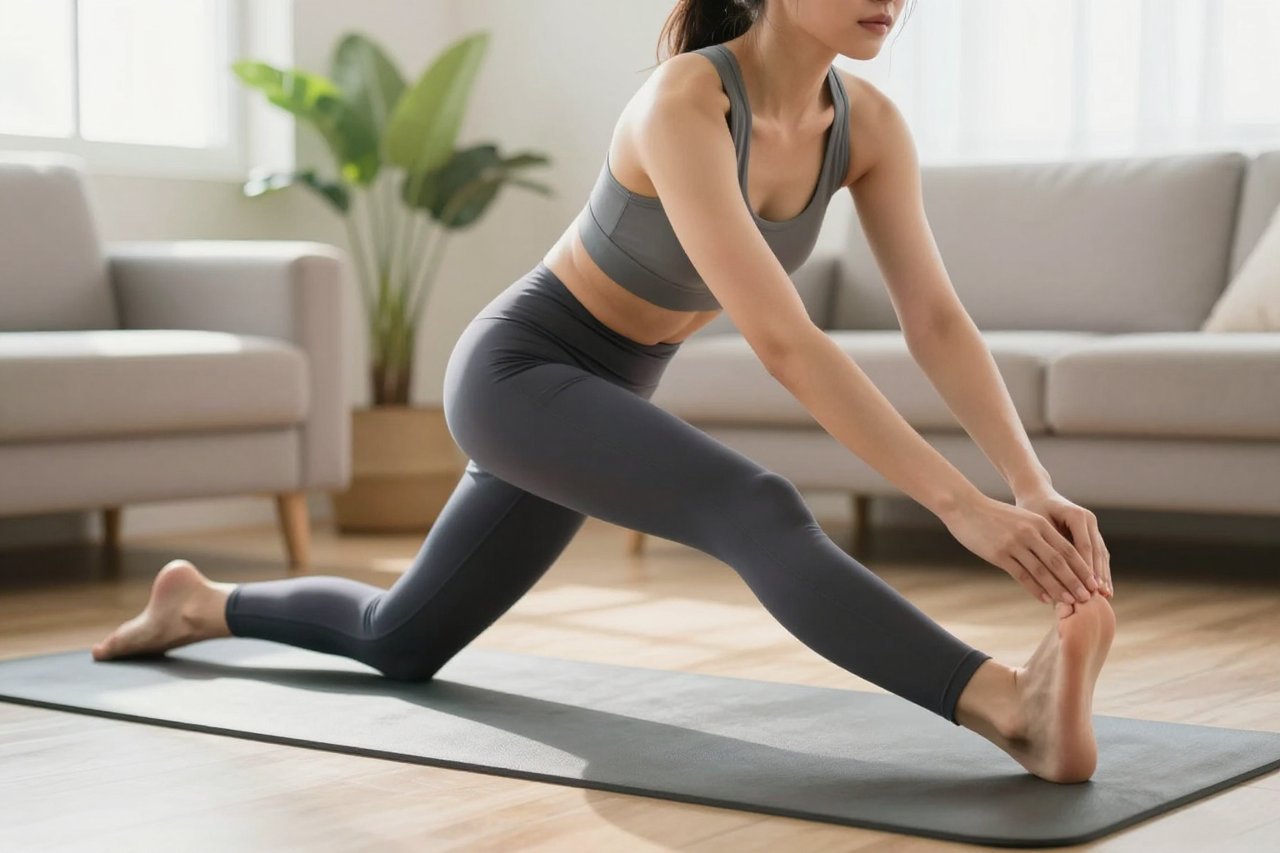
Long commutes and hard chairs tighten the front of your hips. The seated pigeon stretch is your friend here, as is a simple lunge stretch. Kneel on one knee with the other foot in front, then gently push your hips forward until you feel a stretch in the front of the hip. Hold for 30 seconds and switch sides.
How to Build a Stretching Habit That Lasts
The best stretching routine is the one you actually repeat. Start tiny. Stretch for five minutes when you wake up or before you go to bed. Link it to an existing habit, like making coffee or brushing your teeth. Keep a mat visible in your living room as a reminder.
A short morning stretch sequence can also wake up your digestive system and help you start the day bloat-free. This morning routine for digestion includes gentle twists and forward folds that stimulate your gut and ease tension.
If you want a more structured approach to flexibility and body control, try a dedicated movement practice. The Pilates workout guide on this site walks you through the fundamentals of stretching, strengthening, and breathing in a way that complements any routine.
Common Stretching Mistakes That Slow You Down
Even with good intentions, small errors can undermine your progress. Here are the mistakes I see most often, and what to do instead.
- Stretching cold muscles. Static stretching before your muscles are warm can actually increase injury risk. Warm up with a few minutes of light activity, like marching in place, or do dynamic movements first.
- Bouncing. Ballistic bouncing makes your muscles tighten up as a protective response. It also increases your chance of tearing muscle tissue. Keep every stretch smooth and steady.
- Holding your breath. Breathing is what tells your nervous system to relax. Exhale into the stretch, then breathe slowly and deeply while you hold.
- Treating it like a competition. Flexibility gains take time. Trying to force yourself into a deeper split or a bigger forward fold will set you back. Progress at your own pace.
- Skipping the areas you dislike. It is easy to stretch your hamstrings and ignore your shoulders or hips. But the areas you avoid are often the ones that need the most attention.
Stretch for the Long Game
Flexibility is not about touching your toes perfectly or doing the splits. It is about moving through life with ease, keeping your joints healthy, and avoiding the stiffness that creeps in as you age. Done consistently, stretching exercises can lower your risk of injury, improve your posture, and even boost your mood by releasing physical tension.
Start where you are. Pick three movements from the routine above and do them today. Add a fourth next week. The goal is not perfection. It is to keep showing up for your body, one breath at a time.


