
Table of Contents
Ancient Rome spanned three continents, lasted over a thousand years, and left behind everything from aqueducts to the Latin alphabet. But the more you dig into daily life in the empire, the weirder it gets. These ancient Rome facts skip the usual emperor gossip and focus on the details that textbooks leave out. And if you like the strange corners of history, you’ll find plenty more in the craziest history facts you never learned in school.
The City of a Million People (and It Wasn’t Tidy)
At its peak, Rome had over one million residents. That made it the largest city in the known world, and it did not have a sanitation department to manage the mess. Chamber pots were emptied out of windows, stray dogs roamed, and the rivers of urine ran not just metaphorically.
Apartment Blocks That Could Collapse
Most Romans lived in insulae, six-story apartment buildings made with cheap materials. Fires were frequent, and collapse was so common that Augustus set a height limit of 70 feet to stop the worst disasters. The rich lived in houses on the hills; everyone else crammed into noisy, smoky tenements above shops.
Trajan’s Market: The Mall of Antiquity
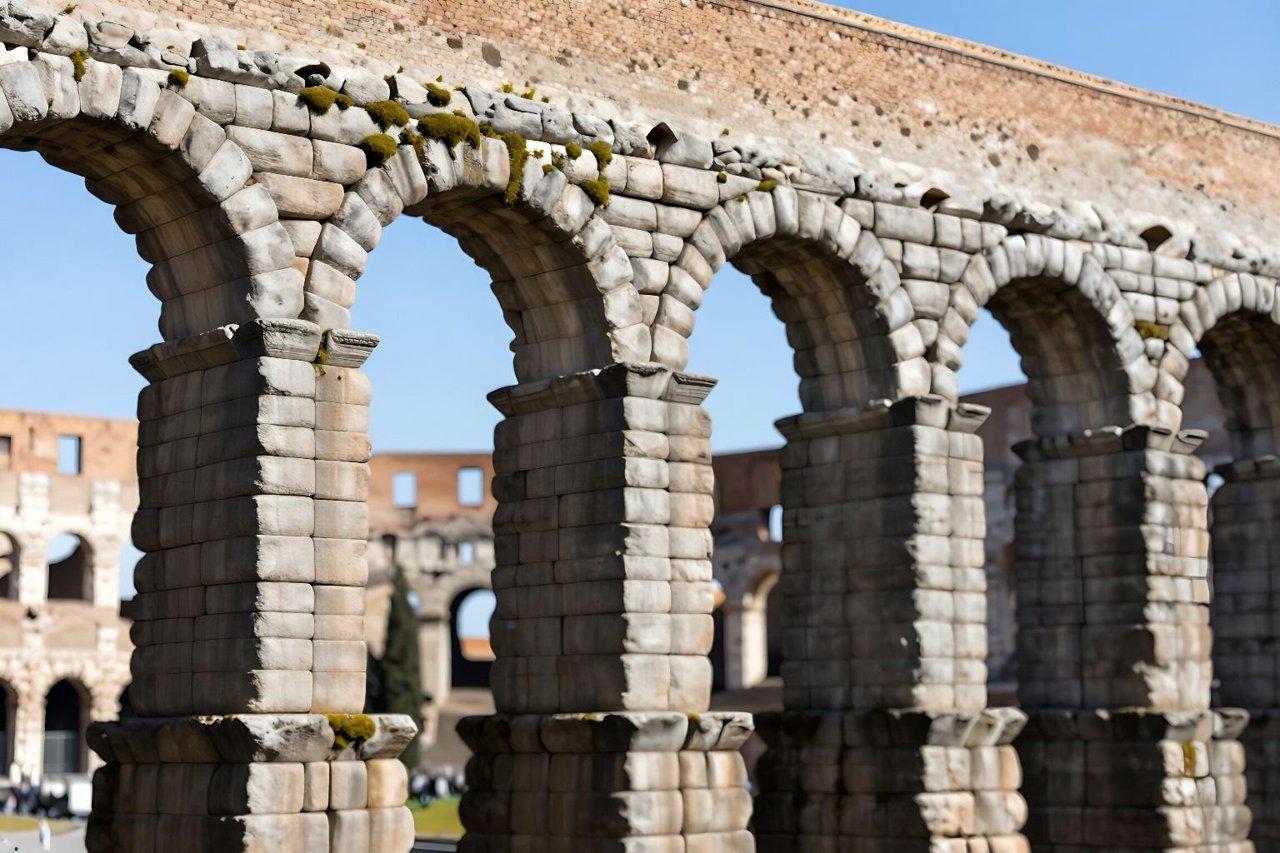
Trajan’s Market, built in 110 AD, is often called the first shopping mall. It had dozens of shops on multiple levels, selling everything from spices to olive oil. The curved complex still stands near the Colosseum, and you can walk through its brick arches today.

The Concrete That Got Stronger With Age
Roman concrete, or opus caementicium, is a miracle of ancient engineering. It’s one of the many gifts from the ancient civilizations that shaped humanity. Unlike modern concrete, which degrades within decades, Roman harbour structures have survived 2,000 years of seawater. Researchers discovered that the Roman recipe used quicklime combined with volcanic ash, creating durable crystals that actually reinforced the material when exposed to saltwater. The Pantheon dome, still the world’s largest unreinforced concrete dome, shows just how well it held up.
A Calendar With No January or February (At First)
The early Roman calendar had ten months and started in March. Winter was just an unnamed stretch of days. King Numa Pompilius added January and February, but even then it was a mess. Because the calendar didn’t align with the seasons, priests could insert a leap month called Mercedonius to keep things roughly on track. They often did this for political reasons, making the year longer if favoured officials stayed in power. Julius Caesar finally fixed it with the Julian calendar, which is the direct ancestor of the one we use today.
Gladiators Were More Than Just Killers
The movie version of gladiatorial combat is mostly wrong. Real gladiators fought about three to five times a year, and death was not the usual outcome. Matches were supervised by referees, and defeat didn’t always mean a kill. The editor (the sponsor of the games) decided the fate of a beaten gladiator, often letting them live to fight another day. And many gladiators were volunteers, motivated by fame, money, or just adrenaline.
There were strange specialisations. Here’s a short list of gladiator classes:
- Murmillo – armed with a sword, a tall shield, and a fish-shaped helmet crest.
- Retiarius – a net, a trident, and almost no armour, a crowd favourite.
- Secutor – heavy armour and a smooth helmet, built to fight the retiarius.
- Thraex – small shield, curved dagger, and leg guards.
Gladiators could be found in every corner of the empire, from big arena spectacles in Rome to smaller shows in provincial towns. They were so popular that their graffiti has been found scratched on walls in Pompeii.
The Pee Tax and the Toothpaste Connection
Roman laundry (fullonica) used stale urine as a cleaning agent. The ammonia broke down grease and made togas white. Emperor Nero recognised the value of this and taxed urine from public latrines. It wasn’t the only weird use. Mouthwash and even toothpaste sometimes contained ammonia-rich urine. If that fact feels like it belongs in a list of weird facts that sound fake but are actually true, that’s because the past is rarely polite.
The Communal Toilets and the Shared Sponge
Public latrines in Rome were open-plan rows of benches over a constant flow of water. People sat side by side and chatted, and they wiped themselves with a tersorium, which was a sea sponge fixed to a stick. After use, the sponge was rinsed in a bucket of water and vinegar and shared with the next person. It’s hard to call that hygienic in the modern sense. Still, it was better than the plumbing in most other ancient cities, and the sewer system (Cloaca Maxima) is partly in use even now.
The Army That Marched on Salt
The Roman soldier’s salary was partly paid in salt, which is where the word “salary” comes from. Salt was valuable because it preserved food, and Rome controlled salt flats along the Tiber. Soldiers were expected to carry heavy packs on long marches, then build a new fortified camp every night. They could throw up a ditch-and-wall defensive position in under four hours, which made them almost unbeatable in hostile territory.
Fake Sea Battles in a Real Flooded Amphitheatre
The Colosseum could be flooded to stage naumachiae, elaborate mock sea battles with actual warships. It’s a controversial point among historians, but the evidence is strong: drains and water channels found under the arena, plus accounts from contemporary writers like Cassius Dio, describe the spectacle. Domitian later dug a separate lake nearby for these naval displays, partly because the Colosseum needed a new underground structure called the hypogeum, which prevented the flooding.
Saturnalia: A Festival That Turned Roman Society Upside Down
In December, Romans celebrated Saturnalia, a carnival where masters traded roles with slaves, the streets got packed with gambling and drinking, and gifts were exchanged. It lasted several days, and the poet Catullus called it “the best of times.” While early Christians didn’t admit it, many historians believe Saturnalia traditions shaped the timing of Christmas. The festival didn’t require any special architecture or technology – just bonfires, decent wine, and a temporary suspension of social rules. It’s the perfect end to a look at the strange daily realities of the empire, and it’s also one of the historical events that turned into long-lasting traditions. The world would look very different if a handful of Roman customs hadn’t stuck around for the ride.


