
Table of Contents
Ask most people what the Crusades were, and you’ll hear a simple story: Christian knights marching east to snatch Jerusalem from Muslim hands. That’s not wrong, but it’s only a sliver of the truth. The Crusades were a two-century-long, messy, constantly shifting movement that mixed deep faith, brutal violence, naked ambition, and surprising cultural exchange. They didn’t just affect the Holy Land – they rewired politics, economy, and identity across Europe and the Middle East.
And some of that wiring still hums today.
A Pilgrimage With Swords
The First Crusade began in 1095, when Pope Urban II stood before a crowd in Clermont, France, and urged Christians to help the Byzantine Empire defend itself against Seljuk Turk expansion. He also promised spiritual rewards for those who took up the cross. But it wasn’t just a defensive war. The call to liberate Jerusalem – a city sacred to Christians, Jews, and Muslims – turned the expedition into a mass armed pilgrimage.
What happened next was astonishing. Tens of thousands, perhaps a hundred thousand, answered the call. Nobles sold lands to fund the journey. Peasants abandoned their villages. Entire families loaded carts and walked hundreds of miles, convinced that reaching the Holy City would erase their sins. Many died before ever seeing a battlefield.

In 1099, after a brutal siege, the Crusaders captured Jerusalem. The city fell to a massacre that still stains the memory of the era. Blood literally ran in the streets, according to contemporary chroniclers – an image that may be exaggerated, but the horror was real. The victors established a handful of Christian states along the eastern Mediterranean coast, known collectively as Outremer, the French word for “overseas.”
Not One Crusade, but Many
Schoolbooks often talk about the “First” Crusade as if the others followed a script. They didn’t. Each Crusade was a distinct, often chaotic event driven by different pressures.
- The Second Crusade (1147–1149) was a failed follow-up, triggered by the fall of the County of Edessa. It produced little but disaster.
- The Third Crusade (1189–1192) became legendary because of its larger-than-life leaders: Richard the Lionheart of England, Philip II of France, and the Kurdish general Saladin, who had recaptured Jerusalem in 1187. Richard and Saladin never fought a decisive battle, but their mutual respect became the stuff of legend.
- The Fourth Crusade (1202–1204) shows how far the movement had drifted. Crusaders never reached the Holy Land at all. Instead, they sacked Constantinople, the greatest Christian city on earth, and carved up the Byzantine Empire among themselves. That catastrophic act deepened the schism between the Catholic West and Orthodox East, making future cooperation near impossible.
- The Children’s Crusade of 1212 wasn’t a true crusade, but thousands of young people followed a French shepherd boy toward the sea, believing the waters would part. They were captured by slavers or died of hunger.
Later expeditions – the Fifth, Sixth, Seventh, and Eighth – achieved little. The oddest may have been the Sixth Crusade, led by the excommunicated Holy Roman Emperor Frederick II. In a combination of diplomacy, bluff, and sheer audacity, he negotiated the return of Jerusalem in 1229 without a single major battle. The truce held for a while, but the city fell again to Muslim forces in 1244.
The last Christian stronghold in the Holy Land, Acre, was lost in 1291. After that, the Crusades were over in the Levant, even as the word kept getting used for other wars.
The Real Engine: Trade and Travel
The Crusades were a religious movement, but they rode on the back of an expanding Mediterranean economy. Italian city-states – especially Venice, Genoa, and Pisa – supplied ships, food, and financing for the expeditions. In return, they demanded trading privileges in the new Crusader states. This wasn’t a side hustle; it was the strategic core.
Venetian merchants followed the knights east, setting up factories and warehouses from Acre to Tyre. They established direct commercial links with the Levant, importing silks, spices, dyes, and luxury goods from the Islamic world that flowed back to eager European markets. This trade boom didn’t stop after the Crusader states fell. Italian merchants simply shifted their operations to Mamluk ports in Egypt, maintaining a profitable – and sometimes surprisingly friendly – relationship with the very powers that had expelled the Christians.
The Crusades also reintroduced Europe to luxury products like sugar, cotton, and glass, as well as scientific and medical texts preserved and expanded by Islamic scholars. The old idea that everything valuable was locked away in monasteries until the Renaissance is a myth. Much of that knowledge flowed west through Crusader-era contact, along with Arabic numerals, which slowly replaced Roman numerals in European accounting.
The Human Cost and the Legacy
The Crusades exacted a terrible toll. The slaughter in Jerusalem was repeated at a smaller scale in many other sieges. Muslim and Jewish communities in the Levant suffered greatly, and the Jewish communities of Europe were also attacked by mobs of crusaders en route to the Holy Land, as seen in the massacres of the Rhineland in 1096. Thousands of eastern Christians, too, were caught in the crossfire, sometimes treated as heretics by Latin clergy who didn’t understand their rites.
Yet the relationships weren’t purely adversarial. Historians have found evidence of decades-long truces, alliances between Crusader knights and Muslim emirs, and even gifts of horses exchanged between Richard and Saladin. Trade rarely stopped, even during periods of open war.
The Crusades also shaped the way the Christian faith was lived and spread. They gave Europeans a shared enemy in Islam, but that sense of common purpose was often undermined by Byzantine, French, German, and Italian rivalries. The culture of chivalry, with its complex codes of honor and violence, grew out of this collision of faith and war.
What Did the Crusades Actually Change?
One enduring result: they accelerated the growth of a self-aware “Latin Christianity.” For better and for worse, the idea that Europe was a united Christendom fighting a holy war gained enormous influence. It also made the papacy more powerful – at least for a while – since popes could direct the energies of thousands of knights.
Politically, the Crusades contributed to the weakening of the Byzantine Empire, which never fully recovered from the Fourth Crusade’s looting and eventually fell to the Ottomans in 1453. That event, in turn, cut off traditional trade routes to Asia, pushing Europeans toward the Atlantic – and toward the New World.
For the Islamic world, the Crusades were often seen as just another series of invasions from the barbarian north, not as the existential threat Christian writers imagined. Saladin’s reputation as a chivalrous enemy actually grew after his death, celebrated by European chroniclers as much as by Muslim ones.
The Crusades in Modern Memory
Few medieval events are as emotionally charged today as the Crusades. Political and religious leaders regularly invoke them, often inaccurately. Some modern Muslims see them as the first episode in a continuing Western assault on the Islamic world, while some Christians romanticize the knights as defenders of civilization.
Neither view matches what actually happened. The Crusades were not a unified, triumphant march of good versus evil. They were a chaotic, changing, and often contradictory phenomenon, driven increasingly by economic ambition, legal disputes, and personal vendettas as much as by theology. That’s precisely what makes them fascinating and important.
To understand the medieval world, you have to understand the forces that produced the Crusades: the rise of the papacy, the feudal land hunger of the warrior class, the commercial muscle of the Italian cities, and the fragile links between the Christian kingdoms of Europe. These same forces also gave birth to universities, Gothic cathedrals, and the slow movement toward nation-states that eventually replaced the old feudal order. If you want a single doorway into that world, the history of the Middle Ages opens through the Crusades.
The empires that rose and fell in this period – Byzantium, the Seljuks, the Ayyubids – all left deep marks on the lands they governed. The crusader states were small and short-lived by comparison, yet their legacy has outlived the empires. The phrase “the Crusades” still evokes a vision of armored knights beneath a burning sun, marching toward ancient walls. It’s a powerful image, but the truth underneath is far more complex – and much more human.
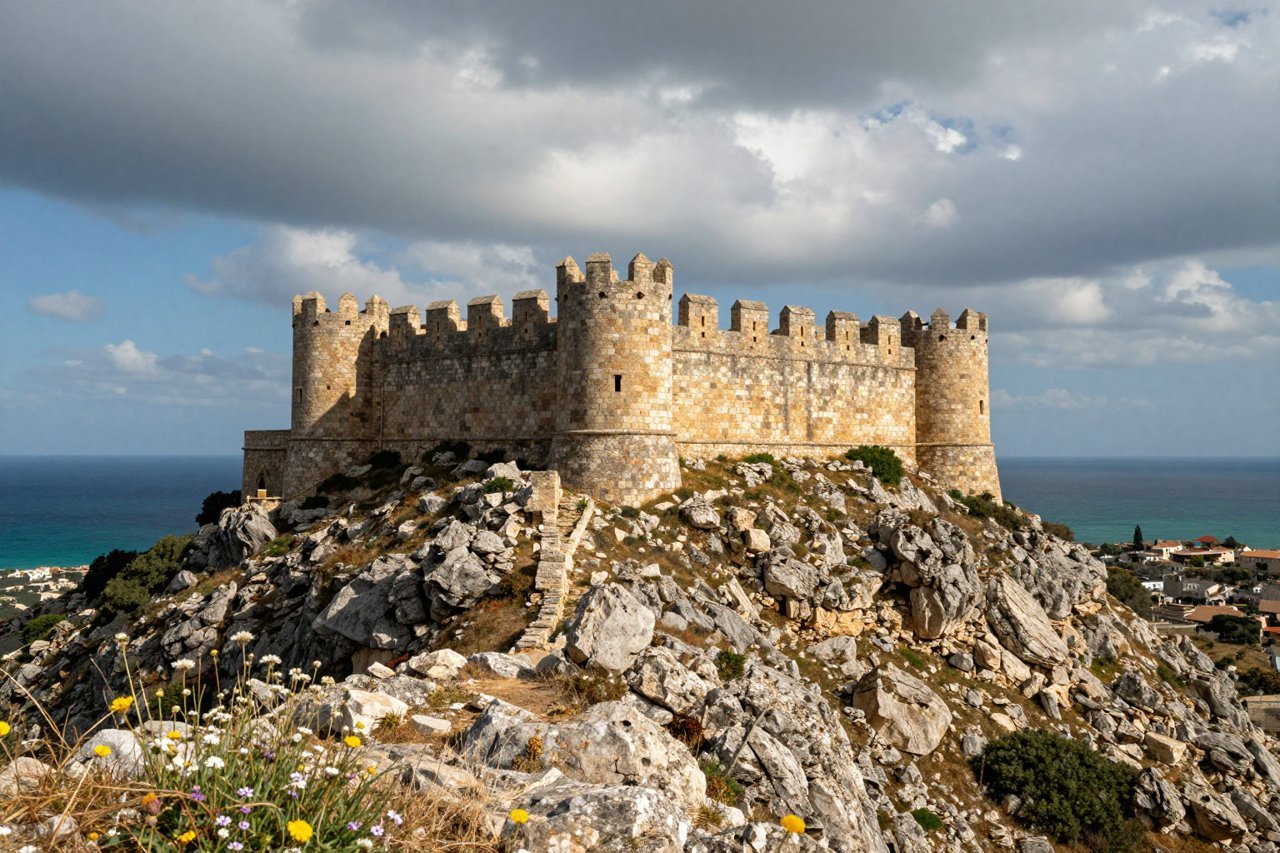
Look at the ruins of Acre today, or the towering walls of Krak des Chevaliers, and you can still feel the weight of dozens of sieges, treaties, and betrayals. Those stones are not monuments to a single clash of civilizations. They are reminders that violence and culture, faith and trade, are never as separate as we want to believe.
The Crusades belong to a broader story of how empires and states rise and fall, and why the marks they leave behind are never exactly what the victors intended. The next time you hear a simple claim about the Crusades – “it was about greed” or “it was purely religious” – you can be fairly sure the full truth is more tangled. That’s what makes history worth digging into.


