
Table of Contents
Your hands do more heavy lifting than your face ever will. They scrub dishes, grip steering wheels, swipe screens, and get doused in antibacterial gel. Yet we often treat them like an afterthought. The skin there is thinner than the skin on your face, and it has far fewer oil glands. That combination makes it easy for hands to feel tight, rough, and dry.
The solution sounds simple: use a hand cream. But pick the wrong one and you’ll be left with greasy palms and a scent that lingers all day. Choose well, and you’ll have soft, calm, comfortable hands. Here’s what actually matters when you’re looking at that wall of tubes, bottles, and jars.
Why Hands Need More Than a Splash of Lotion
Every time you wash your hands, you’re stripping away a thin layer of the oils that keep your skin barrier intact. Do that ten times a day, and your hands are begging for backup. Add in cold weather, indoor heating, and the San Andreas fault of handwashing. That’s the combination of soap and water followed by alcohol sanitiser, and your skin barrier can’t keep up.
A lightweight lotion can offer a quick hit of moisture, but it often evaporates before lunch. A decent hand cream should sink in without leaving a film, while delivering the ingredients that actually rebuild your skin’s defence system. That’s a much bigger job than just putting a bit of water back.

What to Look for in a Hand Cream
Hand cream formulas vary wildly. Some are lighter than a splash of milk, others sit on your skin like a buttery duvet. The right one depends on your day, your skin, and where you need it to take you. Let’s break it down by texture first.
The Texture Question: Light vs Rich
If you’re heading to the office or typing on a keyboard, you want a fast-absorbing lotion or cream that disappears after a minute. Look for words like “silk” or “quick-drying”. For nighttime, or for hands that are honestly painful when you bend them, a thick balm or a rich cream with shea butter is the better bet. It works while you sleep.
Ingredients That Earn Their Keep
Ingredients are where the real story lies. A hand cream can feel lovely, but if it doesn’t have anything that repairs or feeds the skin, you’re just applying water and perfume. These are the ones that make a difference:
- Glycerin or hyaluronic acid for humectant power that pulls moisture into the skin.
- Ceramides or niacinamide to help repair the skin barrier so it holds onto that moisture.
- Shea butter, squalane, or jojoba oil for the emollient, nourishing finish that keeps hands soft.
- Panthenol (pro-vitamin B5) to soothe stressed, angry skin.
Your hand cream may not have all four, but if you see at least one from each category, you’re on safe ground. And if you happen to love the ritual of applying something fragrant that also brings you joy, you’re not alone. There’s a compelling argument for indulging in a beautifully-scented hand cream, and honestly, a scent that makes you smile can become part of your self-care habit.
How to Apply Hand Cream So It Actually Works
How you apply matters just as much as what you apply. This is where most people go wrong. Pumping a giant dollop and slapping it onto your palms is fine in a pinch, but a more deliberate method gets better results.
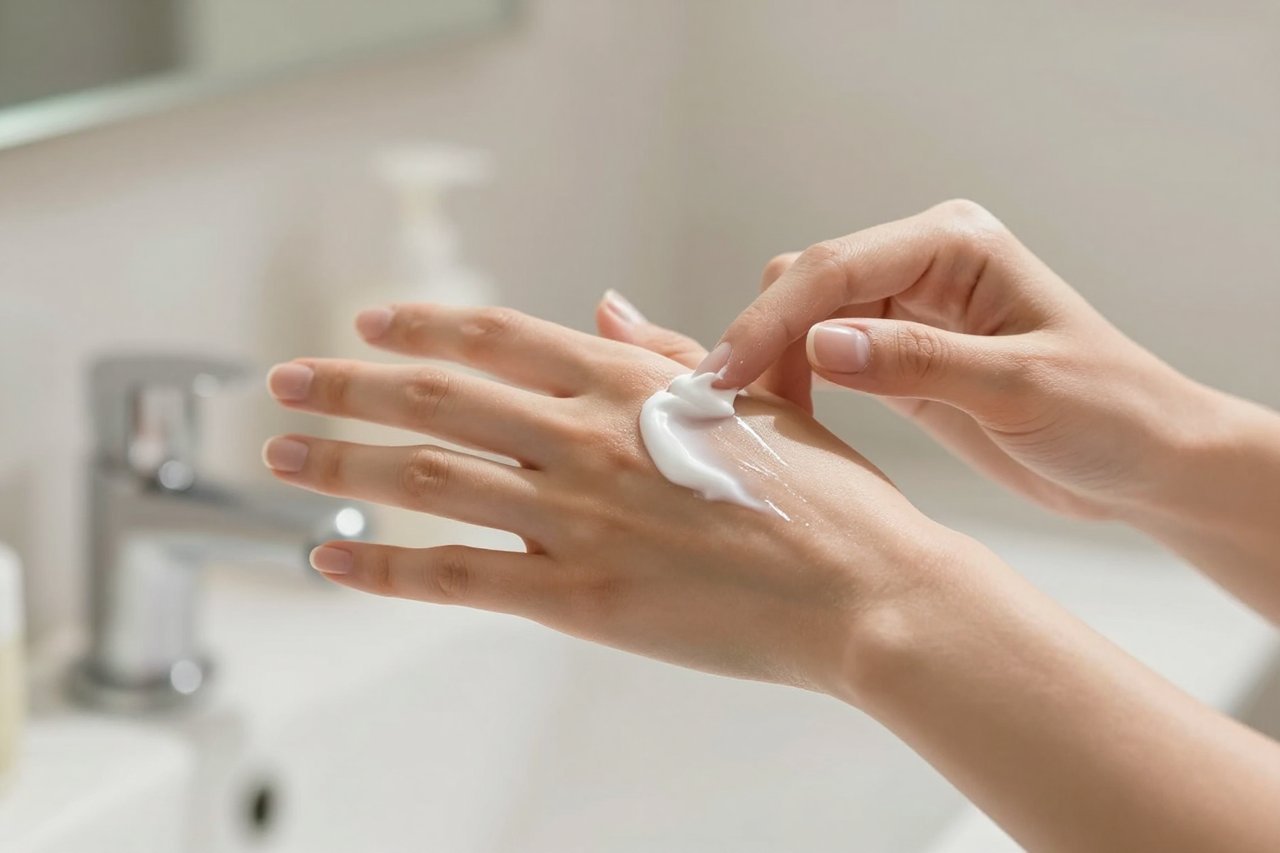
Start with slightly damp hands. After washing, pat them dry (don’t rub) and apply the cream while your skin is still a little moist. That traps extra water inside. Use about a pea-sized amount per hand and rub the backs of your hands together, pressing the cream in, rather than focusing everything on your palms. Don’t forget the side of your index finger, the skin between each finger, and the cuticles. If your cuticles look ragged all the time, a quick massage with the leftover cream will help.
For an overnight repair, apply a generous layer right before bed and wear a pair of cotton gloves. It feels strange for the first half hour, but you’ll wake up with hands that feel like they’ve been on a spa retreat.
Hand Cream for Sensitive Skin and Eczema
Sometimes dry hands are more than just dry. If you’re dealing with red patches, cracking, or the telltale itch of eczema, a standard hand cream with fragrance or essential oils might make things worse. What you need is a barrier-repairing, fragrance-free formula that won’t sting. Ingredients like zinc oxide, colloidal oatmeal, and shea butter tend to be gentle.
Eczema is a particularly stubborn challenge on the hands because they’re always exposed to irritants. A dedicated skin-barrier cream is often the first line of defence, and if you want to dig into the science, this guide to choosing eczema cream that actually works walks through what makes a difference when your skin is struggling. The same principles apply for hands: avoid harsh alcohols, keep the formula simple, and patch test anything new before using it all over.
Do You Really Need a Separate Hand Cream?
You can technically use your body lotion or even your facial moisturizer on your hands. But you might end up either with a film that never absorbs or with an expensive product disappearing quickly. Your hands need something with a slightly heavier weight so it lasts through the day.
Face creams, no matter how luxurious, are formulated for a much thinner skin terrain. Even celebrity-worthy formulas like Charlotte Tilbury’s Magic Cream are designed to sit on your face without clogging pores, not necessarily to withstand ten hand washings. That doesn’t mean they’re bad for your hands, just that you’ll likely go through a jar at three times the speed, and that’s a waste of a good face cream. Let your hands have their own dedicated tube.
Pick the Right Hand Cream for the Season
Your hand cream routine should change with the weather. In summer, a lightweight gel or lotion with hyaluronic acid feels right, and you should still apply SPF during the day because hands get sun exposure too. In winter, switch to a rich, occlusive cream with shea butter or petrolatum that forms a protective blanket. If you work in an air-conditioned office, keep a small tube in your desk drawer and reapply after every hand wash. The best hand cream is the one you actually use, so have one at your desk, one in your bag, and one by your bed.
Make Your Hand Cream Work Overtime
Once your hands are soft again, resist the urge to stop using the cream. The skin barrier needs constant reinforcement. Keep up the routine for a couple of weeks, and you’ll notice the changes: no more dry patches, smoother cuticles, and fewer finger cracks in winter. If you’ve been skipping hand cream because you hated the sticky feeling, try a lighter texture and layer it in small doses throughout the day. With the right formula and a few smart habits, soft hands become the background of your life until someone reaches out to shake your hand and can’t help but notice.


