
Table of Contents
On a Tuesday afternoon in March, my neighbour’s beagle decided the hole under the fence was his ticket to freedom. Twenty minutes later, he was across town, hightailing it down a four-lane road in Pennsylvania. A quick-thinking driver spotted him and called the number on his tag, but I can’t help thinking how much easier that rescue would have been with a dog GPS tracker. The panic, the wasted hours, the sheer luck involved—it’s a scenario every pet owner knows. This guide is about making sure you never have to rely on luck again.
What Exactly Is a Dog GPS Tracker?
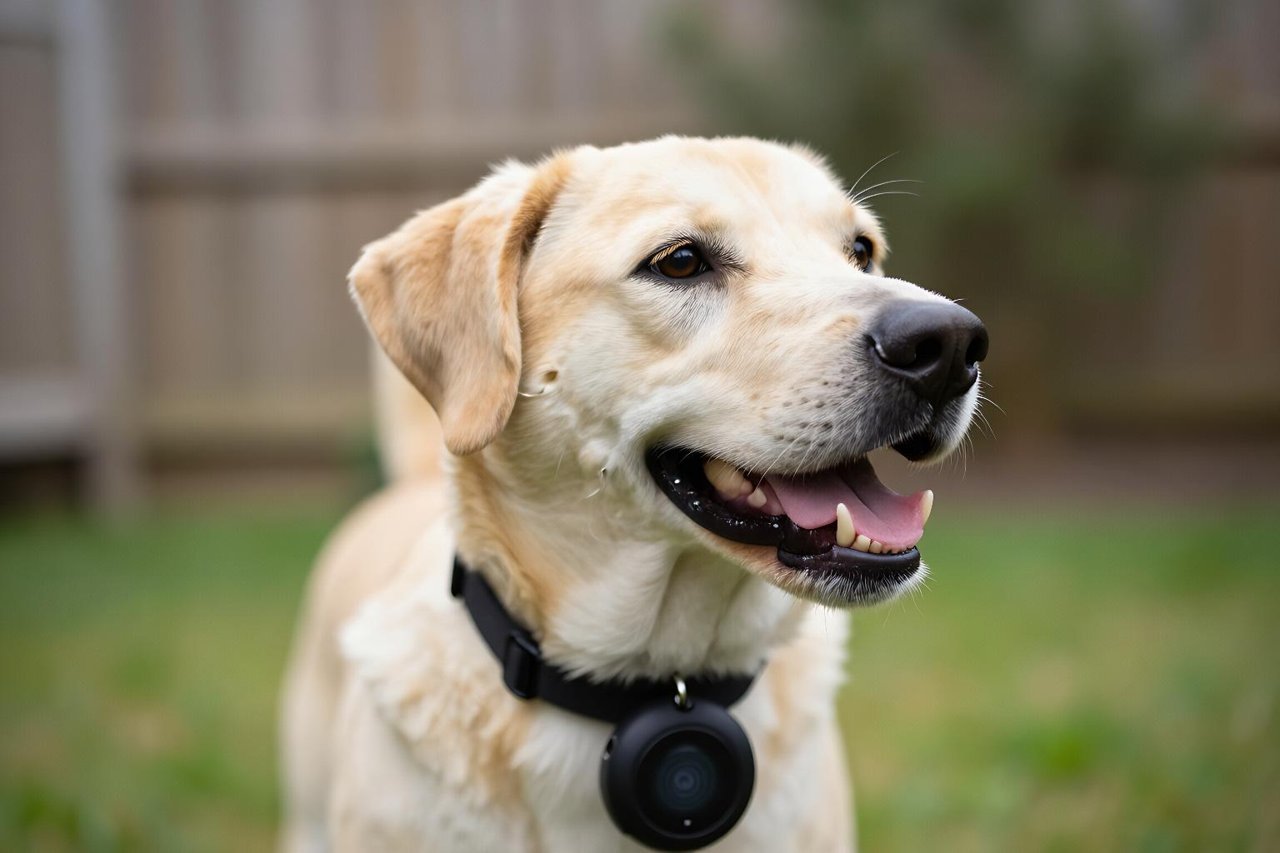
A dog GPS tracker is a small device attached to your dog’s collar. It uses satellite networks like GPS, GLONASS, or Galileo to determine the dog’s location, then sends that data to your smartphone via a cellular network. That second part matters: a true GPS tracker needs both a satellite receiver and a mobile connection to help you find your dog in real time. It’s not the same as a microchip, which just stores your contact info and only works if someone finds your dog and takes it to a vet or shelter.
Some products blur the line. Bluetooth “trackers” (like Apple AirTags or Tile) don’t have their own GPS module. Instead, they rely on nearby phones to report their location. If your dog runs through a rural area, the AirTag may never update. If you’re looking for true real-time location, you need a device with an actual GPS chip. I’ve put together a more detailed comparison in our breakdown of the different tracking types, but the short version is: no cellular connection, no real-time locator.
Why Every Dog Owner Should Consider One (Even If Your Dog Never Runs Off)
You might trust your dog to stay in the yard, but dogs are experts at finding the one weak spot. A gate left ajar, a broken fence picket, a sudden noise that sends a nervous dog sprinting. There’s a whole world of reasons. The reasons go far beyond escape artists—hunting dogs, runners, kids who forget to close the door, even elderly dogs with cognitive decline. If you value your dog’s safety, a tracker is a cheap insurance policy compared to the alternative.

Consider the statistics: a lost dog that isn’t found in the first 24 hours has a significantly lower chance of being returned. A GPS tracker can reduce that search time from hours to minutes. In my own experience, my lab mix, Beans, once slipped out during a thunderstorm. I found him huddled under a neighbor’s deck, but it took me two hours to search every possible spot. With a tracker, I’d have had his location immediately.
GPS vs. Cellular vs. Bluetooth: Don’t Confuse Them
Before you buy, you need to understand the triangle. Let’s break it down simply:
- GPS (Satellite): This is the positioning system that calculates your dog’s coordinates anywhere on Earth. It doesn’t transmit anything; it just receives signals.
- Cellular (4G/LTE/5G): This is how the tracker sends those coordinates to your phone. No cell coverage means your tracker might as well be a paperweight.
- Bluetooth: Short range (typically 100–300 feet). Many “GPS trackers” actually rely on Bluetooth and will only update when your phone is nearby.
When a product says “no monthly fees,” double-check whether it’s actually Bluetooth-only. True real-time GPS trackers need a data plan, because they use cellular networks. Some brands bundle the first year with the purchase, then ask for a subscription. If that bothers you, a tracker with a long update interval might be a compromise, but for true peace of mind, a subscription is almost always worth it.
Key Features That Actually Matter (and Ones You Can Skip)
Now that you know the core tech, let’s talk about the features that separate a great tracker from a frustrating piece of plastic.
Battery Life and Charging
Real-time GPS trackers are battery hogs. Most need recharging every 2 to 5 days, depending on update frequency. Some trackers have a “power saving mode” that pings less often when your dog is in a known safe zone, stretching the battery to 2 weeks. If you’re the type who forgets to charge your phone, look for a tracker with a long standby and a base that makes charging easy. For example, the Fi tracker comes with a charging collar that magnetically connects, making it a no-brainer to pop on at night.
Update Interval
When your dog bolts, every second counts. The best trackers update every 2–3 seconds (true live view). Others only update every 30, 60, or even 300 seconds to save battery. That means your dog could be a half-mile away from where you’re looking. For city dwellers with fenced yards, a 30-second update is fine. For hikers or hunters, live view is worth the battery cost.
Subscription Costs and Coverage
Don’t get blindsided by a cheap tracker that costs $50 but requires a $15/month plan forever. Check the fine print. Most reputable brands like Tractive, Fi, and Whistle charge between $6 and $12 per month, often with discounts if you prepay annually. Also check whether the device covers the countries you live in or travel to. A tracker bought in Europe might not operate on US cell bands.
Size and Weight
For small breeds, a heavy tracker can cause neck strain or simply annoy the dog. Professional trackers like the Garmin Alpha come with hefty collars, but consumer GPS trackers typically weigh around 15–35 grams. Some are designed to clip onto an existing collar, while others are integrated into a special collar. If you have a tiny dog, look for a tracker under 20 grams. You might also be interested in lightweight activity trackers for Cavaliers, which offer some location features but prioritize health monitoring.
Additional Reliability Features
- IP67/IP68 water resistance: Your dog will swim, roll in mud, and get caught in rain. Make sure it survives.
- Geofencing alerts: Set a virtual boundary around your home and get a notification the moment your dog crosses it. This is the #1 feature for escape-artist dogs.
- LED light: A remote-controllable light helps you spot your dog in the dark.
- Sound: A tone or bark command can help you call your dog without a voice.
- Multi-dog support: Some apps let you manage several trackers from one dashboard—essential for a two-dog household.
The “Cheap” Tracker Trap
If you go to Amazon, you’ll find dozens of GPS trackers for $20–$30 with no subscription. They sound too good to be true, and they usually are. Most of these use Bluetooth, which limits them to your phone’s range. Others use low-power networks like LoRa or Sigfox, which have spotty coverage in many areas and a lag time of several minutes. Still others are simply tracking devices that only update when your dog is near a known Wi-Fi network. You get what you pay for. A quality GPS tracker is an investment in your dog’s life, not a disposable gadget.
Living With a Dog GPS Tracker: What the Day-to-Day Looks Like
Once you have a tracker, you’ll quickly realize how much more relaxed walks become. I use mine for off-leash hikes now. Beans has a habit of disappearing into the brush after rabbits, and instead of shouting myself hoarse, I can pull up the app, see exactly where she is, and walk directly toward her. At home, I’ve set a geofence around the yard. The first week, I got an alert that she’d escaped through the back gate—I still have no idea how she opened it. I found her at the neighbor’s pond, happily splashing around.
Human nature kicks in though: don’t become a helicopter pet owner. A GPS tracker is a backup, not a substitute for training. Keep practicing recall and keep your dog leashed if you can’t trust them off-leash. The tracker just takes the edge off those “what if” moments.
The Future of Dog GPS Trackers: What’s Next Beyond 2026
The technology is moving fast. Newer trackers are starting to incorporate health monitoring—heart rate, breathing, and sleep patterns—alongside location. For example, some are integrating with smart home systems and can notify your phone if your dog hasn’t moved for an unusual amount of time. Battery life is improving too, thanks to low-power chips. We’re also seeing more products that combine GPS with activity tracking, which might be enough to tempt owners who want both. If you’re curious which products are currently dominating the market, our overview of trending dog products for 2026 has some surprising names.
The biggest change we might see in the coming years is the move toward satellite-to-something connections. Apple’s satellite emergency SOS for iPhones hints at a future where your dog’s tracker could work in the most remote wilderness—no cellular required. Some startups are experimenting with solar-powered collars that could recharge themselves. It’s all exciting, but for now, the technology on the market is already transformative. You don’t need to wait for the future to get peace of mind. Just make sure you pick the right tracker for your dog’s habits, your budget, and your lifestyle.


