
Table of Contents
Picture this: the gate swings open after a strong wind, your terrier slips through, and by the time you notice, he’s three streets away. Every minute that passes makes it harder to find him. A dog tracker is designed for exactly this moment — but only if you’ve chosen the right one. The problem is, the term “dog tracker” covers a lot of ground. Some devices pinpoint your dog’s location via satellite, while others count steps and hours of sleep. Understanding what each one does — and doesn’t do — is the key to picking a tracker that actually helps.
Why Dog Trackers Are Suddenly Everywhere
Dog trackers have moved from a specialty tool for hunters and search-and-rescue teams to a mainstream accessory for everyday pet parents. A recent pet tech trends survey found that smart collars and wearable monitors are among the most embraced devices for dog owners. They’re also showing up in collections of the most popular dog products of 2026, right alongside durable toys and auto-feeders. That popularity makes sense: the same phone that tracks your steps can now track your dog’s location and activity levels in surprising detail.
Three Main Types of Dog Trackers (and Why the Difference Matters)
When people search for a dog tracker, they often don’t realize there are three distinct categories. Mixing them up can lead to disappointment.
GPS Trackers: For Finding Your Dog in Real Time
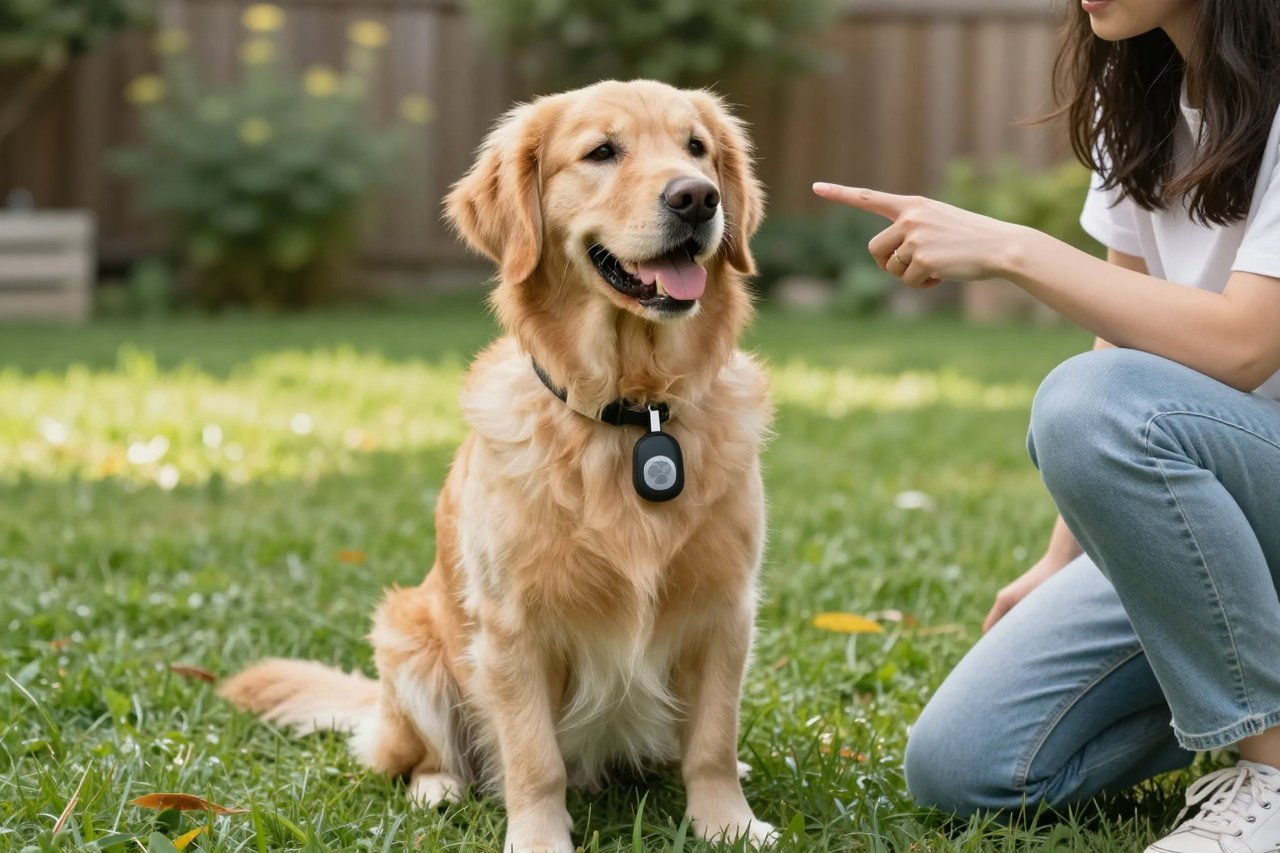
A GPS dog tracker uses a combination of satellite and cellular signals to report your dog’s location on a map. The best ones update every few seconds, so you can watch your dog’s exact path in near-real-time. They’re ideal for escape artists, off-leash hiking, and anyone who lives near busy roads. Many GPS trackers also include a geofencing feature, which alerts you the moment your dog crosses a virtual boundary.

Before you commit to one, though, weigh the costs. Most GPS trackers require a monthly subscription for the cellular connection. Some battery-hungry models need a charge every two to three days, while others use a lower-power update mode to stretch out to a week or more. If you’re new to this category, start with our detailed guide on why every dog owner needs a GPS collar and how to pick one that fits your lifestyle.
Activity Trackers: For Understanding Daily Habits
Activity trackers are the other popular camp. Instead of location, they use accelerometers to measure steps, distance, calories, and sleep patterns. Some models are tailored to specific breeds — for example, the best Cavalier activity trackers are designed to monitor weight-related habits in a breed prone to overeating. These trackers can flag sudden changes in restlessness or lethargy, which is often the first sign of illness.
The catch? Many activity trackers don’t have GPS. They sync over Bluetooth when your dog is near the phone, so they can’t help you find a dog that wanders off. If your primary concern is your dog’s exercise and sleep, an activity tracker is a solid choice. If you want to know where your dog is and how much they’re napping, you’ll need a combo unit.
Health Monitors: The Next Big Thing
Health monitors take the same idea further by adding vitals like heart rate, respiratory rate, and even scratching or licking counts. These are still fairly new and often more expensive. They’re most useful for dogs with chronic conditions, like heart disease or brachycephalic breeds that need help watching their breathing. You can track trends over time and bring that data to your vet, which is a lot more useful than a vague guess from a worn-out test strip.
What to Look For Before You Buy a Dog Tracker
Specs alone won’t tell you whether a tracker will survive life with a 70-pound lab that dives through every puddle. Here’s what I’ve learned to check before hitting “buy.”
- Battery life: A GPS tracker that dies at 8 p.m. on the night your dog digs under the fence is useless. Look for real-world battery estimates, not just “standby time.” Activity trackers often last ten days or more, while GPS units can run for two to five days.
- Weight and size: On a 10-pound dog, a heavy tracker is a nuisance. A good rule of thumb is to keep the device under 2-3% of your dog’s body weight.
- Subscription fees: GPS tracking without a cellular connection doesn’t work away from your home Wi-Fi. Check the monthly cost and whether there’s prepaid or year-long pricing.
- Durability and waterproofing: Look for an IP67 or higher rating. Dogs shake, swim, and roll through mud. A tracker that can’t handle that will end up on a shelf.
- Coverage: If you hike in remote areas, your tracker needs to rely on a network that reaches there. Ask about dead zones before you rely on it in an emergency.
- App quality: A chaotic app with constant connection drops is worse than no tracker. Read recent reviews to see what real users say about setup and daily use.
These details matter more than the marketing photos. A tracker that looks cool but takes twenty minutes to update your dog’s location is almost pointless.
Real-World Limitations: Battery Life, Coverage, and Workarounds
No dog tracker is perfect. GPS accuracy can wander in dense build-up areas or under heavy tree cover. Inside the house, your dog’s position may bounce across rooms because the signal refracts. And if you forget to charge the collar, all that technology is just a piece of plastic strapped to your dog.
Battery life is the number one complaint I see from owners. Many GPS trackers default to an update interval of one minute to preserve power, which means you can’t always watch your dog’s exact route in real time. You can usually switch to a “live” mode, but it drains the battery much faster. A better approach is to save live mode for critical moments and keep the tracker in its standard mode the rest of the time.
Another workaround is to pair the tracker with a physical fence or regular training. A tracker doesn’t keep your dog from running away; it just helps you find them after they do. If you’re dealing with a repeat escape artist, spending time on recall training will do more than any gadget.
Is a Dog Tracker Worth It for Your Dog?
The answer depends on your situation. If your dog regularly escapes the yard, or you take them hiking off-leash in unfamiliar terrain, a GPS tracker is worth its weight in gold. If your main worries are weight gain, sleep quality, or detecting changes in activity, an activity or health monitor is a better investment.
There’s also a comfort factor to consider. A tracker adds a little extra weight to your dog’s collar, and it should never chafe or irritate their neck. Your tracker can even tell you if your dog is restless at night — and if they are, it might be time to look beyond the gadget. A dog’s sleeping setup matters more than any app. If you see constant tossing and turning, a supportive orthopedic dog bed could solve the problem faster than adjusting your tracker’s settings.
In the end, the best dog tracker is the one you’ll actually remember to charge and put on your dog every morning. It’s not a replacement for training, vet care, or your own attention. But when the gate swings open and your dog takes off, you’ll be glad you took the time to pick the right tool for your specific canine companion.


