
Table of Contents
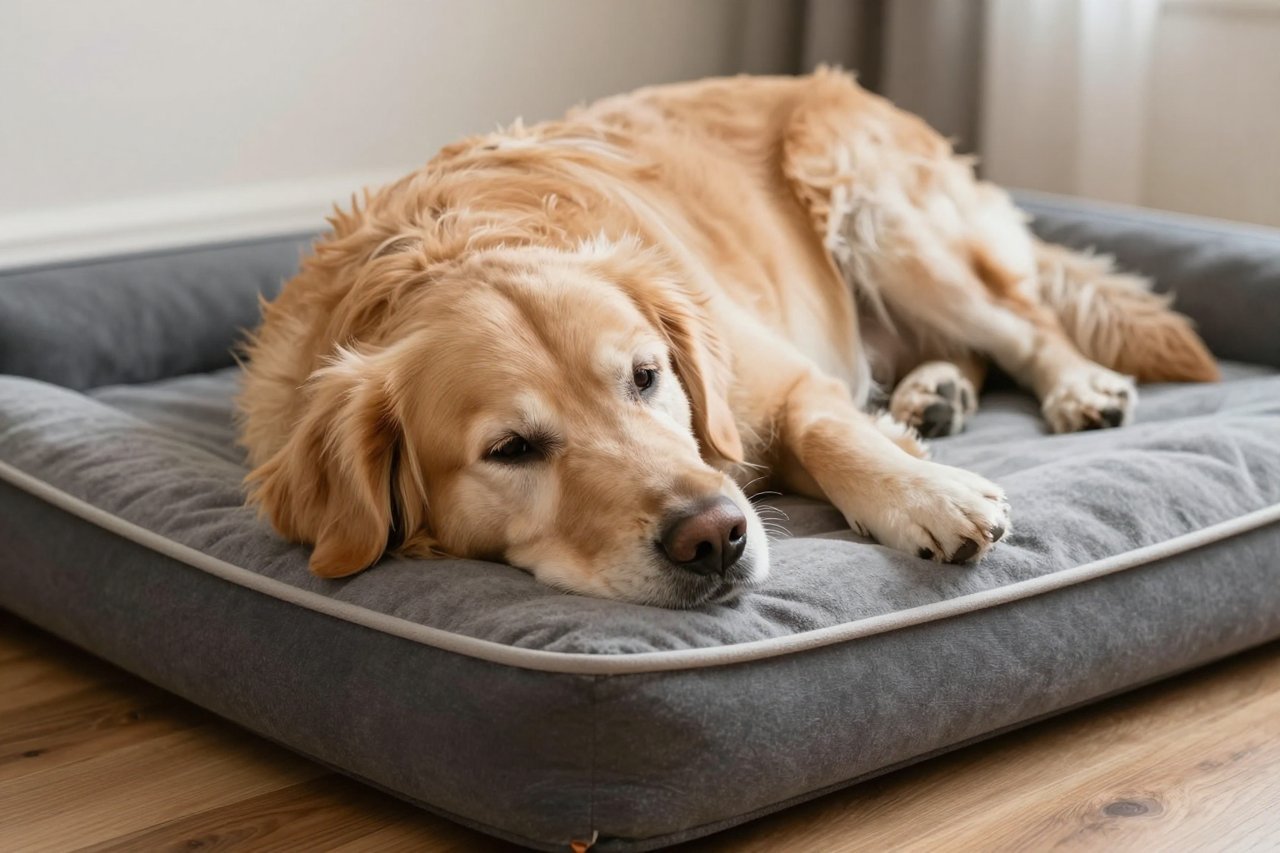
Old dogs get achy joints. It’s not a cliché – it’s a biological reality. As our dogs age, the cartilage that cushions their bones wears down, leading to stiffness, pain, and a noticeable lack of enthusiasm for the morning walk. A good bed can make a meaningful difference. But not every thick piece of foam is truly orthopaedic.
When you start shopping for a dog bed, orthopaedic is a term you’ll see on dozens of products, often with a significant price bump. Some are worth every penny. Others are just a marketing label on a piece of low-density foam. So how do you tell the difference? And more importantly, does your dog actually need one? Let’s break it down.
What Actually Makes a Dog Bed Orthopaedic?
An orthopaedic dog bed is designed to provide consistent, even support for your dog’s joints and spine. The key is the foam core. You’re looking for high-density memory foam or a similar supportive material that responds to your dog’s body heat and weight, cradling them without letting them sink all the way to the floor.
Memory Foam vs. Regular Foam
Memory foam is the standard for orthopaedic beds, and for good reason. It’s the same material used in human mattresses designed to relieve pressure points. The foam conforms to the shape of your dog’s body, which distributes weight evenly and reduces the pressure on sensitive areas like elbows, shoulders, and hips. A regular foam bed, even if it’s thick, won’t do this. It will compress over time and offer no real support.

But here’s a common misconception: not all memory foam is the same. The density, measured in kilograms per cubic metre, matters immensely. You want a foam density of at least 40 kg/m³ for a dog that’s over 15 kg. Anything lower is going to lose its shape within months.
Why Thickness Alone Isn’t the Answer
You might be tempted to buy the thickest bed you can find, thinking bigger means better. That’s not always the case. A very thick bed made of soft foam will just let your dog sink deeper, which isn’t good for their joints. The supporting base layer needs to be firm. Some orthopaedic beds have a layered construction: a dense support foam on the bottom and a softer memory foam on top. That’s a good sign.
Another thing to look for is the base of the bed. Is it designed to sit directly on the floor? Some beds have a non-slip bottom for safety, especially for older dogs with mobility issues.
7 Signs Your Dog Needs an Orthopaedic Bed
Not every dog needs an orthopaedic bed at first. Puppies and young, healthy dogs are fine with a standard bed. But you should start thinking about upgrading if you notice any of these signs:
- Difficulty getting up after a nap, especially on a hard floor
- Stiffness when walking after rest, often called “cold start” stiffness
- Reluctance to jump up or down from furniture or into the car
- Visible pain or limping after exercise
- Age – most dogs start to show signs of joint wear after age seven
- You see your dog circling and pawing at a standard bed as if trying to fluff it up more
- Your dog has been diagnosed with arthritis, hip dysplasia, or a similar condition
If you’re seeing some of these, it’s worth considering a change. It’s similar to how you might think about your own sleeping surface. If you’ve ever explored sciatica treatment options for your own back, you know that sleep posture makes a huge difference. Your dog depends on you to make that call for them.
How to Choose the Right Orthopaedic Dog Bed
Once you’ve decided to upgrade, the options can feel overwhelming. Here’s a practical breakdown of what to look for.
Size and Weight
A bed should be at least the length of your dog from nose to tail, so they can stretch out fully. But also consider your dog’s sleeping style. If they like to curl up, a bolsters bed with raised edges might be ideal. If they sprawl, a flat orthopaedic pad is better. For dogs over 25 kg, look for a base foam thickness of at least 10 cm.
Foam Density and Construction
This is the most important factor. Look for a bed that explicitly states the foam density. Many reputable brands use 40–60 kg/m³ memory foam. The cover should be removable and washable, because senior dogs tend to have accidents or shed more. A water-resistant liner between the foam and cover is a huge plus.
In terms of support, you want something that’s firm enough to keep your dog’s spine aligned but soft enough to relieve pressure points. Think about your own mattress preferences. If you’ve suffered from sciatica, you’ve probably learned that firm support beats a soft surface. The same goes for your dog.
What About Hot Sleepers?
Memory foam can retain heat, which is a problem for some dogs. Look for open-cell memory foam or beds with breathable covers like cotton or bamboo. If your dog tends to overheat, you might also consider a gel-infused foam.
To make sure you’re getting a genuinely supportive bed, check for:
- Removable, machine-washable cover
- Waterproof or water-resistant liner
- Non-slip base
- High-density foam core (stated density, not just “orthopaedic foam”)
- Firm edge support for dogs who like to rest their head
- A trial period or warranty from the manufacturer
The Overlooked Link Between Your Dog’s Bed and Your Own Back Health
Have you ever thought about how much your dog’s sleeping surface affects your own mornings? If you’ve ever looked into how to avoid a curved back as you age, you’ll know that sleeping on a supportive mattress is a crucial part of maintaining healthy posture. Dogs are no different. An orthopaedic bed supports their spine in a neutral position, which reduces pressure on the discs and joints. And when your dog sleeps well, you sleep better too, because you’re not up at 3 a.m. listening to them whine as they try to get comfortable.
Getting Your Senior Dog Comfortable in a New Bed
Some dogs take to a new bed instantly. Others, especially older dogs with deep habits, might give it a suspicious sniff and then sleep on the floor next to it. Here’s how to make the transition easier:
Place the bed in the spot where your dog already likes to nap. If they always gravitate to a certain corner of the living room, start there.
Put an old t-shirt or blanket that smells like you on the bed. Familiar scents are powerful reassurance.
Use treats or mealtimes to create a positive association. Slide the bed under their food bowl for a few days.
If your dog is very stiff, look for a bed with a lower profile or a bolsters to lean against. Some senior dogs feel more secure with a backrest.
Most importantly, don’t force it. Let them discover the bed on their own timeline. For the first week, keep their old bed nearby if they have one, and then gradually remove it once the new bed has been accepted.
Caring for Your Dog’s Joints Beyond the Bed
An orthopaedic bed is part of a larger strategy for keeping your senior dog mobile and comfortable. Weight management is the single biggest factor. One extra kilogram on a 20 kg dog is a significant load on their joints.
Regular, low-impact exercise like swimming or short walks on soft ground helps maintain muscle mass, which supports the joints. Supplements like glucosamine and omega-3 fatty acids can help, but they’re not a substitute for good sleep support. And don’t forget to keep your dog’s nails trimmed – long nails change their posture and put extra stress on the joints.


