
Table of Contents
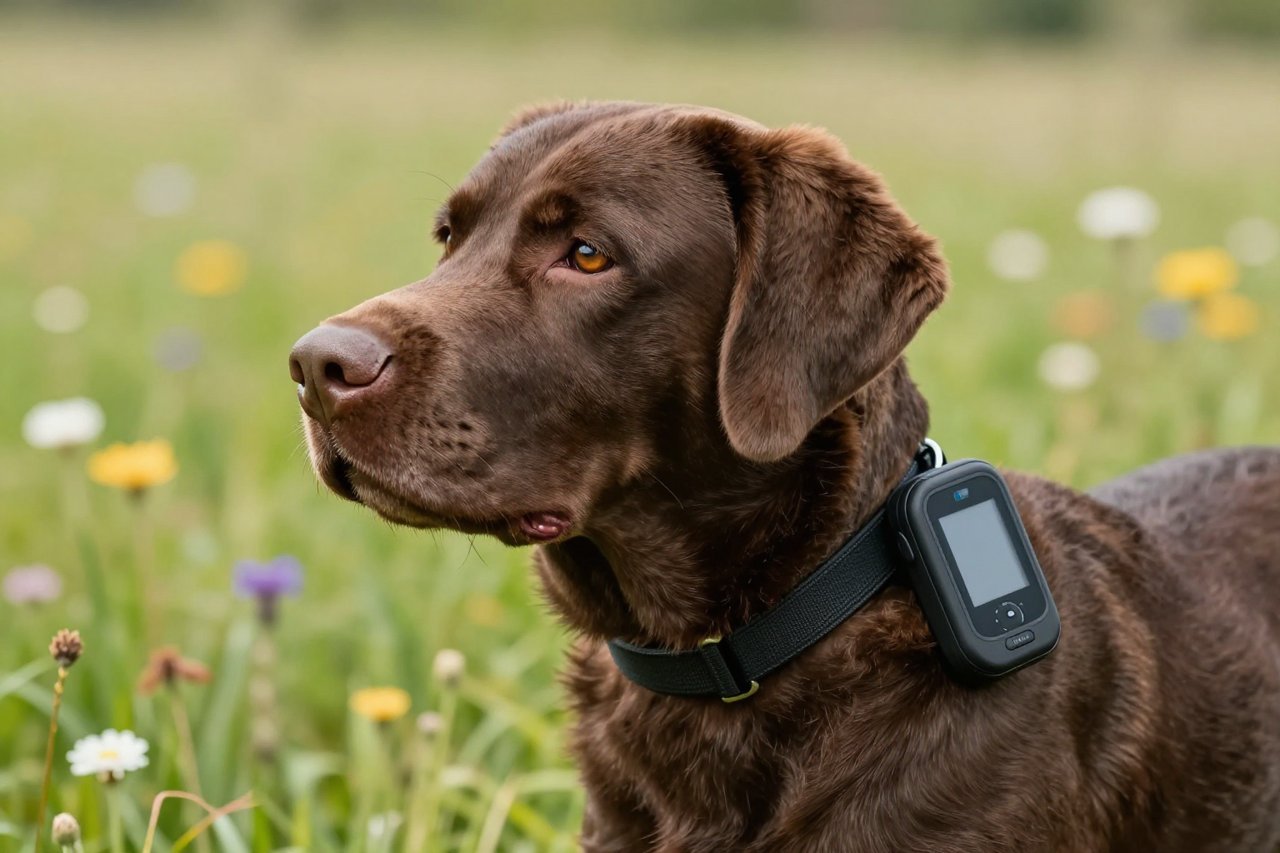
Your dog could be missing for blocks before you even notice the gate is ajar. A collar tag with a phone number doesn’t tell you where they went. A GPS locator for dogs does. Small compartmental devices attach to the collar and use satellites to pinpoint your dog’s position – often down to just a few metres.
But here’s the catch. The market is flooded with trackers that differ wildly in price, battery life, and hidden subscription costs. Some are glorified Bluetooth beacons that go silent as soon as your dog leaves your line of sight. Others rely on a cellular network and demand a monthly fee many people overlook. Last year I tested six different trackers on a working farm in Shropshire, using them on a scruffy terrier and a border collie. What I found is that the most expensive tracker isn’t necessarily the most practical one. Here’s what to consider before you buy.
What Exactly Is a GPS Locator for Dogs?
A true GPS locator for dogs is a device that communicates directly with the global positioning satellite network to establish its coordinates. That location data is then relayed to your phone, usually via a 4G or LTE cellular connection. The tracker is essentially a tiny computer with a GPS receiver, a cellular transmitter, and a battery, housed in a tough plastic shell.
The distinction matters because many lower-priced “trackers” only use Bluetooth pairing with your smartphone. These can notify you if your pet wanders off within 50-100 metres, but they won’t help you herd them back if they’re miles away. A true GPS locator doesn’t need your phone to be nearby – it just needs a clear-ish view of the sky and a cellular signal to send its coordinates. Some models, like those designed for hunting dogs, skip the cellular part entirely and transmit the signal to a dedicated handheld receiver over radio frequencies.

The Three Types of Dog GPS Locators
When you start shopping, you’ll quickly see that there are three distinct categories. Each has advantages that depend on how you live with your dog.
Real-Time Cellular Trackers
These are the most common. Examples include the Tractive LTE trackers and many of the newer collar devices from brands like FI and Weenect. The tracker stays in constant communication with a mobile network, so you can open an app and see your dog’s live location at any moment. Some offer updates every second, others every 15-30 seconds. The trade-off is battery life and a monthly subscription fee. Most brands charge between £5 and £15 per month, though some offer a “lifetime” fee if you pay upfront for the device. This type is ideal for urban and suburban owners who want immediate peace of mind and geofencing alerts.
Radio and Handheld Receivers
If you’ve ever seen a hunter with a black antenna handheld unit cradled to their chest, that’s a radio-based GPS system. These trackers use the GPS satellite to locate their position and then broadcast the coordinates over a short-range radio frequency to a base unit. They don’t rely on any mobile coverage, which means they’re a godsend in the remote countryside or mountains. The downside is cost – these are the professional-grade units where you’ll easily spend £300-£700. The base unit also must be within a few kilometres of your dog to pick up the signal. But for off-grid terrain, they’re unbeatable.
Logging-Only Trackers (No Live Map)
A third type doesn’t give you live tracking. Instead, it records GPS points at a set interval, stores them locally on a microSD card, and lets you review the dog’s route later on your computer. These are typically cheaper, with no subscription, and they can run for weeks on a set of AA batteries. But they’re useless if you need to find a lost dog right now. Some of these models are built for surveying hunting routes rather than escaping pets. So if your primary goal is tracking your dog while they’re off-lead on a hike, avoid these.
Why You Might Actually Need a GPS Locator
Most dog owners buy a GPS locator after a single terrifying escape. The incident stays with you. A GPS locator is simply an insurance policy. But beyond anxiety prevention, there are practical uses:
- Hunting and field work: If your dog flushes a bird and runs the next valley over, you can locate them without screaming your lungs out.
- No-fence living: If your garden is unsecured or you live on rural property without a fence, a geofence alert can notify you if your dog strays beyond the property line.
- Hiking and camping: Dogs can backtrack or chase wildlife. A real-time map means you can reunite before the situation spirals.
- Health monitoring: Some trackers double as an activity monitor. If you’re concerned about a senior dog’s exercise levels, the step and calorie count is a useful side benefit.
Features That Equal Real Value (and Those That Are Hype)
It’s tempting to buy the tracker with all the bells and whistles. But if it doesn’t connect quickly or loses its rechargeable battery before you’ve had a cup of tea, none of that matters.
Battery Life: The Big Trade-Off
Live tracking eats power. The current crop of basic GPS trackers that broadcast every second will give you between 8 and 16 hours on a single charge. That’s fine for a day out, but not for a week-long trip. Some now use adaptive battery modes that reduce update frequency when the dog is still. Many models claim “up to 3 weeks” but that’s with 30-minute intervals. Always read the small print and think about how often you need updates. I’d much rather have a tracker that updates every 30 seconds and lasts hours, than one that updates every 5 minutes and lasts a month – because the whole point is to find a moving dog.
Subscriptions: The Hidden Monthly Cost
This is the part most people don’t factor in. A £199 tracker might sound reasonable, but throw in a £9.99-per-month subscription and you’ve spent £322 after just one year. The subscription pays for the data sent over the cellular network. Some brands let you pre-pay for two years to cut the monthly rate. Before you fall in love with a specific tracker, read the terms. If you’re comparing models, our honest guide to dog GPS trackers details exactly what you’ll pay over three years and which plans offer real value.
Size and Weight: Don’t Burden Your Dog
A fat tracker on a small terrier can cause neck strain and rub the skin raw. The lightest real-time trackers weigh around 20-30 grams and are the size of matchboxes. For small breeds, aim for under 35 grams including the attachment. Check that the device is shaped to follow the curve of the neck. Flapping attachments can also catch on branches, which is a safety hazard if your dog runs through thick undergrowth.
Durability and Water Resistance
Your dog will roll in mud, dive in rivers, and possibly swallow a tracker if they’re the type that chews on collars. Look for an IP67 or IP68 rating. IP67 means it can sit in one metre of water for around 30 minutes. IP68 is waterproof for longer and deeper. Also check whether the charging port is exposed. Some trackers use magnetic connectors that are sealed, far better than a little rubber flap you’ll forget to push down properly. Some models can also be chewed – if you have a power chewer, look for reinforced housings.
Geofencing and Escape Alerts
The geofence feature is a huge part of daily usefulness. You draw a virtual boundary on a map around your home or campsite, and if your dog travels beyond that area, your phone gets a push notification. The best apps let you adjust the size and speed of the alert, so you’re not getting bombarded when your dog just strolls to the mailbox. If you have a dog that loves to wander, this feature alone justifies the cost.
Historical Routes and Activity Tracking
This can be nice, but treat it as a bonus. Some trackers will log all your dog’s routes and let you replay them later, which is helpful if you’re trying to find out where they’ve been sneaking off to in the woods. The activity tracking (steps, sleep, calories) is health data, not a safety feature. If it’s included, great; don’t pay extra for it.
The Honest Downsides of GPS Tracking for Dogs
There’s no perfect dog tracker. Before you reach for your credit card, be aware of these pitfalls.
Battery failure is the most common. If you forget to charge the device, it’s a paperweight. Find a model with a cable that’s easy to keep around, or one that has a month-long standby mode so a single charge can sustain your routine.
Signal dead zones are a real thing. Thick forests, narrow valleys, and city canyon streets can block GPS satellite signals or cellular data. Even the best sports tracker will sometimes report that your dog is 100m from the actual position because the device lost a satellite lock. This is where training with your dog in different environments becomes essential – you’ll learn how the tracker behaves.
It’s not a restraint. A GPS tracker doesn’t prevent your dog from running into traffic. It’s a post-incident tool, not a pre-incident one. A nervous dog in a thunderstorm may still dig under a fence, and no tracker will change that.
Subscription costs can be annoying. Some dog owners simply refuse to pay a monthly fee for a dedicated SIM card. If you’re one of them, you’ll have to choose between a logging-only tracker or a Bluetooth beacon, and accept the limitations. There is no genuinely impressive real-time tracker with live phone maps that costs zero monthly fees unless you count the initial data bundle included in the tracker price.
How to Choose the Right GPS Locator for Your Dog
Start with a simple checklist.
- Where do you live? If you’re in a well-connected town, a compact LTE tracker with geofencing is enough. If you live in a remote rural area, invest in a radio-based receiver system that works with no phone coverage.
- How big is your dog? For a toy breed, choose a tracker under 30g. For a large dog, you have more freedom with a larger battery and longer range.
- What’s your budget? Factor in the initial cost of the device, the first year’s subscription, and the charging cradle or spare battery packs. Some top-tier hunting trackers are best bought as a bundle with a compatible handset.
- Test the app. A great tracker with a clunky app is useless. Look at the user interface on the manufacturer’s website or app store. See if you can set up geofencing quickly, and check the latency of the live map.
If you want a deep-dive on which models held up in real-world conditions, from battery claims to actual accuracy, read our full guide to the features that matter and those that don’t. Buying the cheapest tracker might save you £50, but if your dog escapes in a thunderstorm and you can’t find them because the app is unresponsive, you’ll regret it.


