
Table of Contents
Margaret walked into the shelter with one question: “Which dogs won’t knock me over?” She was 74, lived alone, and had already been flattened once by a friend’s overexcited Labrador pup. She didn’t care about pedigree. She cared whether the dog would still be walkable on a wet Tuesday in February.
That’s the right way to think about it. The best dog breeds for seniors aren’t automatically the smallest or the fluffiest. They’re the ones whose size, energy, coat, and temperament line up with the body and the daily routine of the person holding the leash. Breed is a starting point, not a guarantee, since every dog is an individual and mixed breeds can throw any combination at you. Still, some breeds stack the odds in your favour.
What Matters More Than the Breed Name
Four things decide whether a dog feels easy or exhausting to live with.
Size and pulling power. A 15-pound dog that lunges at a cyclist is annoying. A 70-pound dog that does the same thing is a shoulder injury waiting to happen. Under about 25 pounds, most dogs can be handled with one hand and a well-fitted harness, which matters if you use a cane or have arthritic wrists.

Energy level, not age. Herding and working breeds stay busy well into old age. A 10-year-old border collie still wants a job. Companion breeds tend to settle by two or three and are happy with two short walks and a warm patch of floor.
Coat maintenance. A dog that needs professional grooming every six weeks runs $60 to $100 a visit in most cities, plus brushing at home. Short-coated breeds are closer to a rubber brush and five minutes a week.
Noise. If you live in an apartment or share walls with neighbours, a breed that barks at every doorbell gets old fast.
One more thing worth being honest about: lifespan. A toy breed may still be trotting at 15 or 16. If you’re 78, that raises a real question about who cares for the dog later. Plenty of owners arrange that in advance with family or a breed rescue, and doing so is a kindness rather than a jinx.
Nine Dog Breeds That Tend to Suit Older Owners
These come up again and again for good reasons: modest size, manageable exercise needs, and a strong willingness to be near you.
Cavalier King Charles Spaniel
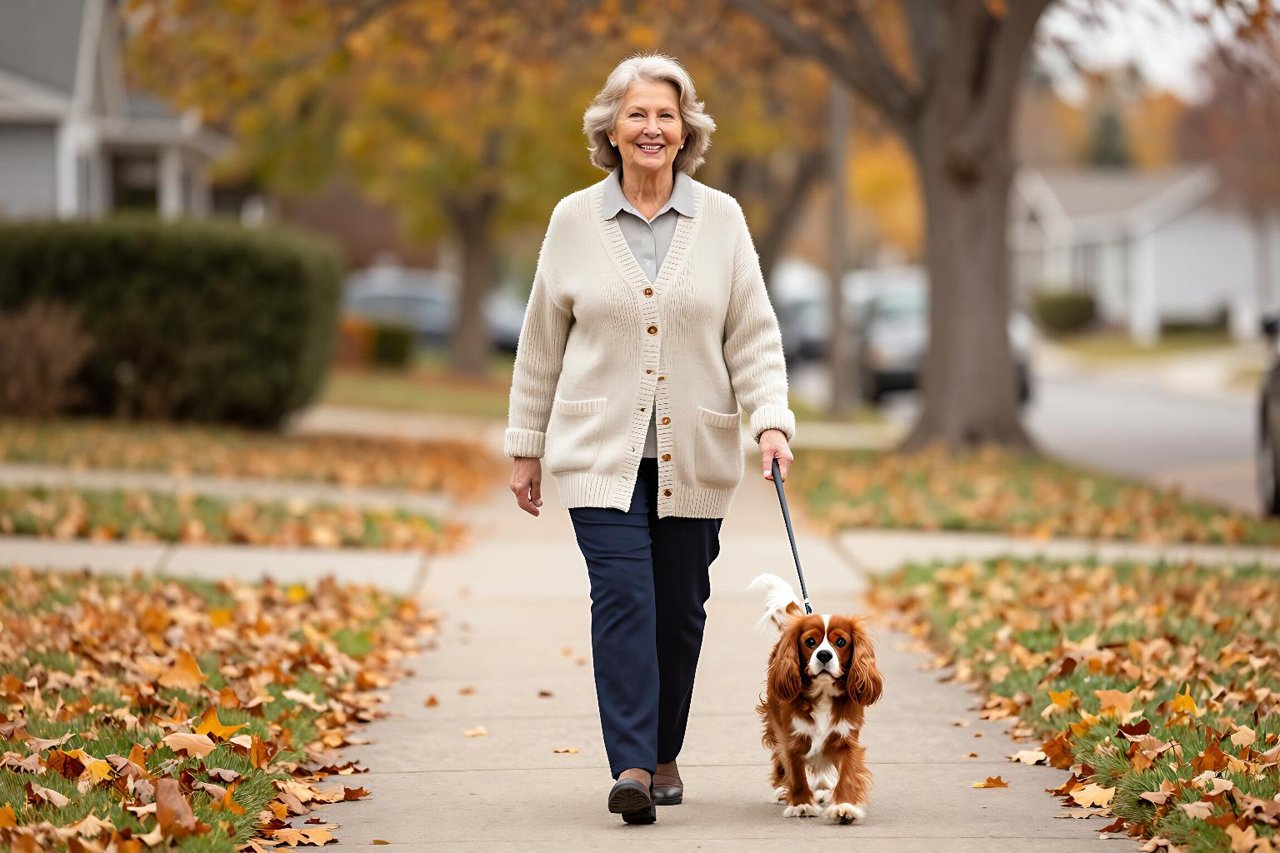
Thirteen to eighteen pounds of friendly, people-focused dog. A cavalier will take a 20-minute walk or a nap with equal enthusiasm, gets along with grandchildren and other pets, and rarely needs more than a weekly brush. The breed does carry a high rate of mitral valve heart disease, so buy from a breeder who health-tests, or adopt an adult whose history is known.
Maltese
Four to seven pounds, single-coated and low-shedding, which makes it a reasonable pick for allergy sufferers. The trade-off is daily brushing to prevent mats, and a frame so small that a jump off the sofa can break a leg. Lovely for someone steady on their feet and happy to groom.
Shih Tzu
Bred for centuries to sit on laps in palace rooms, and it shows. Nine to sixteen pounds, low exercise needs, content to follow you from room to room. Clipping every six to eight weeks is non-negotiable, and those flat faces struggle in summer heat.
Bichon Frise
Ten to eighteen pounds, cheerful and a bit clownish without being frantic. The curly white coat barely sheds but mats quickly, so it needs a trim roughly every two months. A good middle ground if you want a dog with some play in it.
Miniature Poodle
The most trainable dog on this list, and one of the least likely to pick up bad habits if you’re consistent. Ten to fifteen pounds, sharp as a tack, and quick to housetrain. They read your mood closely, which is either a comfort or a nuisance depending on the day.
Havanese
Seven to thirteen pounds with a sturdier build than its fluffy silhouette suggests. Bred as a family companion, endlessly cheerful, and famously attached to its person. Regular brushing keeps the coat under control.
French Bulldog
Twenty to twenty-eight pounds, low exercise needs, genuinely funny to live with. The catch is the flat face: heat, exertion, and anaesthesia all carry extra risk, and breathing or spinal surgery can run into four figures. Insure early or keep a dedicated vet fund.
Greyhound and Whippet
The best-kept secret on this list. A retired racing greyhound will hit 40 mph for thirty seconds and then sleep for eighteen hours, which makes it calmer indoors than most toy breeds. Racers are usually rehomed at two to four years old, already crate-trained and used to being handled. Keep them leashed in open areas, since the chase instinct is real.
Pembroke Welsh Corgi
A solid 25 to 30 pounds on very short legs, so there’s less bending down to pet or harness them. They’re clever and sturdy, but the herding background means barking and occasional ankle-nipping, plus heavy shedding twice a year. A good fit if you want a dog with opinions.
Breeds That Look Manageable but Usually Aren’t
Border collies, Australian shepherds, Jack Russell terriers, and huskies are all beautiful and all wrong for most retirees: they need an hour or more of real exercise a day and get destructive without it. Dachshunds are popular with older owners and are charming company, but the breed’s spinal disease risk means ramps instead of stairs and careful lifting for life. Flat-faced breeds as a group, including pugs and bulldogs, come with breathing and cooling problems that turn a warm afternoon into a medical event.
Puppy or Adult? Older Dogs Skip the Hard Part
A puppy is a twelve-month project with teeth. An adult dog is a known quantity: full grown, temperament visible, usually house-trained, sometimes already obedience-trained. For many seniors, a three-to-seven-year-old from a shelter or breed-specific rescue is the smarter choice, and dogs aged eight and up are the hardest to rehome and often the easiest to live with.
Ask staff direct questions. How does the dog walk on a loose leash? How does it react to other dogs, to grandchildren, to being left alone for four hours? Fostering first lets you test the fit for a fortnight before committing. Once an older dog settles in, nutrition deserves a rethink too, since needs shift with age; what high quality dog food actually means is a sensible place to start.
Costs and Logistics Worth Planning For
Nobody enjoys this part, but knowing it prevents nasty surprises.
- Veterinary care. A healthy small dog runs $200 to $400 a year. Add a dental cleaning at $300 to $600 and one emergency, and the total can pass $3,000.
- Food and treats. Expect $40 to $90 a month for a small breed. Cheap kibble costs less at the till and often more at the vet.
- Grooming. Six to eight visits a year at $60 to $100 each if you choose a coated breed.
- Insurance or a savings buffer. Pick one deliberately rather than hoping.
- Backup help. A hospital stay or a family wedding shouldn’t leave you scrambling. Deciding how to find a dog sitter you’ll trust before you need one is worth an afternoon.
Feeding a Smaller, More Settled Dog
A ten-pound lap dog that walks twenty minutes a day needs roughly 300 to 400 calories daily. Most people overfeed, and the result is a dog carrying an extra pound or two, which is a lot when the whole animal weighs twelve. Measure the food instead of eyeballing it, and cut treats out of the daily ration rather than adding them on top.
Senior dogs specifically benefit from higher-quality protein, added joint support, and smaller, more frequent meals. The ultimate guide to finding the best dog food for your pup walks through label reading without the marketing noise. If you prefer to stay on kibble, this no-nonsense guide to the best dry dog food explains which ingredients are worth paying for and which are decoration.
Matching the Dog to Your Actual Week
Before you commit, sketch out a normal week as it really is, not as you’d like it to be. If mornings are slow, choose a dog that doesn’t need a walk before coffee. If your garden has three steps down to the lawn, that shapes the answer as much as any breed chart. If the nearest emergency vet is forty minutes away, a breed with known breathing or spinal issues becomes a bigger gamble.
The most useful test is a walk together. Borrow a friend’s dog for an afternoon, or ask a shelter about weekend fostering. Notice whether you can harness the dog one-handed, whether it pulls when a squirrel crosses the path, and whether you both enjoy the same pace. Plenty of successful matches happen because a quiet six-year-old spaniel mix with grey eyebrows chose the person sitting on the bench, and that dog will suit a slow morning better than any puppy ever could.


