
Table of Contents
You’ve probably seen the murky brown bottle on everyone’s kitchen counter. Some folks swear by a shot of apple cider vinegar every morning, while others use it to polish their hair and brighten their skin. With all the noise, it’s easy to wonder: are there apple cider vinegar benefits worth paying attention to, or is it just another wellness fad?
The short answer: it’s not magic. But a few real, evidence-backed benefits do stand out. Here’s what apple cider vinegar can actually do, how to use it without wrecking your teeth, and simple ways to work it into your everyday routine.
What Exactly Is Apple Cider Vinegar?
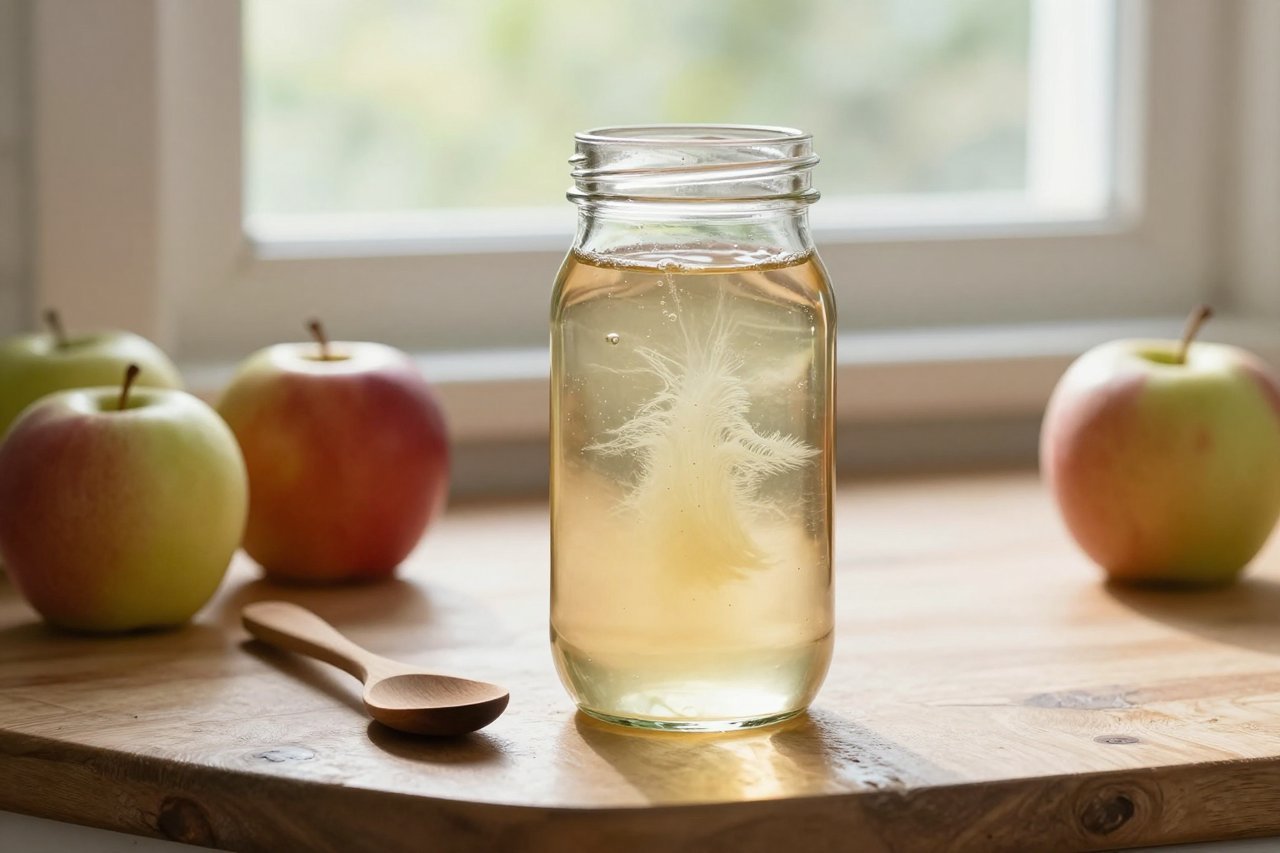
ACV is essentially fermented apple juice. Yeasts turn the natural sugars into alcohol, then bacteria convert that alcohol into acetic acid – the compound responsible for vinegar’s sour taste and most of its effects. Unfiltered, organic ACV also contains the “mother,” a murky web of beneficial bacteria, enzymes, and proteins.
That acetic acid is the star. It’s a short-chain fatty acid that has been shown to influence metabolism, digestion, and even how your body processes sugar. The mother adds a probiotic element, though only raw, unpasteurized versions contain it.

Blood Sugar Control: The Benefit With the Most Science
If there’s one reason to keep ACV in your cupboards near the stove, it’s blood sugar regulation. This is the most heavily researched area, and the results are impressively consistent.
In a small 2004 Diabetes Care study, people with type 2 diabetes who took two tablespoons of apple cider vinegar before bedtime woke up with lower fasting blood sugar levels. Another study found that eating vinegar with a high-carb meal reduced participants’ blood sugar spikes by about 34% compared to placebo. The effect seems strongest on slowly digestible carbs like rice and potatoes.
The mechanism? Acetic acid slows gastric emptying and delays the breakdown of starches into glucose, giving your body a gentler rise in blood sugar. If you’re one of the many people exploring natural remedies for everyday ailments, this is one that has genuine science behind it.
A practical way to harness this: mix one to two teaspoons of ACV into a glass of water and drink it with your meals, especially if you know you’ll be eating a carb-heavy plate. Skip the extra sugar and just lean into the tang.
Digestive Support and a Happier Gut
ACV has a reputation for soothing digestive issues, but it’s not a simple story. Some people with acid reflux find that a teaspoon of ACV in warm water actually eases their heartburn. The idea is that your reflux could stem from too little stomach acid, not too much, and adding a mild acid helps your stomach signal the lower esophageal sphincter to close properly.
This is anecdotal, not rigorously proven, and it can backfire. If you have gastritis or an active ulcer, extra acid can make things worse. But for occasional bloating or sluggish digestion? Worth a try.
The mother also brings in friendly bacteria, so a daily ACV tonic can support your overall microbiome. That said, you’ll get more probiotic diversity from actual fermented foods like kimchi, sourdough, or a good yogurt.
You don’t have to drink it straight, either. Your digestion will thank you just as much if you whisk ACV into a dressing. This carrot ginger dressing recipe is a delicious example of how to work it into a meal without feeling like you’re taking a shot of something medicinal.
Mild Weight Management Support
No vinegar will replace exercise and a sensible diet, but ACV might nudge the scale in the right direction. Studies in animals show acetic acid reduces fat accumulation, and a widely cited 2009 study in Japan found that obese individuals who drank one to two tablespoons of vinegar per day for 12 weeks lost more belly fat and overall weight than the placebo group.
How does that work? It’s partly about lowering insulin levels, which helps your body burn fat. Also, vinegar is quite acidic, which can promote a feeling of fullness. A 2005 study reported that people who consumed white vinegar alongside bread felt more satisfied and ate fewer calories in the next few hours.
Just don’t think of ACV as a “diet drink.” Try a warm mug of water with lemon, ACV, and a pinch of cayenne before meals to rev up digestion, but skip the idea that it’s making you slim while you binge on donuts.
Skin Health and the Nail Trend
On the skincare front, ACV might be useful for balancing skin pH, tightening pores, and calming inflammation. The unregulated pH of most skin-care products can irritate sensitive skin; a diluted ACV toner – never applied directly – is a classic DIY staple for that reason.
There’s also a growing interest in vinegar soaks for fungal issues like athlete’s foot, because acetic acid is mildly antifungal. This benefits of vinegar baths guide explains how a warm vinegar foot soak can help soften skin, neutralize odor-causing bacteria, and give some fungal overgrowths a hard time. Remember to dilute it – a half-cup of vinegar per gallon of water is usually plenty.
If you’re dealing with stubborn nail fungus, apple cider vinegar soaks might be a complementary step. Many people report gradual improvements when they pair regular diluted vinegar soaks with other care routines. That same vinegar principle is at work in this nail fungus treatment, which is a popular at-home approach.
The Great ACV Detox Myth
You’ve probably seen “detox” teas and cleanses claiming that ACV flushes out toxins. Let’s be blunt: your liver and kidneys do that job already. No vinegar will speed it up. But that doesn’t mean ACV doesn’t help your body process things better – blood sugar control and digestion support are part of that effect.
Treat ACV as a metabolic helper, not a “cleanse.” A dietary aide that makes you feel more balanced is useful, but it’s not a detoxifier.
Potential Side Effects: Don’t Skip This
ACV is acidic – really acidic. Consuming it undiluted can burn your esophagus, damage tooth enamel, and irritate the stomach lining. Here’s how to use it safely:
- Always dilute it: at least a tablespoon of ACV per 8–10 ounces of water.
- Drink through a straw to avoid contact with your teeth, and rinse your mouth with plain water afterward (wait at least 30 minutes before brushing).
- Start small: a teaspoon per day, then work up if your stomach tolerates it.
- Never apply it directly to skin at full strength – dilute it 1:4 or more.
- If you take diabetes medication or potassium-lowering diuretics, talk to your doctor first. ACV can affect blood sugar and potassium levels.
How to Make ACV a Habit (Without Gagging)
If you’re ready to try it, here are some effective ways that don’t involve chugging vinegar:
The Morning Tonic
Warm water, a spoon of ACV, lemon juice, and a tiny bit of raw honey. It’s practically a lemonade, and that warmth makes it easier on the stomach.
Salad Dressings
Swap the white wine vinegar for apple cider vinegar in your next dressing. It pairs beautifully with olive oil, Dijon mustard, and fresh herbs. The carrot ginger dressing recipe mentioned earlier is a great place to start.
Pickling and Marinades
Next time you make a cucumber salad, use a splash of ACV. It also makes a great base for a coleslaw dressing, and in marinades, the acetic acid can help tenderize chicken or pork.
Fire Cider
This spicy, pungent tonic is basically ACV infused with garlic, onion, horseradish, and hot peppers. It’s a favorite in the natural-remedy world for taming colds. Grab a spicy fire cider recipe if you want a project that puts ACV to work.
Post-Meal Fix
After a heavy meal, a small glass of water with a teaspoon of ACV and a pinch of salt can help settle your stomach. It’s not a detox, but it feels good.
So, Are Apple Cider Vinegar Benefits Worth It?
Yes, but with reasonable expectations. It’s not a disease cure, and it won’t undo a month of poor eating. Its real strengths lie in the modest, daily effects: better blood sugar control after carb-heavy meals, a possible slight boost to weight management, a supportive nod to digestion, and a practical, inexpensive addition to a homecare routine.
The best way to get the benefits is to use ACV consistently but modestly – as part of dressing, tonics, and household remedies. In a world of expensive supplements, it’s one of the cheapest, most accessible tools in your pantry. But like any tool, it only works when used correctly.
And if you do decide to make it a habit, keep in mind the safety guidelines and start small. Your stomach, your blood sugar, and your dentist will all appreciate that.


