
Table of Contents
There’s a reason the back of your makeup drawer is full of half-used concealers. The first one was too dry. The second creased within an hour. The third looked great in the mirror but disappeared by lunch. Hunting for the best concealer can feel like a full-time job – but the secret isn’t about price or popularity. It’s about finding a formula that works for your skin type, your specific concern, and the way you actually wear makeup.
What Actually Makes a Concealer “Best”?
A “best” concealer is subjective, but there are a few undeniable qualities: even coverage, comfortable wear, and longevity. Beyond that, it comes down to the job you need it to do.
Before you shop, ask yourself three things:
- What am I covering? Dark circles, dark spots, breakouts, or redness?
- What is my skin type? Dry, oily, combination, or mature?
- What finish do I like? Natural, dewy, or matte?
The answers change everything. A matte, full-coverage formula can be a lifesaver for a pimple, but it can also look scaly on dry skin. A luminous, hydrating concealer might look fresh and bright under the eyes but slide around on an oily t-zone. That’s why any article that names one single “best concealer” for everyone is lying. You need the best concealer for your skin’s unique personality.

The Best Concealer by Skin Type
Dry Skin: Look for Hydrating and Creamy Textures
Dry skin and powder concealer are not friends. The drier your skin, the more emollients your formula needs. Ingredients like hyaluronic acid, squalane, and glycerin help keep undereyes from looking cakey or flaky. You also want a satin or dewy finish – anything completely matte will settle into every dry patch. Always apply with patting motions instead of swiping, and let the product warm up on your skin before layering. If you’re seeing flakiness, this list of best hydrating concealers for dry skin covers formulas that won’t cling or crack.
Oily Skin: Go Oil-Free and Long-Wear
If your t-zone is an oil slick by mid-morning, your concealer has to work harder. Look for oil-free, transfer-resistant formulas with a demi-matte finish. Setting powder is almost non-negotiable here – apply a thin layer under the eyes immediately after blending. And don’t forget that the best concealer in the world can’t save skin that’s constantly overproducing oil. A consistent skin care routine for oily skin can cut down on the shine before you even touch makeup.
Mature Skin: Avoid Heavy, Settling Formulas
Mature skin needs a gentler touch. Heavy, matte concealers are a one-way ticket to fine lines. Instead, reach for lightweight, buildable formulas with a soft-focus or radiant finish. Avoid powder overload – a tiny dusting around the outer corner is enough. And for dark circles or blotchiness, opt for brightening tones that reflect light rather than layered thickness. If you’re curious about products that actually hold up, see our picks for the best concealers for mature skin in 2025.
Coverage and Finish: Match It to the Job
Dark Spots and Blemishes: Full Coverage That Doesn’t Cake
Dark spots are stubborn. They need a high-coverage concealer with enough body to sit over pigment without turning into a thick paste. The trick is to build in thin layers. A pea-sized amount should be plenty for a whole cheek. Start with a small dot, blend outward, then add another only where the pigment still shows through. For spots that just won’t quit, this selection of best concealers for dark spots that won’t cake by midday is worth a look.
Undereye Circles: Brightening Pink and Peach Tones
Dark circles are usually blue or purple, so a regular concealer often just leaves a gray cast. That’s why so many brightening concealers have a peach or salmon tint. The pink neutralises the blue, while the concealer blends back into your skin tone. Apply a thin layer to the darkest part of the circle, let it dry for ten seconds, and then add a skin-tone layer on top. It’s the simplest color-correcting trick you’ll ever use.
Everyday Light Coverage: Your Skin But Better
Some days you just want to cancel out a little redness and look wide awake. A serum-like, light coverage concealer can do that without a full face of makeup. Tap it over the inner corner of your eyes, around the nose, and over the blemish you’re hiding. It’s the perfect partner for a sheer or medium foundation – because the right base makes your concealer work harder. If you haven’t found a foundation that sits well, remember that the best foundation is the one that fits your skin – not the most hyped bottle.
How to Apply Concealer So It Stays Put
Application is half the battle. Here’s a step-by-step that works for most concealers:
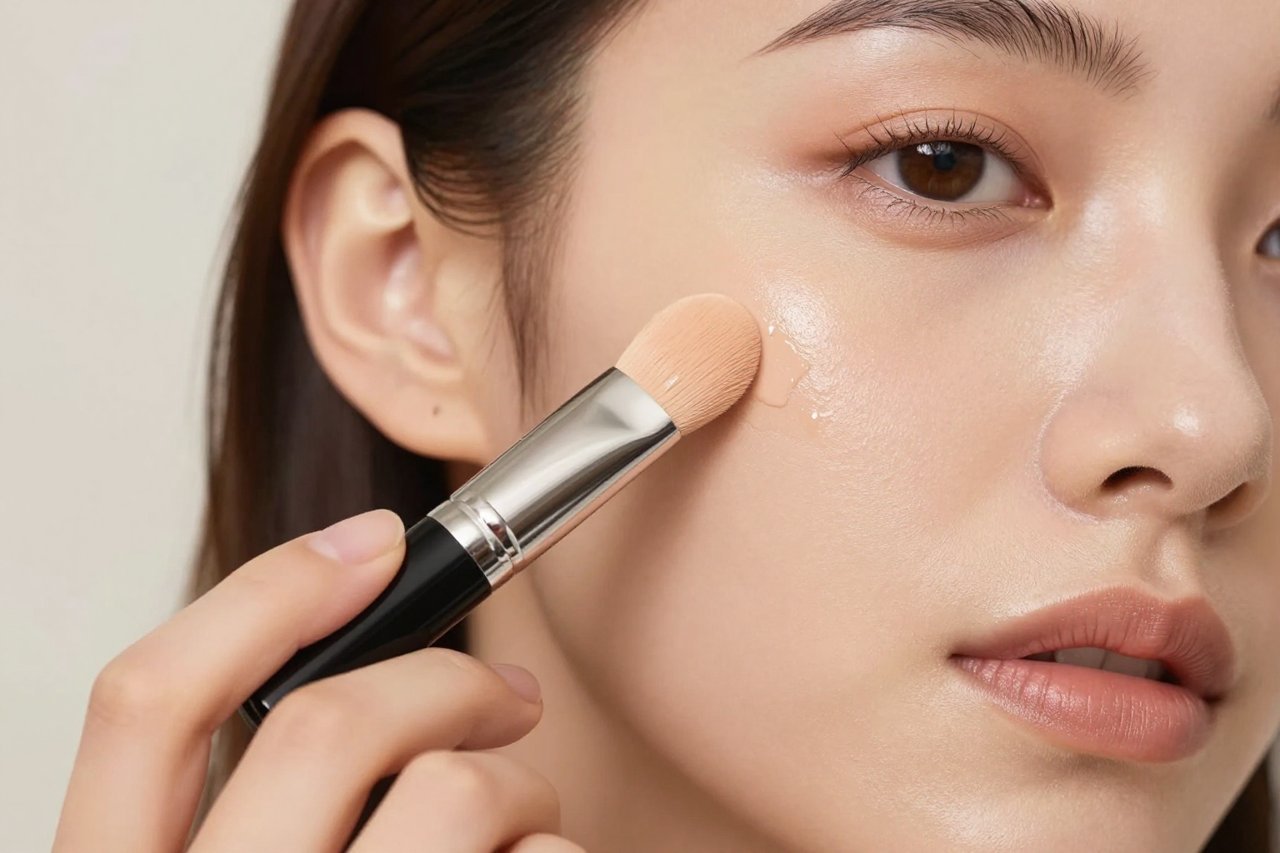
Start with a clean, well-moisturised face. Then, use a warm fingertip to tap the product in. Your finger will melt the formula so it blends without dragging. For under-eye, draw a triangle with the base at your lash line – this lifts the face instead of just covering the circle. Wait thirty seconds before setting with powder. That brief pause lets the product settle into skin rather than creating a separate layer that creases later. For blemishes, use a small synthetic brush to dab the concealer directly onto the spot and feather the edges. No dragging.
Common Concealer Mistakes That Ruin the Look
- Using too much product – start with one dot and build. A thick layer will always crease.
- Choosing the wrong shade – a concealer that’s too light can make dark circles look blue, and too dark looks dirty.
- Skipping the setting step – if you have oily skin or live in a humid climate, powder is not optional.
- Applying concealer before foundation – for most looks, foundation goes first to even out the canvas, then concealer goes where you still need coverage.
- Forgetting about skin prep – dry, flaky patches will make even the best concealers look awful.
How Do I Find My Correct Concealer Shade?
That’s the million-dollar question. For undereyes, your concealer should be one to two shades lighter than your skin tone – but resist going far beyond that or you’ll end up with bright white half-moons. For blemishes, your concealer should match your foundation exactly. If you’re between shades, go a shade lighter for under-eye and a shade closer to your skin for blemishes. Also consider your undertone: cool skin looks better with pink-based concealers, while warm or golden undertones are flattered by peachy or yellow-toned options.
Your best concealer is the one you forget you’re wearing. When it blends seamlessly, lasts past rush hour, and doesn’t make things worse, you’ve found it. Give yourself room to experiment, but let your specific needs be the guide.


