
Table of Contents
You’re at a bustling food market in a foreign city. The grills hiss, the air smells like garlic and smoke, and you only have room for one meal. Should it be a taco, a noodle dish, or something wrapped in bread? Street food is the world’s most democratic meal, and after eating my way through Mexico City, Bangkok, Istanbul, and beyond, I’ve narrowed the classics down to seven that appear on almost every traveler’s must-try list. But they are not created equal. This is a head-to-head comparison of the 7 best street foods in the world, judged on flavor, cost, convenience, and how you feel an hour later.
If you prefer a more scenic route through these dishes, we’ve taken a culinary tour in seven bites before. Here, we’re zooming in on the trade-offs so you can pick the right one for the moment.
How We Judged the World’s Best Street Foods
To crown a winner, you need a yardstick. I ate each food at least twice: once at a famous vendor and once at a random stall that locals recommended. I scored them on five criteria that travelers actually care about.
- Flavor: Does it stop conversations mid-bite?
- Portability: Can you walk, talk, and eat without a mess?
- Price: Is it a bargain compared to a sit-down meal?
- Health: Are there real ingredients or just salt and oil?
- Regret factor: Will you crave seconds, or regret the indulgence?
1. Tacos al Pastor (Mexico)
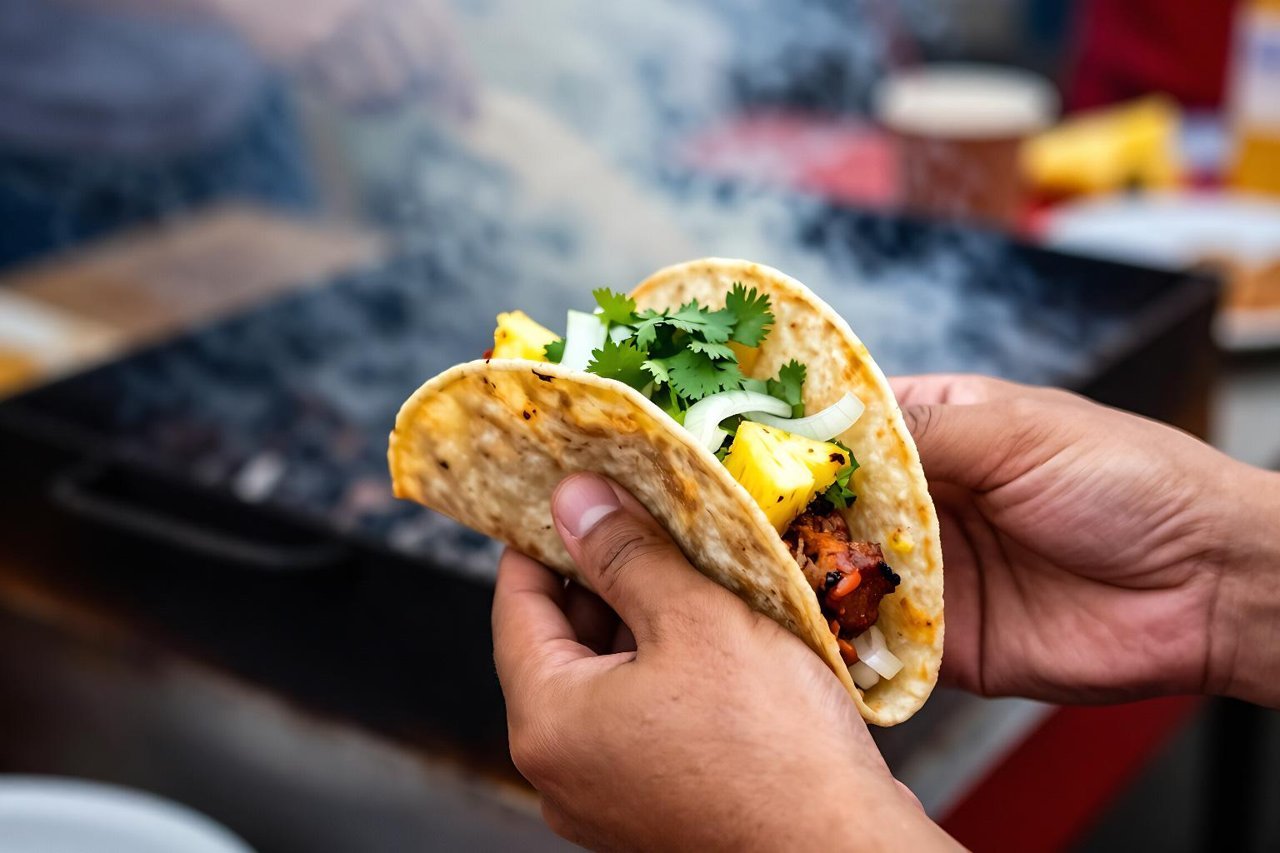
Pork sliced from a vertical spit, charred at the edges, topped with pineapple, cilantro, and onion on warm corn tortillas. This is the king of street food because it’s both portable and endlessly customizable. In Mexico City, a single taco costs around half a dollar, and you can eat three in five minutes.

- Wins: Perfect balance of sweet, savory, and spicy. You can add salsas, pickled onions, or lime.
- Loses: It’s messy. The juice and salsa will drip down your wrist if you’re not careful.
Compared to a hot dog, a taco has fresh, lively ingredients; compared to pad thai, it’s faster to eat and easier to enjoy standing up.
2. Banh Mi (Vietnam)
French bread meets Vietnamese fillings: pâté, grilled pork, pickled carrots and daikon, cucumber, jalapeño, and a handful of cilantro. The baguette is light and crunchy, the pickles cut with sourness, and the chili adds an optional burn.
- Wins: The most portable and healthiest of the seven. It’s a full meal with vegetables, protein, and carbs, and it doesn’t need a plate.
- Loses: Quality depends heavily on the bread. A stale baguette ruins the whole experience.
Banh mi has more texture and complexity than a kebab, and it’s less greasy than anything fried.
3. Pad Thai (Thailand)
Stir-fried rice noodles with egg, tofu, shrimp, crushed peanuts, bean sprouts, and a tamarind-lime sauce. It’s the sweet-sour-salty flavor bomb that you eat fresh off the wok.
- Wins: The sauce clings to every noodle, and the toppings add crunch. It’s a satisfying, balanced meal.
- Loses: It requires a plate and fork, so it’s not handheld. It’s also slower to eat if you’re sightseeing.
Pad Thai offers more vegetables than a doner kebab, but it’s less portable than a taco.
4. Doner Kebab (Turkey)
Layers of marinated lamb or chicken roasted on a vertical spit, shaved thin, and stuffed into flatbread with tomatoes, onions, and garlic sauce. It’s the ultimate late-night recovery food, found from Berlin to Istanbul.
- Wins: Hearty, filling, and juicy. The meat is savory and fatty in the best way.
- Loses: Quality varies wildly. Some versions are dry, others are dripping with grease.
Kebab is heartier than a hot dog, but pork tacos are more delicate.
5. New York Hot Dog (USA)
A boiled or grilled sausage in a soft bun, topped with mustard, ketchup, onions, and sauerkraut. It’s the most accessible street food in North America.
- Wins: Fast, cheap, and consistent. No surprises, no mess.
- Loses: It’s the least exciting flavor of the seven. The processed sausage is more about convenience than craft.
The hot dog is the bridge between street food and fast food, and our comparison of the best fast food chains shows how much that industry owes to this simple sausage.
6. Takoyaki (Japan)
Octopus chunks in a soft batter, cooked in a special pan until golden, then brushed with takoyaki sauce, mayo, and bonito flakes that dance from the heat.
- Wins: Creamy, umami-rich, and fun to eat. The molten center is a pleasant surprise.
- Loses: It’s dangerously hot and burns the roof of your mouth if you’re impatient. It’s also not very filling as a meal.
Takoyaki wins on sheer novelty, but loses to banh mi on substance.
7. Samosa Chaat (India)
Crushed crispy samosas drowned in yogurt, tangy tamarind chutney, green chili chutney, onion, and pomegranate seeds. It’s a flavor explosion served on a paper plate at chaat stalls across India.
- Wins: The most complex flavor profile of the seven: spicy, sour, creamy, and crunchy at once. It’s also naturally vegetarian.
- Loses: It gets mushy quickly, and it’s the least portable. You need a bench or a wall to lean against.
Samosa chaat is the grand finale of street food flavor, but it’s a commitment, not a snack.
The Verdict: Which Street Food Should You Choose?
There is no single winner. Your pick depends on where you are and what you need. If you want the biggest flavor surge per bite, samosa chaat delivers. If you need something to eat while walking through a museum, banh mi is your container. If you’re on a budget, tacos and hot dogs are the cheapest. In my scoring, banh mi took first for balance, tacos came second for customization, and takoyaki won the “I can’t stop eating” award.
- For a filling lunch that stays with you: Doner kebab or pad thai.
- For a savory snack that’s easy to share: Takoyaki or hot dog.
- For a meal you can eat on the move: Banh mi or taco.
- For the most adventurous flavor: Samosa chaat.
Each of these street foods reflects its culture, and if you’re curious how they fit into their wider cuisines, our comparison of the top seven cuisines gives more context. And when you’re ready to taste them properly, our step-by-step eating guide covers the techniques, from rolling a taco to cooling takoyaki.


