
Table of Contents
Every dog owner reaches the kennel question eventually. Maybe you’re bringing home a puppy, heading on a long road trip, or you just want a quiet space where your adult dog can relax. Kennels for dogs are more than a convenience—they can become a comforting den for your pet. The hard part is figuring out which style fits your life and your dog’s needs.
You don’t have to be a dog trainer to get this right. You just need a little patience and the right information.
The Main Types of Kennels for Dogs
Walk into any pet supply store and you’ll see a wall of crates and kennels. They all serve the same basic purpose, but each style has strengths and weaknesses. Here’s how to tell them apart.
Wire Kennels
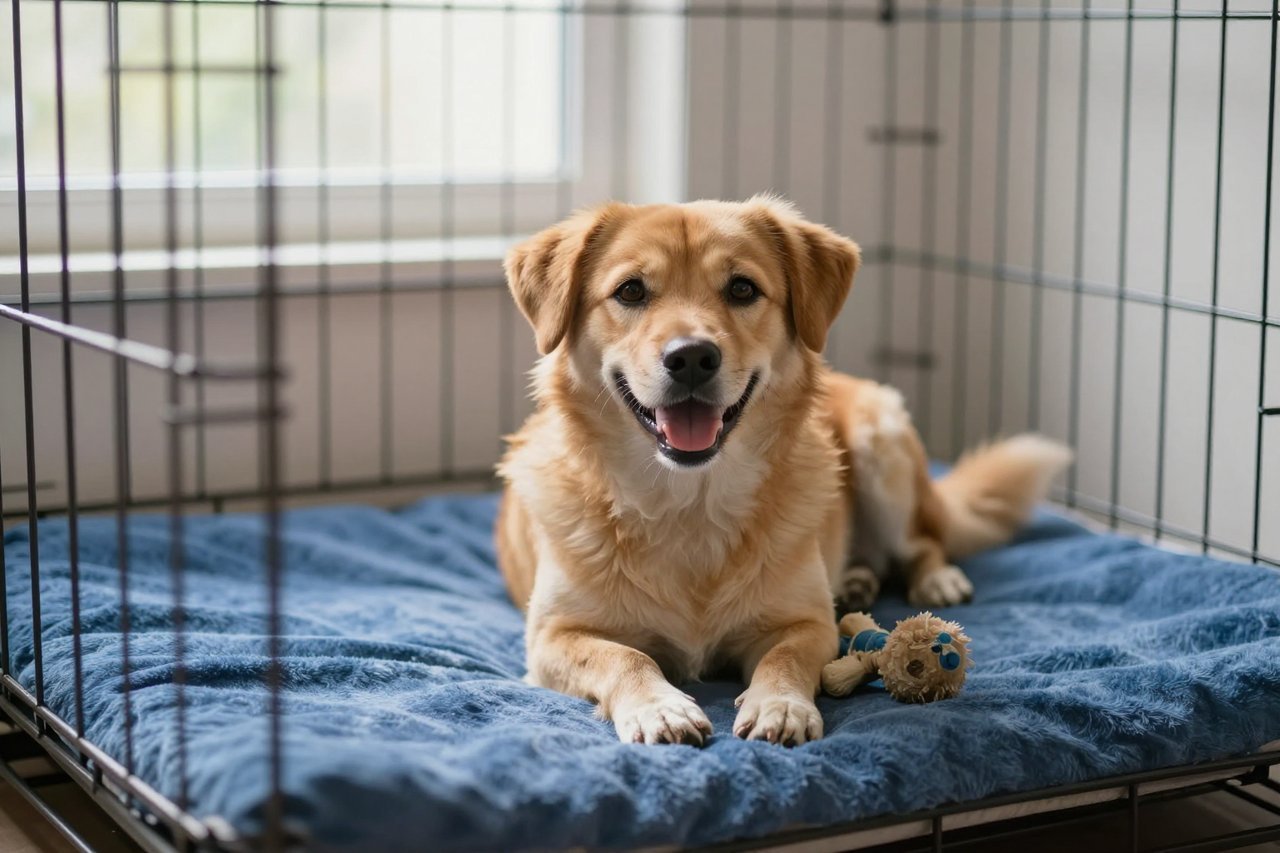
Wire crates are the most popular indoor choice. They offer plenty of airflow and let your dog see everything going on, which helps some dogs settle down. Most fold flat for storage or travel, and a door at the front means you can drop a bowl of water in without opening the whole side. The downside is that a determined dog can sometimes bend the wires, and they’re drafty for short-coated breeds in winter.

Plastic and Airline Kennels
Plastic or ‘airline’ kennels are the ones you see at the airport check-in counter. They’re sturdier, more enclosed, and offer better protection from drafts. That makes them ideal for car travel or for a dog that likes to feel hidden. They also tend to be chew-resistant. Look for one that’s been tested to meet airline safety standards if you plan to fly.
Soft-Sided Crates
For a dog under 25 pounds, a soft-sided crate is handy to keep in the car and carry into a friend’s house. They’re light, easy to store, and many pack away into a small bag. But they’re not chew-proof, and a dog with a lot of energy can trip over the zipped door. Save this style for dogs with a calm temperament.
Heavy-Duty Kennels
Some dogs treat a standard crate like a puzzle to be solved. For escape artists, heavy-duty kennels use reinforced steel bars and locking pins that are much harder to defeat. They’re heavier and more expensive, but they bring peace of mind for owners of strong chewers.
Outdoor Dog Kennels
If you’re talking about kennels for dogs in the backyard, that’s a different piece of equipment. An outdoor kennel is a large fenced enclosure, not a crate. You’ll need to provide shade, water, and protection from the elements. A solid base is important, since dogs can dig their way out under a chain-link fence.
Here’s a quick recap:
- Wire: best for airflow and visibility
- Plastic: best for travel and security
- Soft-sided: best for portability, small dogs only
- Heavy-duty: best for determined escape artists
- Outdoor: best for supervised yard time
Size It Right: Measure Twice, Buy Once
Kennels for dogs come in standard sizes from tiny to XXL, but the label isn’t the whole story. You need to measure your particular dog. Have your dog stand, then measure from the tip of the nose to the base of the tail. Also measure from the floor to the top of the shoulder. Add around three inches to both numbers. That’s your minimum interior dimension.
A dog should be able to stand, turn around, and lie down without squishing. But you also don’t want a palace. A crate that’s too big for a puppy encourages bathroom accidents because the puppy can sleep in one corner and do their business in the other. Many wire crates come with a divider panel, which lets you adjust the floor space as your puppy grows.
Finding the Right Spot in Your Home
Placement matters more than you’d think. Put the kennel somewhere you spend time, like the living room, so your dog doesn’t feel exiled. Avoid the laundry room or a drafty garage. If the floor is cold tile, a raised platform or a simple mat under the crate adds insulation.
For outdoor kennels, pick a location with afternoon shade and move the whole thing under cover when the weather turns rough.
Making the Kennel a Comfortable Sanctuary
A bare wire floor isn’t welcoming. Add a thick bed that matches your dog’s habits. If your dog chews their bedding, start with a heavy canvas mat and upgrade later. For older dogs, the right bed makes a big difference. If you’re wondering whether your dog needs extra support, the guidance on orthopedic dog beds is a useful starting point. Place a familiar blanket in there too, and rotate in a safe chew toy.
Using Kennels for Travel and Boarding
Kennels for dogs also earn their keep on the go. In the car, a plastic kennel is much safer than a wire one—it keeps a dog contained and protects them in a sudden stop. When you stay at a hotel, a familiar crate helps your dog sleep in an unfamiliar room.
If you’re planning a trip that requires boarding your dog, most facilities will either provide a kennel or ask you to bring one. A dog who is already used to being in a kennel will cope far better with a night away from home. For a smooth experience, work through the steps in this step-by-step guide to a happy, safe boarding stay before you book. And if your dog tends to get anxious, this complete guide to a stress-free boarding experience has a lot of practical tips.
Common Kennel Mistakes to Avoid
- Never use the kennel as a punishment. Your dog should see it as a safe spot, not a place they get sent to when they’re in trouble.
- Take off your dog’s collar before closing them in. Tags can get caught in the wiring and cause panic.
- Watch the temperature. In summer, keep the kennel out of direct sunlight and make sure the room is ventilated.
- Don’t leave a dog in a kennel all day. Puppies under six months need bathroom breaks every few hours, and adult dogs shouldn’t be crated for more than six to eight hours at a stretch.
Helping Your Puppy Love the Kennel
The best time to introduce a kennel is when your dog is young, but even an adult rescue can learn to appreciate one. Start slow. Toss a few treats near the open crate first, then just inside the door. Don’t close the door until your dog is relaxed and entered the crate voluntarily several times over several days.
You can feed meals inside the crate, gradually closing the door for a few minutes afterwards. Use a command like ‘kennel up’ or ‘bed’ each time you ask them to go inside. With a consistent routine, the kennel becomes a quiet den your dog chooses on their own. The more you understand your dog’s perspective, the easier this process gets. In this Ask Me Anything with Prof. Carri Westgarth, the professor answers everyday dog questions that touch on why a dog might fear a closed crate.
Keep the first few visits short. Let your dog out while they’re still calm. Over time, extend the length, and always make sure good things happen while they’re inside. Done right, a kennel is one of the most comforting pieces of equipment you’ll ever buy for your dog.


