
Table of Contents
I was 51 when I realised I couldn’t get off the floor after playing with my dog without using the couch. Not old, but not exactly agile. That moment didn’t send me to a gym; it sent me to a physiotherapist, which is where I learned that staying active after 50 is less about punishing workouts and more about the right mix of strength, balance, and consistency.
What Actually Changes at 50
Age-related muscle loss, or sarcopenia, starts slowly in your 30s and picks up speed after 50. Without intervention, you can lose 1–2% of your muscle mass each year. Bone density drops too, especially for women going through menopause. Ligaments stiffen, joints complain, and balance gets worse in ways you don’t notice until you’re on one leg.
None of that is cause for panic. It’s cause for a plan.
Notice I didn’t say try to stay young. I said plan, because movement alone isn’t enough. It needs to be targeted.

Why Just Walking More Isn’t Enough
Walking is excellent. It lowers blood pressure, improves mood, and keeps joints loosely lubricated. But if you’re chasing a daily step count while never loading your skeleton, you’re missing the bigger picture.
After 50, the body responds to demands. Bones need impact or heavy resistance to keep rebuilding. Muscles need progressive overload, which means each week should feel slightly harder than the last. That doesn’t require CrossFit-style craziness. It requires controlled, intentional load.
Try this: swap one daily walk for a brisk walk carrying a weighted vest. Or take two flights of stairs, then walk back down slowly. That’s a beginning.
Strength Training Is the Best Investment You’ll Make
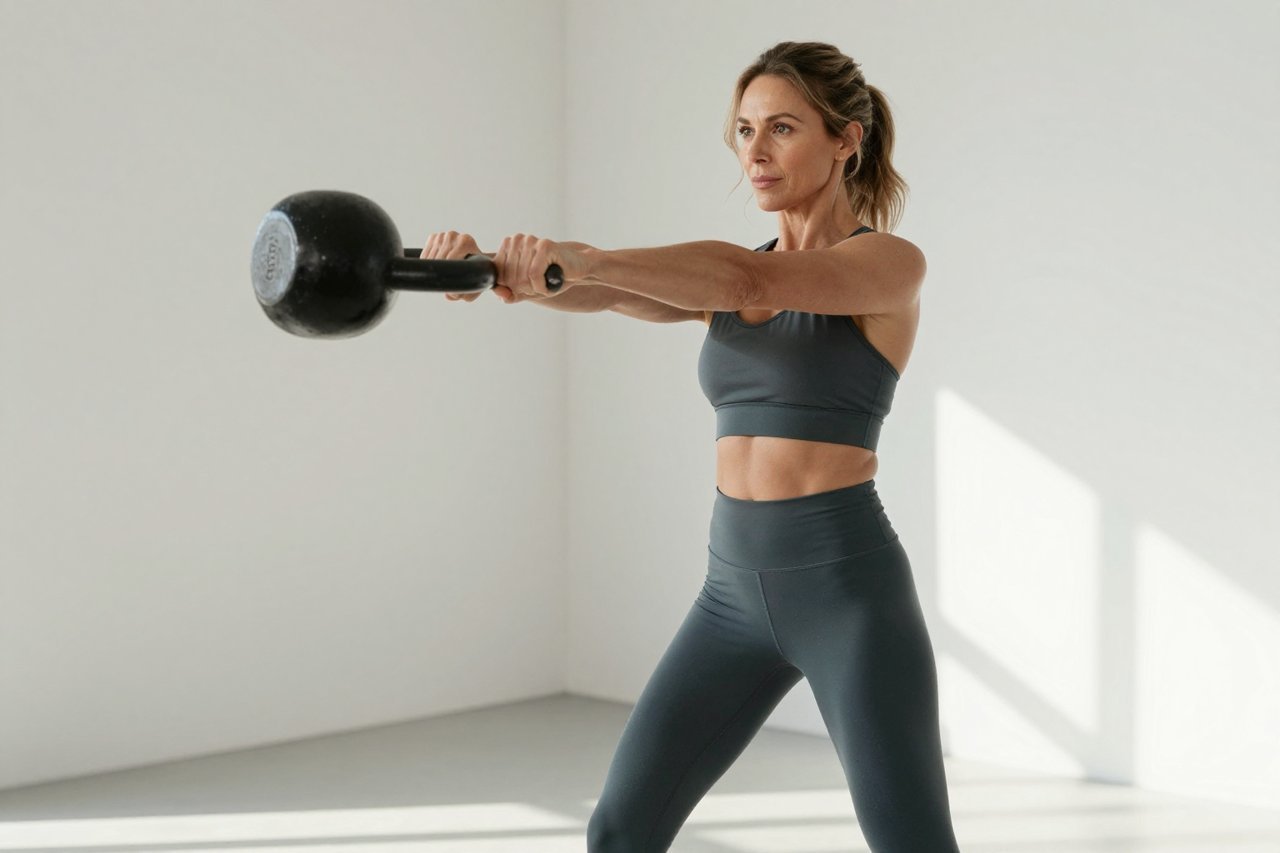
Here’s the blunt version: if you do only one thing, lift something. It doesn’t have to be a barbell. Dumbbells, kettlebells, resistance bands, or a loaded backpack all work.
Strength training after 50 does more than build muscle. It improves insulin sensitivity, increases bone density, raises resting metabolism, stabilizes joints, and can reduce fall risk by up to 40%. I’ve said it before, and I’ll keep saying it: strength training is non-negotiable for women after 40, but the same rules apply to men and everyone else.
Start with the Basic Patterns
Focus on push, pull, squat, hinge, and carry. Five compound exercises cover almost everything:
- Overhead press
- Seated row
- Goblet squat
- Hip hinge
- Farmer’s carry
Do two full-body sessions a week. A simple target is three sets of three of these movements, using a weight that makes the last two reps genuinely challenging.
Recovery Belongs in the Plan
At 50, you don’t bounce back like a 25-year-old. Sleep matters more, protein matters more, and rest days should be active: easy walking, gentle stretching, not couch-bound. The science-backed habits for healthy aging cover sleep, stress, and social connection, all of which amplify what you do in the gym.
Cardio Without Sacrificing Your Knees
You still need aerobic work. Aim for 150 minutes of moderate cardio per week, spread over five or six days. But steady-state on a treadmill isn’t the only option, and for many people it isn’t the best one.
Swimming and cycling are easy on knees. Rowing is superb. Dancing counts too, and it trains balance at the same time.
If you need proof this matters, look at women over 50 who are running marathons and finishing Ironmans. The lesson isn’t that everyone should become an endurance athlete. It’s that the body adapts well into your 50s and 60s when you progressively load it.
Balance and Mobility Are the Real Longevity Skills
Strength and cardio keep you functional. Balance keeps you alive. Falls are the leading cause of injury-related death in older adults, and the decline in balance begins far earlier than most people expect.
The One-Leg Stand Test
Can you stand on one leg for ten seconds with your eyes open? If yes, you’re better than average for your age. If no, don’t panic, now you know exactly where to start.
Practice while brushing your teeth. Stand on one leg for thirty seconds, then switch. When your balance improves, close your eyes for a few seconds.
Eccentric Work for Tendons and Joints
Tendons love slow, lengthening contractions. Sit down to a chair with a four-second count, then stand up without using your hands. Repeat ten times. That single move strengthens your knees, hips, and core.
Bone density responds to actual load, not just pills. For a deeper look, I recommend this science-backed guide to bone health. It goes beyond calcium and explains why impact and compound lifts matter most.
Eat Enough Protein for the Work You’re Doing
Strength training without adequate protein is like building a house without bricks. As you age, your body becomes less efficient at using protein, so you need more of it.
Aim for about 1.6 grams per kilogram of body weight. For a 75-kilogram person, that’s roughly 120 grams per day. Spread it across three meals: two eggs at breakfast, a chicken salad at lunch, and fish at dinner, with a Greek yogurt snack in between.
It’s also never too late to start. The data is clear that starting healthy habits after 60 still lowers fracture and cardiac death risk. You don’t need a time machine; you need today.
Build Momentum With Small Wins
Most people fail at exercise because they go all-in for a week and then fizzle out. Better to start with less than you think you can handle.
The Two-Week Commitment
Pick two exercises: chair squats and a ten-minute walk, for example. Do them every day for two weeks without skipping. After two weeks, add a third exercise or extend the walk to fifteen minutes.
Make It Social
Community matters. Join a walking group, a pickleball team, or a small-group strength class. The social aspect will keep you coming back, and loneliness is a proven risk factor for poor health at any age.
Staying active after 50 isn’t about six-pack abs or a marathon time. It’s about being able to carry groceries, get off the floor, and keep up with your grandkids. The best exercise plan is the one you’re still doing in March.
Tonight, instead of sitting down and scrolling, try a ten-minute walk around your block. Or do one set of chair squats. That’s it. One small action. Build from there.


