
Table of Contents
Creatine is one of the few supplements that actually works. The research is solid: it helps with power output, strength, and muscle mass when you combine it with training. But here’s the problem. Walk into any shop or scroll through Amazon and you’ll see a wall of tubs — “micronized”, “hydrochloride”, “buffered”. Prices range from $12 to $90. So how do you find the best creatine supplement for you without wasting money? It comes down to a few simple steps. In this guide, I’ll walk you through the exact process I use with clients, using concrete examples and numbers.
Step 1: Start with monohydrate unless you have a specific reason not to
For the vast majority of people, creatine monohydrate is the best creatine supplement you can buy. It’s the most studied version, it’s cheap, and it works. A 5-gram scoop once a day is enough to saturate your muscles. You don’t need a loading phase, you don’t need to cycle it, and you don’t need a fancy “patented” form.
Take my friend Mike, for example. He tried a “creatine hydrochloride” powder because he’d heard it absorbed better. It cost about three times more. When we compared the labels, both products provided 5 grams of actual creatine per serving. He saw no difference at all. If you want a deeper look at why monohydrate dominates the science, this no-nonsense buying guide covers all the details.
That said, if you’re someone who gets stomach cramps from monohydrate, even after dropping the loading dose, a different form like creatine HCL might be worth a try. But for most people, start simple and start with monohydrate.

Step 2: Check the label for “micronized” and a single ingredient
Not all monohydrate is the same when it comes to mixing. “Micronized” means the powder particles are broken down into smaller pieces, so it dissolves more easily in water and doesn’t feel gritty. This is fine. It’s still creatine monohydrate. The problem is when you see a long list of added ingredients.
Here’s a practical rule: the best creatine supplement label should list one ingredient — creatine monohydrate. Nothing else. Some brands add “flavors” and “sweeteners” and then use a proprietary blend. Avoid those unless you really want a flavored scoop. A plain, unflavored powder is usually cheaper and easier to mix with anything.
Here’s a cheat sheet for reading a creatine label:
- Creatine monohydrate — the proven standard.
- Micronized creatine monohydrate — just finer powder, easier to shake up.
- Creatine HCL — less stomach irritation for some, but much pricier.
- Buffered creatine / alkaline creatine — marketing-heavy, no real evidence of being better.
Step 3: Do a two-week responder test with a real example
Creatine doesn’t work the same for everyone. Some people are high responders and gain strength quickly. Others notice very little. That’s why the smart move is to test a specific product for at least 14 days before deciding whether it’s the best creatine supplement for you.
Here’s a concrete example. Sarah, a 68-kilogram climber, wanted to add more pulling power. She started with 5 grams of creatine monohydrate per day, dissolved in her post-training shake. On day six she felt slightly fuller, by day twelve she added five more reps to her weighted pull-ups. That’s a clear response. During the same period, her training partner Tom took the same scoop and felt no real change in his max bench press until week three. That doesn’t mean the creatine was bad; it means his body responded slower.
So when you try a product, keep a small log of your top lifts or sprint times. If after a month you see no improvement at all, check your protein intake and sleep first, then consider trying a different form or brand. If you want to read about other evidence-based supplements for energy and performance, this guide to supplements for energy is a good complement.
Step 4: Compare cost per serving, not the sticker price
Two jars can look identical but have very different costs. The best creatine supplement on a budget is the one that gives you the most creatine per dollar.
Let’s do the math with real numbers.
- A 500-gram tub of creatine monohydrate for $25. With a 5-gram dose, that’s 100 servings. You’re paying $0.25 per serving.
- A 300-gram tub of “HCL” for $45. If the serving size is 3 grams, that’s only 100 servings, but you’re paying $0.45 per serving, and many studies suggest you need a larger dose to match monohydrate. Not a great deal.
Another trick: check the actual serving size on the label. A product that says “scoop size: 3g” might seem cheaper, but if you need 5 grams to get the same effect, you’re really using almost two scoops. For most people, plain monohydrate is the cheapest and most effective option. And if you’re also thinking about your overall supplement stack, a guide to the best supplements for men can help you avoid wasting money on things that don’t work.
Step 5: Skip the gimmicks and choose a trustworthy brand
You don’t need a tub that says “clinical strength” or “ultimate absorption”. In fact, those labels are often a clue that the brand is trying to upsell you.
What a trustworthy brand looks like
The simplest way to identify the best creatine supplement is to look at the back of the label. Does the company list a raw ingredient like “Creapure” or “micronized creatine monohydrate”? Is there a batch number or a certificate of analysis? Do they claim third-party testing through NSF or Informed Choice? If the answer is no, you’re relying on a marketing team.
One red flag is any product that promises more than creatine can actually do. If a tub says “increase creatine levels by 300% more than regular creatine”, that’s pseudoscience. There’s no shortcut. The only meaningful variable is the form and the dose. Pick a brand that’s transparent about what’s inside, and you’ll be fine.
Step 6: Set up a routine that makes consistency automatic
The best creatine supplement in the world does nothing if you forget to take it. Consistency beats timing. Some people feel a small difference when they take it post-workout, but the research is mixed. The key is to take the same dose every day.
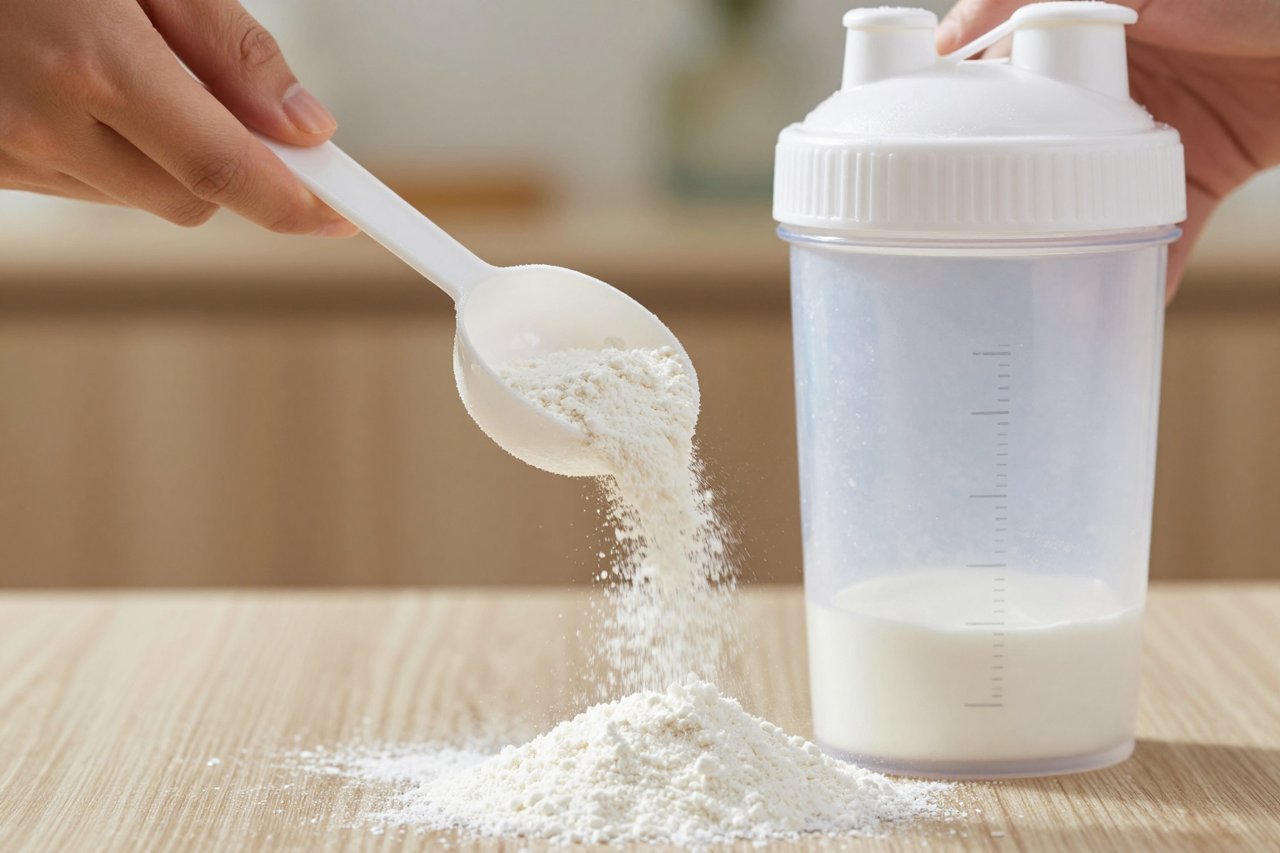
Here’s a practical example. Paul keeps his creatine jar right next to his coffee machine. Every morning, before making espresso, he scoops one 5-gram scoop into a shaker with 200ml of water and drinks it. Takes twenty seconds. The habit is anchored to something he already does every single day, so he never misses a dose.
You can also mix creatine into a smoothie or a protein shake. The type of protein you use matters less than getting enough total protein, but if you’re choosing a powder, this practical guide to the best protein powder gives you the no-sugarcoat version.
If you’re doing all that and your training is consistent, creatine usually pays off. That’s really all it takes. Find a simple product you trust, take five grams a day, and let consistency do the rest.


