
Table of Contents
Search for “best pet food” and you’ll get endless lists that crown a single winner. But anyone who has owned both a picky cat and a garbage-eating Labrador knows it isn’t that simple. This guide takes a different approach. Instead of ranking one product above everything else, we’ll compare the 7 best pet foods of 2026 across the main categories (dry, wet, fresh, raw, and freeze-dried) and look at the real trade-offs. You’ll finish with a clear idea of which approach suits your pet, your schedule, and your wallet.
If you’re completely new to this, our step-by-step guide to choosing the right pet food walks through the selection process from scratch.
The Five Ways to Feed Your Pet (and What Each Costs You)
Before comparing specific foods, it helps to understand the five main formats. Each one has trade-offs baked in that no amount of fancy packaging can remove.
Dry Kibble: Convenience With a Catch
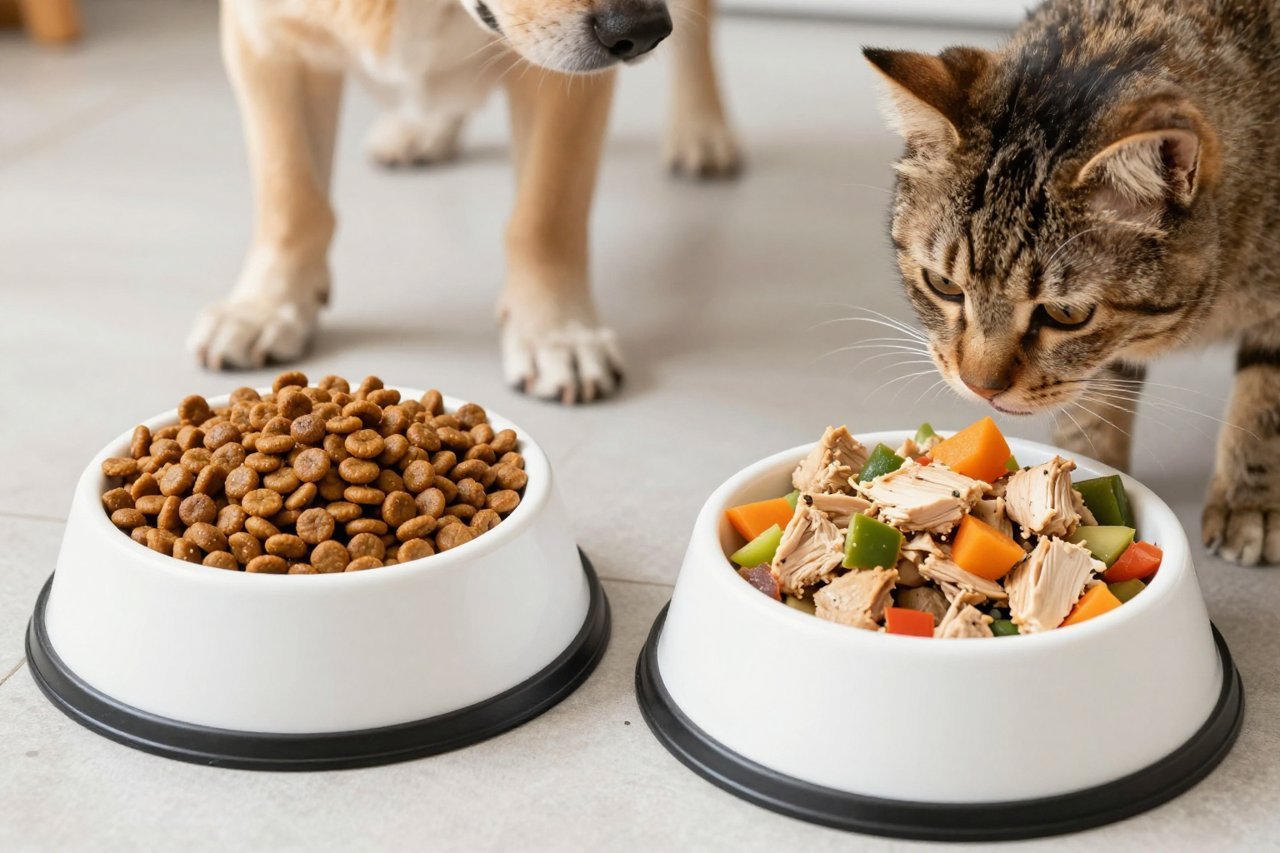
Dry kibble is shelf-stable, budget-friendly, and easy to portion. The catch is moisture; most kibble is only about 10% water, so pets that eat it exclusively often don’t drink enough. High-heat processing also breaks down some nutrients, and carbohydrate levels tend to be higher than a carnivore truly needs. If you’re mainly comparing dry dog food, our no-nonsense guide to the best dog food brands for 2026 covers brands we’d recommend.

Canned and Wet Food: Hydration Boost, Budget Drain
Wet food delivers 70–80% moisture, which is a huge win for cats and small dogs prone to urinary issues. It’s also often more palatable and easier to chew. The downsides: it costs more per calorie, it spoils quickly once opened, and the weight of cans makes the carbon footprint heavy. Indoor cats especially benefit from the extra hydration, as our guide to cat foods for indoor cats explains.
Fresh and Gently Cooked: The Human-Grade Middle Ground
Fresh-food services cook meat and vegetables at low temperatures and freeze them. You get recognizable ingredients and a personalised feeding plan. But the price can run two or three times the cost of kibble, and you’ll need fridge space, freezer space, and a schedule that works with deliveries.
Raw and Freeze-Raw: Ancestral Instinct, Practical Risk
Raw diets mimic what cats and dogs eat in the wild: uncooked muscle meat, organs, and bone. Fans love the shinier coat and clean teeth. But raw meat carries a real risk of Salmonella and Listeria contamination, and unbalanced homemade raw recipes can cause serious health issues. It’s not something to start without veterinary guidance.
Freeze-Dried and Dehydrated: Raw-Lite That Travels
These foods let you enjoy the benefits of raw without needing a freezer full of patties. They’re lightweight, shelf-stable, and still nutrient-dense. The trade-off is price and preparation effort; you usually need to add water and wait. Quality varies dramatically by brand, so read the label carefully.
The 7 Best Pet Foods of 2026, Compared
These seven foods aren’t ranked. They’re chosen to represent different corners of the pet food shelf, so you can see which trade-off is worth making for your animal. If you’d rather see a traditional ranked list, our expert picks for dogs and cats organises the top performers by category.
1. Orijen Original: High-Protein Dry Food for Active Pets
Orijen builds its recipe around a wide variety of named meats, like deboned chicken, turkey, wild-caught fish, and eggs. Guaranteed protein is 38%, which is excellent for energetic dogs and cats. But that rich formula can upset pets used to gentler food, and the price is significantly higher than standard kibble. It’s also grain-free, which isn’t necessary for every pet.
2. Hill’s Science Diet Perfect Digestion: The Vet’s Standard
Hill’s is one of the most widely recommended brands among vets. Its Perfect Digestion line includes prebiotic fibre for a healthy gut and moderate protein and fat. It’s not flashy, but it is reliable and well tolerated. The trade-off? It contains grains like rice and corn, and the first ingredients include chicken meal rather than whole chicken, which is a compromise if you prefer whole-food labels.
3. Purina Pro Plan Sensitive Skin & Stomach: The Dependable Budget Pick
If you’re shopping on a tighter budget, Purina Pro Plan offers solid nutrition without a boutique price tag. It includes enough omega-6 and zinc to keep your pup’s coat glossy, and its protein source is moderate enough for sensitive systems. The cons: it’s still kibble with a high carbohydrate load, and poultry by-product meal appears in the first few ingredients. Not a deal-breaker for most, but know what you’re buying.
4. Wellness CORE Wet Food: Canned Protein With a Hydration Punch
Wellness CORE makes a line of grain-free wet food that hits about 10% crude protein and 80% moisture. It’s a great option for cats or small dogs that need more water in their diet. The catch is cost: feeding canned food exclusively gets expensive quickly, and you’ll go through a lot of cans. It works best as a topper or for pets that won’t drink enough.
5. The Farmer’s Dog: Fresh Meals Tailored to Your Pet
The Farmer’s Dog is a fresh-food subscription service that sends pre-portioned, gently cooked meals using whole ingredients like beef, lentils, and sweet potato. You can customise plans by weight, activity level, and even allergies. The biggest downside is the price: expect to pay $3–$4 per day for a dog, plus pause options aren’t as flexible as you might hope. Having a subscription also means you always need fridge space available.
6. Stella & Chewy’s Freeze-Dried Raw: Raw Nutrition Without the Thawing
Stella & Chewy’s freeze-dried raw patties and morsels are made from raw meat and bone, then freeze-dried to remove moisture. No freezer space is needed, just water. It’s a powerful option for pets with grain sensitivities or picky appetites. However, it’s one of the more expensive ways to feed, and because it’s raw, careful handling is essential to avoid contamination.
7. Royal Canin Veterinary: When Your Pet Has a Medical Need
Some pets need prescription diets to manage kidney disease, diabetes, gastrointestinal issues, or allergies. Royal Canin’s Veterinary line offers formulas that target these conditions, something regular food can’t do. They’re only available through a vet, they cost more, and they’re often more processed than premium commercial foods. But when your pet has a genuine health issue, they can be life-changing.
The Trade-Offs You’ll Actually Face
No matter which food you lean toward, you’ll hit the same five questions:
- Protein vs. price: High-protein recipes cost more. Can you afford to feed this long-term?
- Convenience vs. freshness: Dried and canned foods store well; fresh and raw need handling and refrigeration.
- Prevention vs. treatment: A healthy pet may not need a prescription diet, but an existing condition takes priority.
- Palatability vs. nutrition: Some foods taste great but contain cheap fillers. Others are balanced but met with a turned-up nose.
- Life stage and lifestyle: Puppy, kitten, senior, overweight, highly active: requirements change.
If you want to see which foods earn consistently high marks from owners and vets, our roundup of the top 7 highest-rated pet foods offers a wider sample.
Budget, Lifestyle, and the Pet’s Vote
Once you’ve narrowed down the format, the decision still comes down to three things.
First, the budget. Work out what you can realistically spend per month. If a premium fresh service pushes you into financial stress, a good mid-range kibble beats a diet you can’t sustain. Second, logistics. Can you store a freezer full of raw patties? Are you out of town a lot and need something shelf-stable? Be honest with yourself. Third, and this is the one people forget, the pet’s own taste. A food with perfect reviews but a dog that refuses to touch it is useless.
Start with a small bag. Transition over seven days, mixing a little more of the new food each day. Watch for changes in stool quality, coat shine, and energy. If you don’t see improvement in two to three weeks, try another approach. The best pet food isn’t the one with the longest list of superfoods. It’s the one your pet actually thrives on, that your life can accommodate, and that you can afford to buy week after week.


