
Table of Contents
Aloe vera isn’t just one thing. If you’ve been looking into aloe vera for skin, you might have imagined slicing open a thick leaf at home, then staring at shelves of gel bottles and every moisturizer with a green label. But the way aloe is processed and formulated changes how it works. Some options are more soothing, some are more drying, and some aren’t really about aloe at all. Here is the comparison that no product label will tell you.
Fresh Leaf: The Most Potent Way to Use Aloe (and the Intimidating One)
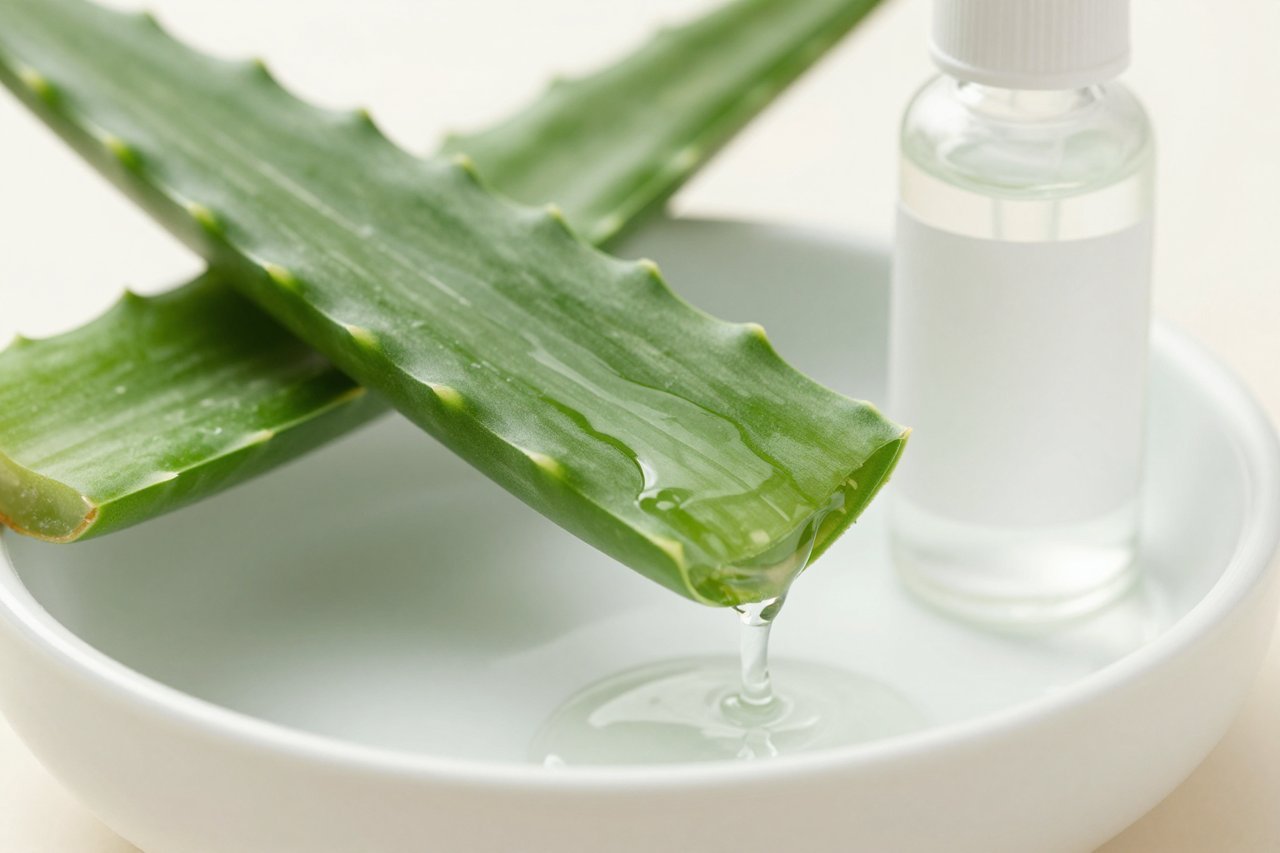
Cutting into a fresh leaf gives you raw, unprocessed gel. This inner filet contains acemannan, a long-chain polysaccharide that research links to wound healing, reduced inflammation, and the moisture-binding effect people usually want from aloe. It also has vitamins, amino acids, and enzymes in their natural ratio. But this purity comes with a catch.
Under the rind, there’s a thin yellowish layer called latex. The main player here is aloin, a strong laxative that can irritate skin and occasionally trigger contact dermatitis. If you split a leaf open and rub it straight on your face, you’re also rubbing that yellow residue over your cheeks. That mistake leads to burning, stinging, and redness—the opposite of what you wanted.
To use fresh leaves properly, you need to remove the yellow latex completely, cut away the green rind, and rinse the mucilage. It’s time-consuming, but you can collect a week’s worth of gel and freeze the rest. If you’re ready to try this approach, a step-by-step aloe vera routine with real examples walks you through the entire latex-removal process from leaf to storage.

The upside here is potency. Fresh gel hasn’t been pasteurised or diluted, so you get the most anti-inflammatory and hydrating compounds in one application. The downside is that most people don’t have the patience for prep, and leaving a cut leaf in the fridge for too long is an invitation for mold.
Bottled Pure Gel: The Practical Middle Ground
Store-bought pure aloe gel is what the majority of my readers end up using. It’s stable, portable, and consistent from bottle to bottle. Manufacturers filter the gel, pasteurise it to extend shelf life, and add preservatives and pH adjusters. That’s a necessary trade-off because unprocessed gel goes bad in days. But not all bottled gels are created equal.
The main issue is what else is in the bottle. Some budget-friendly supermarket gels put water first, followed by carbomer, triethanolamine, and synthetic fragrance. They might still be titled “Aloe Vera Gel,” but the aloe concentration can be startlingly low. Those formulas feel refreshing in your hand, but on already-irritated skin, alcohol or fragrance can undo the cooling effect. The result is a slick chemical film rather than soothing hydration.
If you want the best bottled option, flip the bottle over. Look for a product that lists aloe barbadensis leaf juice (or aloe vera leaf juice) as the first ingredient, with no added alcohols and no fragrance. Brands that make concentrated gels often include just a natural preservative like citric acid or grapefruit seed extract. The gel will be thinner than you expect, absorb quickly, and leave no sticky residue.
Pure, properly formulated gel is perfect as a lightweight hydrating layer before your moisturizer, a soother for sunburn, or a base layer for oily skin in humid weather. But once it’s processed, you’re no longer working with raw aloe. Some of the enzymes are lost. That’s okay; you still get significant soothing benefits. Still, it’s worth knowing what aloe vera actually does and how to use it correctly before you decide which form matches your goals.
Aloe-Infused Moisturizers and Creams: A Valuable Add-On, Not the Main Ingredient
Then there are all the face creams, lotions, and serums that include aloe as part of a bigger formula. This is where the ingredient’s reputation gets diluted. Aloe acts as a humectant, pulling water into the outer layers of your skin, but in a typical moisturizer its concentration might be anywhere from 0.1% to 5%. If you see it listed after water, glycerin, and shea butter, it’s more about marketing than effectiveness.
That’s not an automatic reason to skip those products. In a well-formulated cream, aloe can contribute a bit of antioxidant protection, help calm redness caused by exfoliating actives, and give you a smooth finish. But you’re unlikely to notice the aloe working alone in this format. It’s a supporting player alongside ceramides, peptides, and oils.
The other important limitation is that aloe gel cannot replace a moisturizer. Aloe is full of water but low in occlusive lipids. If you have dry, tight skin, wiping aloe across your face will hydrate briefly, but the water will evaporate and leave you drier than before. That gap is exactly why understanding the entire step-by-step process to find the right moisturizer for dry skin matters. When you match aloe with the right barrier-repairing cream, you get both immediate hydration and long-term protection—but relying on aloe cream alone leaves you chasing the next pump of moisture.
How to Make the Right Choice for Your Skin
Still confused under those bright lights? Here’s a practical cheat sheet based on your situation:
- For sunburn, heat rash, or a reactive flare: You want pure, minimally processed aloe with no fragrance and no alcohol. A fresh leaf or a 99% pure bottled gel will give you faster cooling relief. Skip the scented lotion.
- For oily or combination skin: A lightweight pure gel can act as a daily hydrating layer in humid weather. It won’t clog your pores, but you still need a proper moisturizer if your barrier is compromised.
- For dry or maturing skin: Treat aloe as a supplemental hydrating layer, not the final step. Seal it in with a richer cream. Look for an aloe-infused moisturizer that contains ceramides or squalane.
- For sensitive skin: Aloe itself can be calming, but the other ingredients in a product—preservatives, fragrance, natural extracts—may be triggers. Always patch-test a new formula on your inner forearm first. The same patch-test method that helps you find a sunscreen for sensitive skin works fine for any aloe product. Give it at least 24 hours before you let it anywhere near your face.
One more detail: texture. Fresh aloe gel has a slippery, almost raw egg-white feel that some people love and others can’t stand. Bottled gels can be thinned with a bit of water or glycerine to feel less tacky. Creams containing aloe tend to be the easiest to mix with makeup, but they won’t give you the concentrated mucilage of a pure gel.
Before you buy, ask yourself what you’re actually treating. Aloe vera for skin is an excellent cooling, hydrating, and anti-inflammatory ingredient when used in a form that delivers a meaningful dose. But a tiny drop of aloe juice in a fifty-dollar pot of cream isn’t the same as cutting a leaf open or using a high-percentage gel. Choose based on the concentration you need, the texture you enjoy, and the rest of your skincare lineup. If you’re still uncertain about where the gel should sit in your routine, start with a pure aloe gel as a light layer in the morning, then observe how your face responds for a week. That honest experiment will tell you more than any label ever will.


