
Table of Contents
Aloe vera is the kind of plant that quietly sits on your windowsill until you burn yourself, and then it becomes the most important thing in the house. But reducing aloe to a sunburn remedy misses the point. This spiky leaf has been used for centuries to treat skin wounds, and modern research is finally catching up to what herbalists have known all along.
So, what can aloe vera really do for your skin? And how do you use it without making a sticky mess? If you’ve been curious about aloe vera for skin, this guide breaks down the science, the practical steps, and the limits of this botanical workhorse.
What Makes Aloe Vera So Effective?
Aloe vera gel is about 99% water. That sounds like plain tap water would do the same job, but the remaining 1% is loaded with active compounds. The two most studied are acemannan, a type of polysaccharide, and glucomannan, a sugar molecule that holds onto water. Both are hydrating, but their real power lies in their anti-inflammatory and immune-modulating effects.
The gel also contains vitamin C, vitamin E, beta-carotene, several B vitamins, and minerals like zinc, copper, and selenium. Together, these act as antioxidants and help your skin maintain its natural barrier. There are also enzymes that break down dead skin cells and a small amount of salicylic acid, which explains why aloe has a mild exfoliating effect.

The Skin Benefits Backed by Research
You don’t need to take a wellness influencer’s word for it. Controlled studies have measured aloe’s effect on skin, and the results are genuinely promising.
Soothes Irritation and Redness
Aloe gel is famous for calming inflamed skin, and the mechanism is real. Its anti-inflammatory compounds inhibit the enzyme cyclooxygenase, which is part of the body’s inflammatory response. In one clinical study, 70 people with sunburn who applied aloe gel showed significant reductions in redness and pain compared to a placebo group. But sunburn isn’t the only condition. People with mild eczema and rosacea often report that aloe provides temporary relief from itching and flushing.
Keep in mind that fresh aloe from the leaf is different from bottled aloe drinks or creams that contain just a splash of aloe. For real anti-inflammatory benefits, you need a product that lists aloe barbadensis leaf juice as the first ingredient.
Hydrates Without the Greasy Feel
Aloe works as a humectant, meaning it pulls water into the outer layer of your skin. The glucomannan and acemannan form a light film that traps moisture and leaves behind a soft, non-greasy finish.
If you have oily or combination skin, aloe may be the rare moisturizer that doesn’t clog pores. And if your skin is dehydrated and flaky, aloe still helps, but you might need an additional occlusive layer like a few drops of squalane or shea butter to really lock it in. For persistent dry skin, combining aloe with a heavier moisturizer works best—and if you’re struggling with stubborn patches, you can find a dry skin treatment that works almost instantly.
Speeds Up Minor Wound Healing
Aloe’s reputation as a wound healer goes back to ancient Egypt, and modern trials support it. A 2013 review of clinical studies found that aloe gel shortened wound healing time by an average of about six to eight days in minor cuts and burns. It works by boosting collagen production and helping skin cells migrate to close the wound.
Importantly, this applies to superficial grazes, razor burn, and mild irritation, not deep cuts or surgical wounds. And don’t put aloe on an actively bleeding wound until the bleeding has stopped.
Improves Acne and Breakouts
Aloe contains salicylic acid and a compound called lupeol, both of which help clear clogged pores and calm the redness of existing pimples. It also has natural antibacterial properties that target Cutibacterium acnes, the bacteria involved in acne.
For mild acne, applying pure aloe gel twice a day can be enough to dry out a whitehead without the peeling that comes with benzoyl peroxide. For cystic acne, aloe is not a standalone fix, but it’s still a useful sidekick. If you use a prescription treatment, aloe can sit on top to reduce irritation.
Adds Antioxidant Protection Against Premature Aging
The antioxidants in aloe—vitamin C, vitamin E, and various polyphenols—help neutralize free radicals that break down collagen. One small study in 2018 showed that applying aloe vera gel to the face for 90 days improved skin elasticity and reduced the appearance of fine lines.
The effect won’t rival a quality retinol, and it’s not a wrinkle eraser. What aloe does offer is a gentle, hydrating layer of defense that works particularly well for skin that’s easily irritated by more active anti-aging ingredients.
How to Use Aloe Vera: Fresh Leaf vs Store-Bought Gel
Whether you go with the plant on your windowsill or a bottle from the shop, each approach has its strengths.
Cutting Your Own Aloe Leaf (the Right Way)
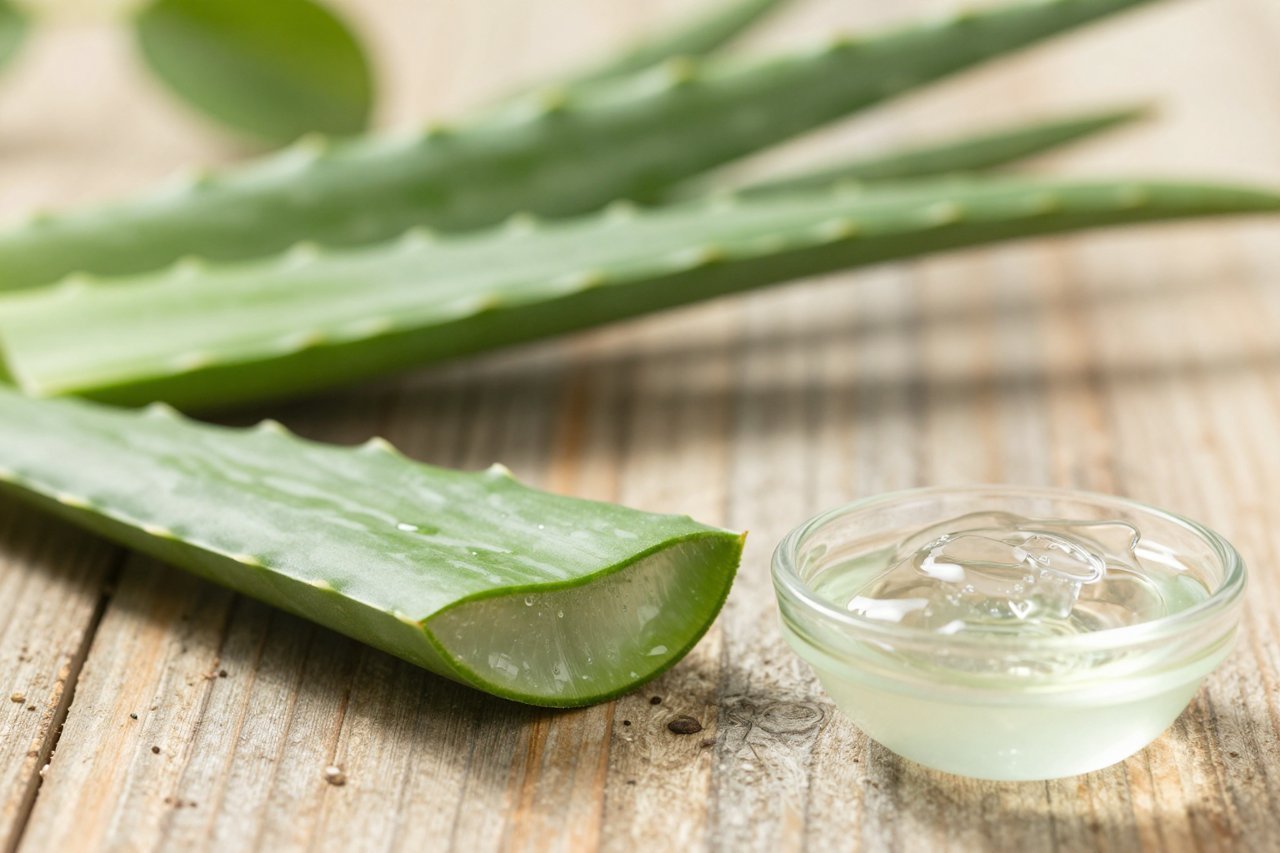
Fresh aloe leaf is the purest form. To harvest it:
- Pick a thick, mature leaf from the outer part of the plant.
- Cut it lengthwise and scoop out the clear gel.
- Rinse the gel pieces immediately to remove the yellowish sap (the latex). This yellow liquid is full of aloin, a compound that can sting and cause a rash on sensitive skin. It’s also a laxative if swallowed, so don’t eat it raw.
- Keep the gel in a sealed container in the fridge, and try to use it within three days.
Fresh gel can be great, but it’s also easy to make mistakes. If you’re using it as part of a face treatment, combine it with other ingredients that are proven to work. For example, you can mix aloe with honey and oatmeal for a soothing mask—our DIY face masks guide has simple recipes for every skin type, along with the ones to avoid.
Five Practical Ways to Use Aloe Every Day
Aloe doesn’t need to be the basis of a 12-step routine. Here are the easiest ways to work it into your day:
- As a lightweight daytime moisturizer: warm a small amount of gel between your fingers and press onto damp skin before makeup.
- As a post-shave or after-wax soother: apply a thin layer to irritated areas to calm redness and stop the sting.
- As a base for homemade face masks: mix with yogurt, smashed cucumber, or a single drop of your favorite essential oil. Always dilute essential oils properly—you can find a safer guide to essential oils for skin if you’re unfamiliar with the rules.
- As a spot treatment: a drop of pure aloe on a pimple overnight can reduce its size and redness.
- As a rescue for over-exfoliated skin: when your face burns from an aggressive acid peel, a layer of aloe is the fastest thing to cool it off.
Choosing a Reliable Bottled Aloe
Not all store-bought aloe products are equal. Many lotions and moisturizers add a tiny percentage of aloe as a marketing gimmick. The label might say ‘aloe extract’ but it’s somewhere near the bottom of the ingredient list. To get real benefits, choose a gel that states 99% or 100% pure aloe vera leaf juice. It should be fragrance-free and alcohol-free. Look for organic products if possible, because aloe is often sprayed with pesticides. For background on why organic labels matter, check out our guide to why organic skincare products are worth the label and the price.
Common Mistakes That Suck the Benefit Out of Aloe
Using the wrong part of the leaf, expecting too much, and ignoring your skin type are the three biggest ways to waste this plant.
One of the most common errors is not peeling away the latex. Whole-leaf aloe juices and even some DIY preparations include the yellow sap, which can irritate the skin, cause redness, and dry it out rather than soothe it. If you cut your own leaf, take time to rinse the gel pieces thoroughly.
Another frequent mistake is using aloe as your only moisturizer on very dry or mature skin. Aloe is a humectant, not an occlusive. If you apply it alone in a dry climate, the water it attracts may evaporate and leave your skin more dehydrated. Layer a few drops of facial oil or a moisturizer over it.
A third common misstep is expecting aloe to act as sunscreen. Aloe does have a very mild sun protection factor, but it is nowhere near enough to prevent a burn. Treat it as an after-sun, not a pre-sun. For daily SPF, use a dedicated sunscreen.
Finally, not every skin type reacts well to aloe. Allergies are rare but real. If you’re allergic to garlic, onions, or tulips, you have a higher chance of reacting to aloe. Before using it all over your face, do a patch test on the inside of your wrist and wait a few hours. If anything stings, stop using it.
Those warnings are not reasons to avoid aloe—they just make the plant more effective when used correctly. In the end, aloe vera remains one of the few natural skincare ingredients with serious scientific backing, and it’s also kind to your wallet. A single leaf costs less than a cheap sandwich, and the bottle of 100% gel doesn’t cost much more. Try it for a week, and let your skin decide.


