
Table of Contents
If you’ve only been shaking turmeric into a smoothie once in a while, you might never experience the turmeric benefits that make the spice famous. Curcumin, the yellow compound behind most of the action, is poorly absorbed unless it is handled correctly. The fix is less about buying another supplement and more about preparation.
Why most turmeric is wasted
Curcumin is fat soluble, quickly metabolized, and too large to pass easily through the intestinal wall. In one frequently cited human trial, piperine, the alkaloid in black pepper, appeared to increase curcumin absorption by about 2,000 percent. That is one reason traditional Asian curries pair turmeric with black pepper and cook everything in oil.
If you want to see what controlled studies actually say before changing your routine, start with our detailed review of the science behind turmeric benefits. It walks through dosages, safety concerns, and which of the popular claims have real evidence behind them.
Step 1: Pair turmeric with black pepper and fat
From now on, treat turmeric as an ingredient that needs a vehicle. Add a generous pinch of black pepper and a visible fat source at the same time. Olive oil, coconut milk, butter, egg yolk, nuts, or ground seeds all work.

- Golden milk ratio: for 1 cup of warm milk, use 1/2 teaspoon ground turmeric, 1/4 teaspoon finely ground black pepper, and 1 teaspoon coconut oil or tahini. A small pinch of cinnamon softens the pepper flavour.
- Savory cooking ratio: for one serving of rice, soup, stew, or roasted vegetables, use 1/4 to 1/2 teaspoon turmeric and about half that much black pepper in the cooking fat.
Golden milk that works better
Simmer the milk with turmeric, black pepper, and a little fat for 3 to 5 minutes. Do not just stir turmeric into cold milk. Gentle heat helps release curcumin, and allowing the fat to bind with the spice makes a smoother drink.
The 30-second skillet trick
For savory food, bloom ground turmeric and black pepper in hot oil for about 30 seconds before adding onions, garlic, or ginger. You will notice the aroma change instantly. This small step dissolves part of the curcumin into the fat and makes the finished dish more consistent.
Step 2: Choose a dose you can actually sustain
Most clinical studies use curcumin extracts, not grocery-store turmeric powder. Ground turmeric contains only about 2 to 5 percent curcumin by weight, so you need a larger spoonful of powder to deliver the same curcumin dose. A practical daily food target is 1/4 to 1/2 teaspoon of turmeric spread across meals.
If you prefer capsules, read the label for the extract amount and standardization. A 1,000 mg capsule of plain turmeric might deliver only 30 mg of curcumin. In contrast, a 500 mg extract standardized to 95 percent curcuminoids delivers around 475 mg of active curcumin. The right dose depends on your body, so start with a lower amount for two weeks before increasing it.
Turmeric is not neutral for everyone. High doses can slow blood clotting and stimulate bile production, so talk to your doctor first if you take blood thinners, manage diabetes, or have a history of gallstones.
Step 3: Use recipes that already do the heavy lifting
Once the mechanics become clear, lean on recipes that combine turmeric with pepper, fat, and complementary ingredients. Our anti-inflammatory ginger turmeric immunity shots are a practical option for a weekly batch: they combine fresh turmeric and ginger into a small, drinkable dose.
For a dessert-style break, try the turmeric mango popsicles with coconut milk. The coconut milk adds enough fat to help carry curcumin, while the sweetness makes turmeric easier for younger family members to accept.
Make a turmeric paste for the week
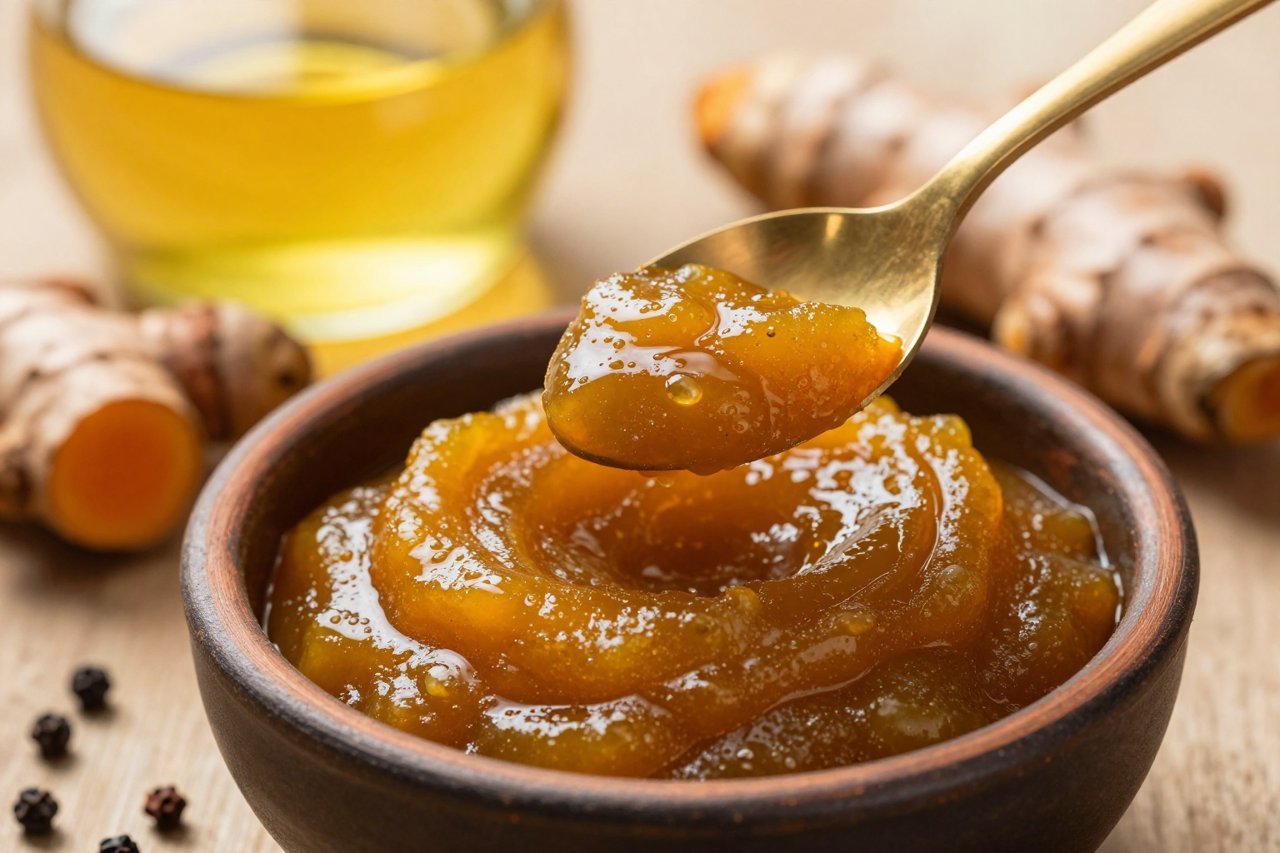
The fastest way to keep this habit alive is to remove prep time from your daily routine. Make this paste once and use it anywhere:
- Combine 1/4 cup ground turmeric, 1 teaspoon ground black pepper, and 1/2 teaspoon ground ginger in a small saucepan.
- Add 1 cup of water and 2 tablespoons coconut oil.
- Simmer over low heat for 6 to 8 minutes, stirring constantly, until the mixture becomes a thick paste.
- Store it in a glass jar in the fridge for up to a week.
Use one teaspoon of this paste whenever a recipe calls for turmeric, salt, and pepper.
Step 4: Build a daily trigger instead of relying on motivation
Turmeric wins through repetition. Anchor it to a meal you never skip:
- If you eat eggs every morning, whisk 1/4 teaspoon of turmeric into the eggs before cooking.
- If lunch is soup or a rice bowl, stir the paste into the fat before heating it.
- If you drink tea before bed, make a simple golden milk with a teaspoon of paste.
Ginger is the closest culinary ally to turmeric, and using both roots makes the ritual easier to enjoy. Our guide to ginger benefits explains a separate set of clinical findings, but the practical advantage is simple: keep fresh or ground ginger next to your turmeric and use them together. The combined taste is bold enough to feel intentional rather than medicinal.
Step 5: Track the right signals for three to four weeks
Clinical trials often run for eight to twelve weeks because curcumin works slowly. Checking for a dramatic change after one night sets you up for disappointment. Instead, keep a simple note and measure things you can actually observe.
- Morning joint stiffness (0 to 10 before you leave bed)
- Digestive comfort after large meals (0 to 10)
- Post-workout soreness the next morning (0 to 10)
- Days you actually took your turmeric dose
Rate each item at the same time every day. After three or four weeks, look for a gradual pattern. A single bad day means nothing, but consistent movement in one direction tells you whether your routine is worth keeping.
A 7-day turmeric starter plan
Here is a concrete week based on everything above. Use the paste as your shortcut:
- Day 1: Make the turmeric paste and store it in a glass jar.
- Day 2: Add one teaspoon of paste to your morning eggs or breakfast rice.
- Day 3: Make golden milk with 1 cup of milk and 1 teaspoon of paste before bed.
- Day 4: Use turmeric paste as the base of a chicken or tofu marinade with lime juice.
- Day 5: Prepare a small batch of anti-inflammatory ginger turmeric immunity shots for the weekend.
- Day 6: Make something unusual, like the turmeric mango popsicles with coconut milk, so the week does not feel repetitive.
- Day 7: Review your daily notes. Decide which meal anchor felt easiest and commit to that one for the next three weeks.
Once the week is over, keep only the part that has already become automatic. The difference between having turmeric in your pantry and gaining turmeric benefits is regularity. Pair it with black pepper and fat, respect the dose, and let the daily rhythm do what no single heaping spoonful can do.


