
Table of Contents
A scraped knee goes red, swells, and heals within a week. That’s inflammation doing exactly what it’s supposed to do. The trouble starts when a similar process simmers quietly for years, in arteries, joints, and fat tissue, without any obvious wound to explain it.
That low-grade, slow-burn version is what most nutrition research on anti-inflammatory foods is actually about. It’s also why the advice can feel maddeningly vague: eat more plants, fewer processed snacks, some fish. All true. But if you’re starting from zero, you probably want to know why those things matter before you rebuild your fridge around them.
Here’s the groundwork, minus the hype.
What chronic inflammation actually is
Acute inflammation is short and loud: heat, pain, swelling, gone in days. Chronic inflammation is quiet and long. It shows up in bloodwork as elevated C-reactive protein (CRP) or interleukin-6, and it’s been linked to heart disease, type 2 diabetes, arthritis, and some cancers.

Most people with low-grade inflammation feel fine. That’s the annoying part. There’s no single symptom that tells you your diet is nudging your immune system into overdrive, which is why the payoff from changing what you eat is measured over months, not days.
Food is not a cure. It’s one of the few levers you pull every single day, three or four times, and it happens to influence several of the pathways that keep that background hum turned up.
Four things anti-inflammatory foods are doing
Nearly every food on the trendy lists works through one of these mechanisms. Understanding them makes the shopping advice much easier to remember.
1. They feed your gut bacteria
Fiber from vegetables, beans, oats, and nuts ferments in the colon into short-chain fatty acids like butyrate, which help keep the gut lining tight and calm. Fewer than one in ten adults hits the recommended 25 to 38 grams of fiber a day. A cup of cooked black beans gets you about 15 grams; a medium avocado, 10.
2. They shift the fat balance
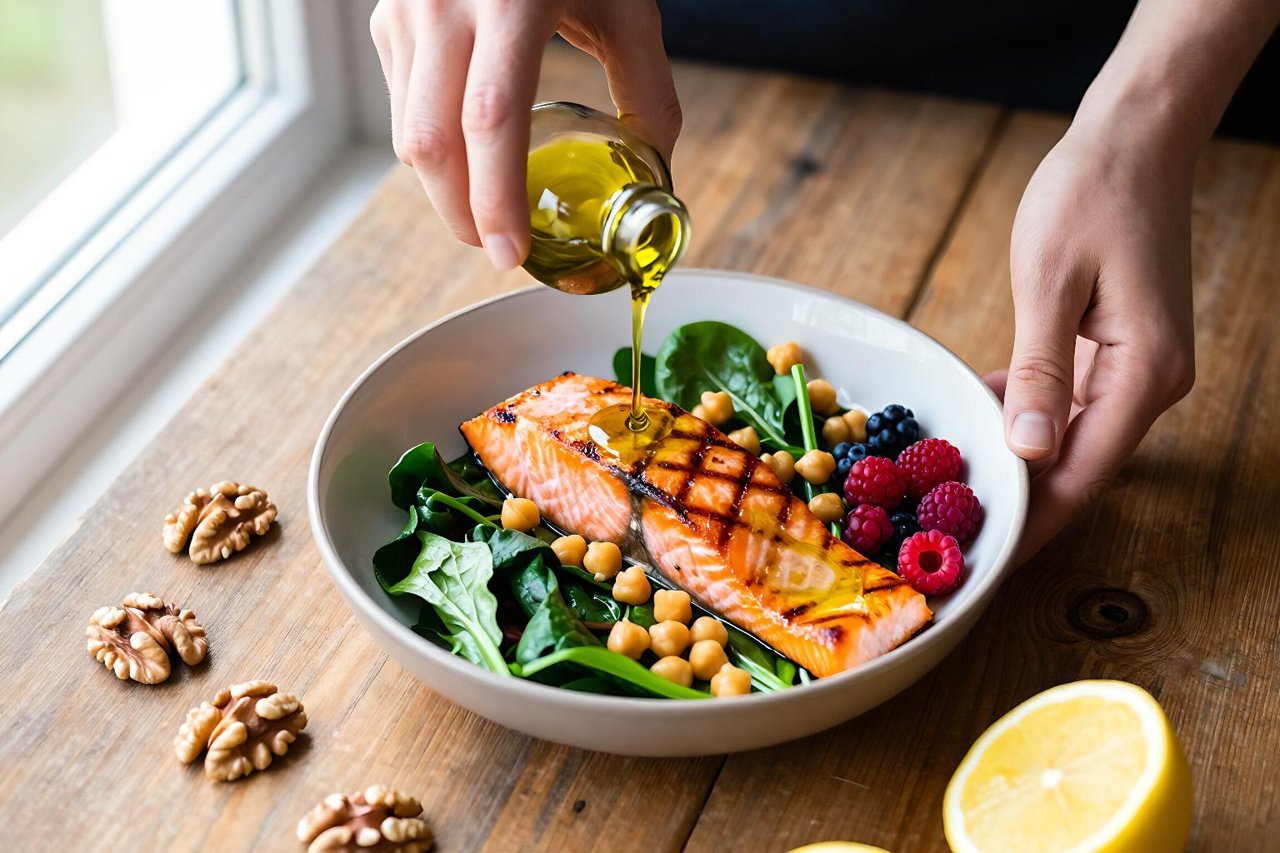
Omega-3s from oily fish compete with omega-6 fats for the same enzymes, and the compounds your body builds from them are far less inflammatory. A four-ounce salmon fillet supplies roughly 1.5 grams of combined EPA and DHA. Two servings a week is the standard target, and it’s a reasonable one.
3. They deliver polyphenols
These are the pigments and bitter compounds in berries, olive oil, dark chocolate, red onions, coffee, and green tea. Extra virgin olive oil contains oleocanthal, which happens to dampen the same enzymes as ibuprofen, though in amounts nowhere near a pill. Turmeric’s curcumin is poorly absorbed on its own; pairing it with black pepper and a little fat makes a real difference.
4. They flatten blood sugar spikes
Repeated sharp glucose spikes drive inflammatory signalling. Fiber, protein, and fat slow digestion, so a bowl of oats with walnuts lands far more gently than a pastry of the same calorie count.
The starter list, without the exotic stuff
You don’t need maca powder or $14 green juice. These are ordinary groceries with decent evidence behind them, and most of them keep for a week or more.
- Oily fish: salmon, sardines, mackerel, herring. Tinned sardines are the cheapest route in.
- Leafy greens: spinach, kale, rocket, Swiss chard.
- Berries: frozen works just as well and costs half as much.
- Extra virgin olive oil: the polyphenols live in the cloudy, peppery stuff, not the refined kind.
- Walnuts and almonds: an ounce of walnuts carries about 2.5 grams of plant omega-3.
- Legumes: lentils, chickpeas, black beans, split peas.
- Alliums and aromatics: garlic, onions, ginger, turmeric.
- Fermented dairy: plain yogurt or kefir with live cultures.
- Whole grains: oats, barley, brown rice, buckwheat.
If you want a shorter, evidence-weighted version of this list, this breakdown of six science-backed staples that calm chronic inflammation is worth ten minutes. And because the same foods tend to overlap with the ones studied for skin and cellular ageing, the guidance on actually eating anti-aging foods in practice covers much of the same ground.
What to eat less of (nobody’s favourite section)
Adding good food works better when you’re not drowning it out. The main offenders are ultra-processed snacks, sugary drinks, deep-fried food, refined white flour products, processed meats, and heavy drinking. Refined seed and vegetable oils used repeatedly at high heat are worth limiting too, though a splash of sunflower oil in a cake isn’t the thing that will tip your CRP.
The pattern matters more than any single ingredient. One biscuit is not inflammation. A daily habit of them, on top of low fiber and no fish, is where the trouble accumulates.
How much is actually enough?
Doses that appear repeatedly in the research:
- Two servings of oily fish per week
- 25 to 38 grams of fiber daily
- At least five portions of vegetables and fruit a day
- Three to four tablespoons of extra virgin olive oil daily
- A teaspoon or two of turmeric most days, with pepper and fat
Consistency beats intensity. A big anti-inflammatory blowout on Sunday doesn’t compensate for five days of white toast and crisps.
Do you need a named diet?
You’ll run into Mediterranean, keto, and the autoimmune protocol (AIP), and they disagree with each other in places. The Mediterranean pattern has the deepest evidence base for inflammation and heart health. Keto helps some people, partly through weight loss. AIP is a short-term elimination approach for people with genuine autoimmune flares, not a long-term default. If you’re weighing them up, this comparison of how to choose between anti-inflammatory diets lays out the trade-offs honestly.
For most beginners, no label is needed. Fish, vegetables, beans, olive oil, nuts, and whole grains, most days. That’s it.
Where beginners usually go wrong
The most common slip is adding a supplement and changing nothing else. Turmeric capsules sell well; turmeric capsules plus a diet of energy drinks and pastries do very little. The second is going all-in for eleven days and quitting because the meals take ninety minutes to prepare.
There are quieter mistakes too, like drinking polyphenol-rich coffee alongside an iron supplement, or cooking everything in so much refined oil that the vegetable’s benefits get buried. This list of eight mistakes that quietly cancel out the benefits is a useful audit if you feel like you’re doing everything right and nothing is changing.
A realistic week, roughly
Breakfasts alternate between oats with frozen berries, walnuts, and kefir, and eggs on wholegrain toast with spinach. Lunch is usually leftovers or a lentil salad with olive oil and red onion. Two dinners are salmon or sardines with greens and barley; the rest are bean curries, stir-fries with tofu or chicken, and a soup night. Fruit and a handful of nuts cover snacks.
That’s roughly 30 grams of fiber, two fish servings, and plenty of polyphenols, and none of it requires a special ingredient. If you’d rather build a routine like this step by step, the five-step method for eating more anti-inflammatory foods sequences it in a way that sticks.
What to expect, and when
Digestion often feels different within two to three weeks, mostly from the fiber shift. Anything you can measure in bloodwork, like CRP or triglycerides, generally takes eight to twelve weeks of consistent eating to move, and the change is usually modest rather than dramatic. Energy and joint stiffness tend to land somewhere in between.
If you take medication for a chronic condition, keep taking it. Food works alongside treatment, not instead of it, and any plan to reduce prescriptions belongs in a conversation with your doctor.
Start with breakfast, not the whole kitchen
Pick one meal you eat almost every day and rebuild it around fiber, plants, and a little fat. For most people that’s breakfast: swap the sugary cereal or the pastry for oats, frozen berries, a spoon of walnuts, and plain yogurt. That single change adds around 8 grams of fiber and a serving of polyphenols before 9am, and it takes four minutes.
Do that for two weeks. Then look at lunch. Small, boring, repeatable swaps are what move a CRP number, not a fridge full of unfamiliar ingredients you’ll throw out on Friday.


